

One Major Mistake To Avoid When Building A Retaining Wall In Your Backyard
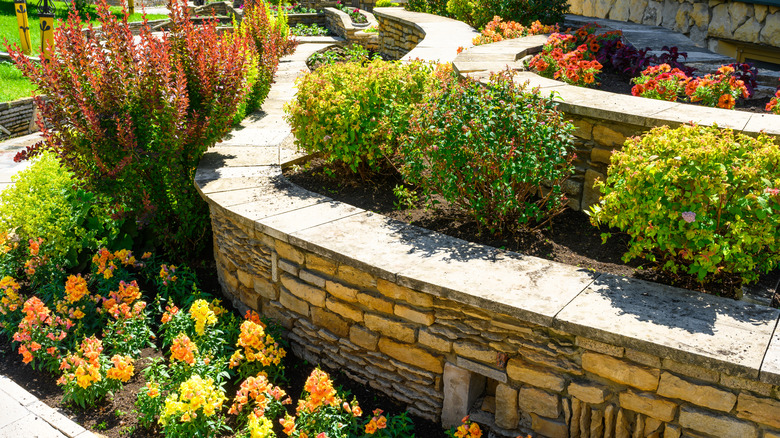
Retaining walls can do more than add a polished look to your landscape. They also help tame slopes, reduce soil erosion, and even create usable garden beds or extra seating areas. In fact, when designed well, they can increase both the beauty and functionality of your outdoor space, and are one of the creative ways to make a sloped backyard more private. But while it might seem simple to pick out materials at the home improvement store and map out the length and height of your wall, there are key factors to consider before you ever start stacking stone. Overlooking these can turn your dream project into a costly do-over.
So, what's the most common reason retaining walls fail? Poor drainage. Excess water that builds up behind a wall creates pressure strong enough to push over even the sturdiest-looking structure. Without proper planning for water flow and release, a beautiful wall can quickly become an expensive pile of rubble. The good news is that with the right prep work, you can avoid this pitfall entirely and ensure your retaining wall stays solid, functional, and attractive for years to come.
Drainage solutions every retaining wall needs
While these potential risks may have you thinking this is one of the outdoor renovations you shouldn't do yourself, one of the simplest ways to prevent water from overwhelming your retaining wall is by installing a perforated drain pipe. Think of it as an underground highway for water: flexible, slotted piping laid at a slight slope (about ½% or more) that directs excess moisture away from the wall before it can build up. The pipe is typically set in gravel and exits through the face of the wall using a notch, wall drain, or spillway. Without this release system, trapped water can make your soil heavier and put enormous pressure on the wall, eventually leading to bulges, cracks, or collapse.
Gravel backfill and geotextile fabric add the final layers of protection. Compacting clean, crushed gravel behind your wall not only provides strength and stability but also allows water to drain freely instead of saturating the soil. Wrapping the system in nonwoven geotextile fabric ensures the gravel stays clean, keeping silt and soil from clogging your drainage path. Together, these three elements — pipe, gravel, and fabric — form a drainage system that dramatically increases the lifespan of your retaining wall. Skipping them might seem like a shortcut, but repairing a failed wall costs far more than building it right the first time. And now that you know how to add proper drainage, try these tips for building a stone retaining wall on a budget.