

A Simple Trick That'll Help Keep Your Yard Free Of Nimblewill Weeds
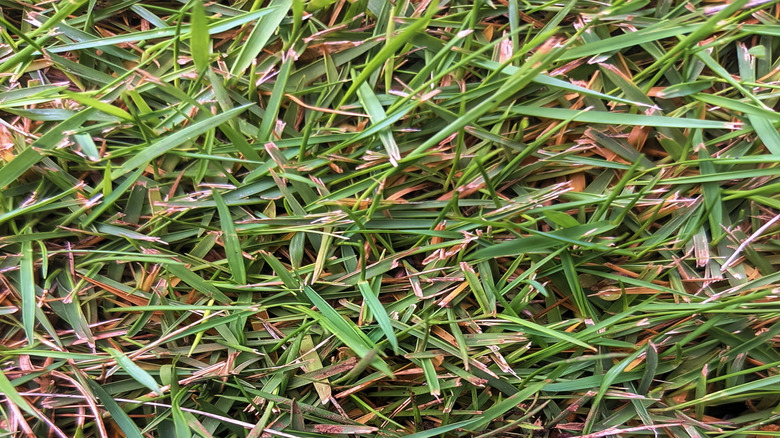
Is it grass? Is it a weed? It's both! Sometimes confused with Bermuda grass, Nimblewill is a native grass in the U.S. that is often looked at as a weed because of its characteristics and appearance. While it is lovely in the warm months and is a popular turf in southern states, it drastically changes when it gets cold out and winter sets in. Nimblewill will start to turn brown and make your lawn look patchy. It also likes to spread, and can end up taking over your outdoor areas as it seeds and its root system slowly crawls underground.
If you notice brown patches in your lawn during the colder months, it could be nimblewill. The grass is a bluish-green weed with leaves that are about 1 to 2 inches in length. Although it is fast-growing, you can take action to control it. You don't want to use an herbicide that will kill off your preferred grass as well. Instead, managing nimblewill is all about taking steps to keep your lawn healthy, such as the simple mowing trick of not cutting too short.
It's all about soil health for eradicating nimblewill

If your lawn has bare patches, nimblewill will happily fill in those spaces. This species likes shade and moisture — you can look to areas without good drainage and under overgrown bushes and trees for the telltale signs of this unwanted plant. Where it thrives is also a clue on how to get rid of it.
PennState Extension suggests that one of the best ways to control nimblewill is to ensure you're seeding with the preferred grass. It also helps to fertilize your lawn throughout the year, allowing your grass to grow full and thick and leaving no room for the plant to take root. When it comes to fertilization, professionals suggest doing it in early April, late May, mid-July, mid-August, and mid-October. If you only have small patches of nimblewill, you can remove it by hand since the roots don't go deep. Since this grass weed likes shady areas, keeping bushes trimmed back is a good step in the right direction. Trim overhanging branches from trees. The same goes for its desire for moist soil — ensure your lawn has good irrigation. Learn watering tips that will help your lawn flourish.