

The Myths And Truths To Where Hummingbirds Really Go In The Winter
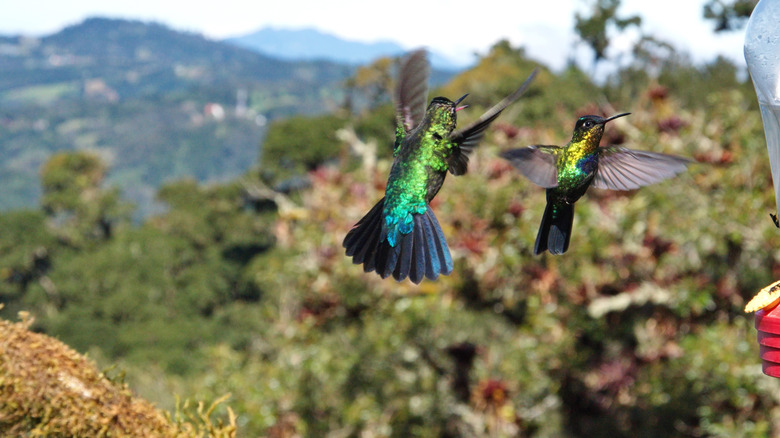
The majority of backyard birders in North America long to see more hummingbirds in their yards each year. In an effort to attract these tiny avarians, much thought is given to which flowers to plant and when to hang feeders. The latter question is typically answered by geographic location and the timing of the hummingbird migration through each region. While everyone enjoys watching hummingbirds when they are around, typically spring through early fall in most of the Lower 48, there is some confusion as to where hummingbirds really go in the winter and how they get there. The answer is: it depends on the species.
Almost every species of hummingbird in the United States undertakes some sort of migration to their winter home in the fall, then back again during the spring. They all get there the same way — they fly. However, because many of these migratory routes are so long and hummingbirds are so small, many speculative myths have arisen to suggest they may receive assistance on their journey or don't actually migrate at all. Those falsehoods range from hummers riding on the backs of larger migrating birds to them entering a long hibernation until the weather sufficiently warms again. However, the reality is these diminutive birds fly the entire way powered by only their tiny wings.
As the time of migration comes closer, hummingbirds begin packing on weight to sustain themselves on their long flight. Typically, they gain 25% to 40% of their body weight in preparation for the trip, during which they will often cover as much as 23 miles a day and up to 500 miles without stopping.
Hummingbirds migrate various distances
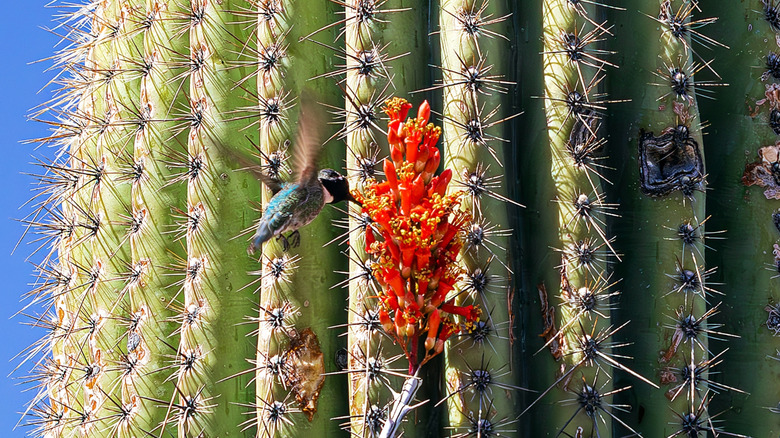
Where hummingbirds go depends on the species, but overall, they head south in winter. For some, that means traveling far beyond the southern border of the United States, while others remain in the Lower 48, spending their winters in areas like South Texas. Among the species that stay in these areas through winter is the ever-popular ruby-throated hummingbird. These birds gather en masse along the Gulf Coast during the fall, preparing for their flight south. Some stay back, while the majority fly further south to Mexico or Central America. For a good many hummingbirds, this requires making a non-stop flight over the Gulf before getting to their winter home.
Another species that can sometimes be spotted in South Texas during winter but typically spends the colder months in Mexico is the rufous hummingbird. These hummers often travel the greatest distance, as many of them migrate as far north as Alaska during warmer periods. On their trek from Alaska to Mexico, the rufous will fly right past the lone exception to hummingbird migration, the Anna's hummingbird. These hummers remain in their Pacific Coast homes year-round and have even adapted to be able to breed in these areas during mild winters.
Not all species choose between a long-distance flight and a staycation, however. There are a number of species that make a relatively short migration. For example, the violet-crowned and broad-billed hummingbirds tend to oscillate between the Southwestern United States and Mexico throughout the seasons. So, while they do migrate, it is over a relatively short distance. Some of these birds can also be seen at feeders year-round.