

A Must-Try Method That'll Protect Your Outdoor Wooden Fixtures From Carpenter Bees
We may receive a commission on purchases made from links.
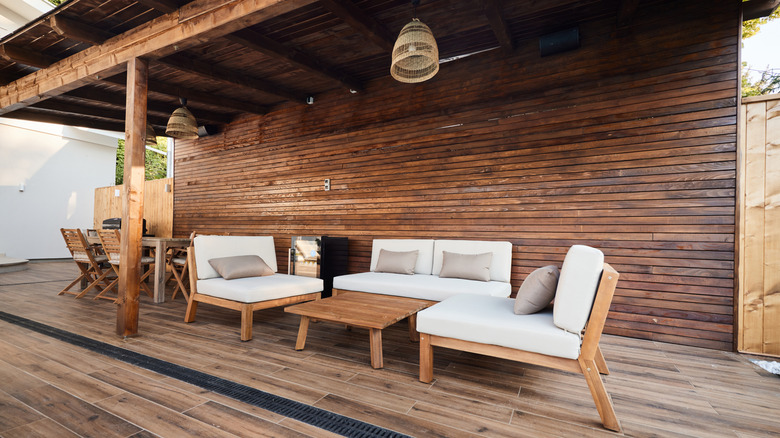
Wooden decks are updates that can add serious value to homes, unless that are unsightly and structurally unsound. While no one intentionally builds a wooden deck that way, it can certainly become so if carpenter bees are allowed to have their way. Although they're name makes them sound like happy little helpers, carpenter bees are actually a dangerous type of bee that can deliver painful stings to humans and destroy anything made of wood, including decks and outdoor furnishings. Luckily, you can prevent this from happening by choosing the right kind of wood and using paints and/or sealants to protect them.
Carpenter bees damage wood by burrowing and tunneling their way throughout the lumber. While the entry holes may be unsightly, it is the labyrinth of unseen tunnels that degrades the structural integrity of the wood. It is typically easy to spot the signs of active carpenter bees. One clue is holes that are so perfectly round, they may initially appear to be made with a drill bit. Also look for sawdust on the ground near the wood and a buzzing sound emanating from within the wood.
Should you see any of these signs, it is necessary to use a pesticide, such as BioAdvanced foam termite and carpenter bee killer plus, before plugging the holes with a section of dowel rod and/or wood putty to prevent more carpenter bees from resuming the destruction. However, the best bet is to take steps to prevent carpenter bees from attacking your outdoor wooden fixtures in the first place.
The right wood and treatment can discourage carpenter bees
Protecting you outdoor wood fixtures starts the moment you buy wooden outdoor furniture or materials to build a deck or other outdoor fixture. The first step is to choose a wood that is less appealing to carpenter bees. In general, carpenter bees much prefer softwoods, which are much easier to burrow into, such as cedar and pine. Pressure treated versions of these woods can be a bit more of a deterrent. However, because carpenter ants don't actually eat the wood, pressure treated lumber isn't completely resistant to them as is the case with wood-eating insects, like termites. Oak and other hardwood, on the other hand, is far less desirable to carpenter bees.
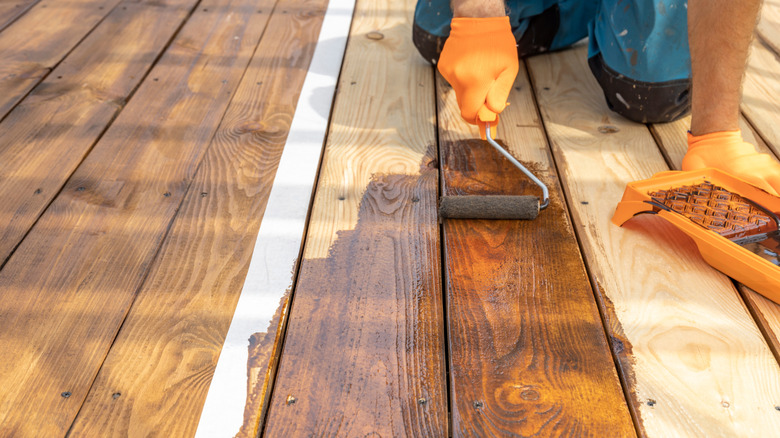
Additionally, carpenter bees prefer weathered wood. So, keeping your wood sealed, in good shape, and protected from the elements will not just prevent destruction from rain and sun, but also from carpenter bees. This step kills two birds — or bees in this case — with one stone, so to speak. Both paint and varnish can help dissuade carpenter bees. However, the best is to use paint or a coat of sealant or clear topcoat over stained wood. The reason this is so effective is because it fools the bees into thinking the material is something other than wood. If carpenter bees cannot feel the grain of the wood, they typically will not begin to burrow. To make your coating even more effective, it is possible to mix either insecticide or insect repellent additives into the paint before applying it (though you may want to avoid this option around pets or small children).