

A Budget-Friendly Solution For Waterproofing Your Backpack While Hiking
We may receive a commission on purchases made from links.
If you've ever been backpacking, you've probably found that it can be a rugged experience that is both enriching and uncomfortable. But if you're passionate about this hobby, the blisters and shin splints are simply another challenge to overcome. One of the harshest obstacles you might face on the trail is bad weather. If you plan on backpacking or thru-hiking 20 or 30 miles, you can plan around it, but if you're spending several weeks on the trail, you need to be prepared for rain. That's why, whether you're hiking the Appalachian Trail or hitting your local state park, it's key to apply a waterproofing solution to your bag before you hit the trails.
You can always just purchase a rain cover for your bag, but you can accidentally leave a rain cover at home or lose it on the trail. Once a chemical waterproof layer has been applied to your bag, you can't leave it behind. A can of waterproofing spray and seam sealers are affordable, easy solutions that provide a non-porous barrier that will lock out moisture.
Choosing the right waterproofing spray for your bag will depend on a few factors. There are two main types of fabric waterproofing sprays: silicone and non-silicone-based sprays. Silicone sprays, like Scotchgard Outdoor Water Shield, are affordable and provide a long-lasting barrier, but they can cause your bag's fabric to change color, or clog the pores of some fabrics. You can test how the spray will react to your bag's material by spot testing it. Non-silicone sprays like Starbrite Waterproofing Spray might work better on synthetic fabrics, but they can also harm the environment.
How to apply waterproofing spray or wax to your backpack
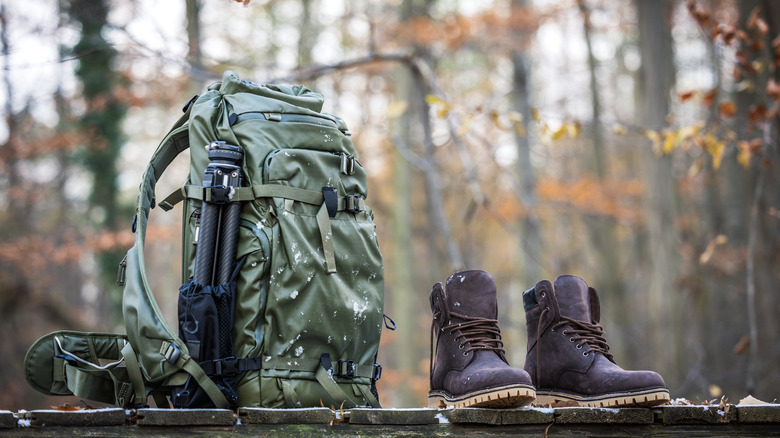
The first step to waterproofing your bag is washing your bag thoroughly and allowing it to dry. If you neglect this step of the process, grains of dirt and sand can mess up the treatment. Next, spray two coats of the waterproofing solution on the bag and allow it to dry. Allow it to fully cure according to the product's instructions before using it.
The last step is to apply the seam sealer, which is essentially a flexible adhesive, to any seams and zippers. This closes any tiny gaps in the fabric that might allow moisture in. This is a crucial step because the seams are one of the easiest places for water to get in. For full protection, you should reapply this spray every six months if you use your bag regularly in wet conditions. For extra protection, you can also purchase a waterproof pack liner, which is basically a plastic bag that goes inside your bag to keep items dry. Or you can keep your gear dry with a genius hack on the cheap by just using black trash bags.
Keep in mind that seam seals and waterproof sprays only work as an additional layer of protection on water-resistant bags, so they won't have the same impact on regular backpacks. Waterproofing your bag isn't the only important thing to remember before you embark on your outing. It's also important to invest in a good rain jacket and waterproof pants. Make sure that your tent has a rain fly and a waterproof ground cloth. Don't forget to bring waterproof boots and backup socks as well. Once you have the right equipment, you can use it on some epic multi-country hikes.