

Attract More Hummingbirds To Your Garden With A Beautiful Type Of Hydrangea
We may receive a commission on purchases made from links.
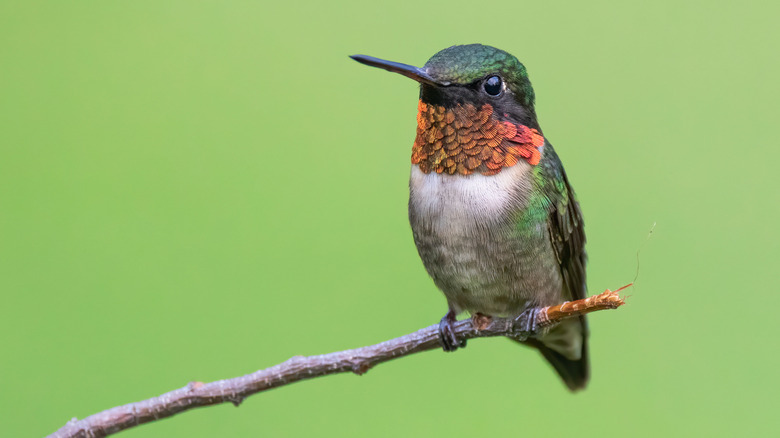
There are all sorts of stunning plants that excel at attracting hummingbirds. Many of them have red petals that capture the attention of these adorable creatures, as well as tube-shaped flowers that accommodate their long beaks. If you're not a fan of red or your garden already has enough of this color, try luring more hummingbirds with 'Invincibelle Lace,' a trademarked cultivar of smooth hydrangea (Hydrangea arborescens). It offers big, lacy blossoms that make lots of nectar for these hungry little birds. The flowers come in pink and plum hues that entice both hummers and humans.
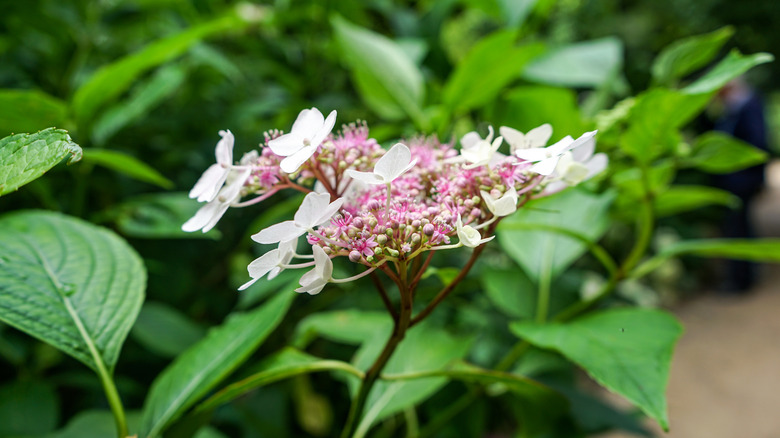
The mophead-style flowers of many bigleaf hydrangeas (Hydrangea macrophylla), which you may have spotted in neighbors' yards, resemble popcorn balls and aren't particularly appealing to hummingbirds. 'Invincibelle Lace' breaks the mold by drawing hummingbirds, bees, and butterflies and producing flowers that sport a very different look. Each one of the plant's lacecap flowers is composed of numerous tiny florets and larger florets with little jewel-like centers. The blossoms are supported by burgundy stems that are as attractive as they are sturdy. In other words, the flowers are unlikely to flop over even though they're quite large.
'Invincibelle Lace' can grow as tall as 5 feet and about as wide, and it thrives in USDA hardiness zones 3 through 8. Since it's native to North America, it's especially appealing to indigenous pollinators such as the ruby-throated hummingbird. Plus, native hydrangeas support native insect populations that are an important part of local hummingbirds' diets.
Caring for 'Invincibelle Lace' hydrangeas
In general, 'Invincibelle Lace' hydrangeas are fuss-free plants that are ideal for gardening beginners. That said, catering to their preferences can help them be as healthy and blossom-filled as possible. After all, the more flowers these hydrangeas produce, the more hummingbirds they're likely to bring to your yard.
Whether you're planting 'Invincibelle Lace' in a landscaped border, patio pots, or a cottage garden, give it at least six hours of direct daily sunlight to promote optimal flowering and vigorous stem growth. Ample sunshine also encourages the petals to take on the most vibrant shades of pink. If full sun isn't feasible, the plant should do fine with four to six hours of natural light. Just don't expect it to be quite as showy. Live somewhere with especially hot summer temperatures? Place 'Invincibelle Lace' in a location that receives some afternoon shade.
Since 'Invincible Lace' flowers appear on new growth in the summer, be sure to prune the plant in the spring. This prompts fresh stems to form and minimizes old growth that won't support blossoms. If possible, fertilize your hydrangeas with a nutrient booster for roses — BioAdvanced all-in-one rose and flower care fertilizer granules, for example — just after winter departs but before new stems begin to appear. Also avoid over-hydration and other common garden-watering mistakes, which can compromise your hydrangeas' health. 'Invincible Lace' needs soil with good drainage and likes its planting site to be damp but not soggy.