

The Surprising State With The Highest Rate Of Snakebites In The US
We may receive a commission on purchases made from links.
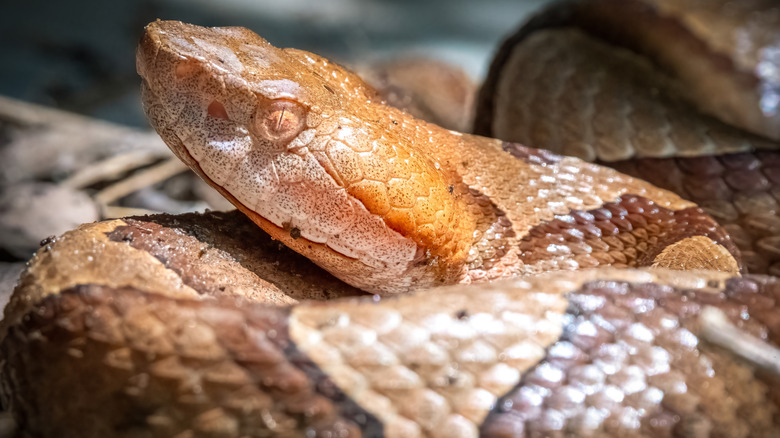
When most people think of snake-infested areas in the U.S., they typically think of spots like the swamps of the deep South, the deserts of the American Southwest, or the Florida Everglades. However, it is actually North Carolina that has the highest rate of snakebites per capita – by a substantial margin. Recent years have only seen those number rise even higher. This is most often attributed to the exceedingly high population of venomous copperhead snakes, which are commonly found in areas inhabited by people. But, the state is actually home to 3 dozen species of snakes, including 6 of the venomous variety. That coupled with the fact outdoor recreation is a major part of life in North Carolina means there are ample opportunities for snakebites to occur.
Besides copperheads, you'll find water moccasins (cottonmouths), coral snakes, and three varieties of rattlesnake — eastern diamondback, pygmy, and timber — on the list of venomous residents. But, despite the fact North Carolina is home to a half-dozen types of dangerous types of snakes, it is the copperhead that accounts for almost all of the venomous snake bites in the state. Many of those bites come during late summer and fall, when hordes of newly hatched copperheads begin fanning out across the area. This means those spending time outdoors in North Carolina face the potential for a snakebite occurring almost year-round.
Pay close attention to your surroundings to stay safe

Before heading on an outdoor adventure in North Carolina, it is important to know what to do if you run into a rattlesnake or other venomous snake along the way. The absolute best way to not get bitten is to avoid snakes altogether. While you can't guarantee that happening, staying on marked trails, looking where you step or place your hands, and paying close attention before picking up fallen limbs or sticks can go a long way in helping you steer clear of serpents. You can also gain some piece of mind by wearing protective clothing such as ForEverlast snake guard leggings, particularly when traipsing through tall grass or brush.
Should you see a snake, your best bet is to give it plenty of space. Don't worry about trying to determine determine whether a snake is venomous or not. It is best to treat all snakes as if they have the potential to inflict harm. Do not try to move the snake or handle it in any way, even if you believe it to be non-venomous. Attempting to handle snakes leads to more snakebites than any other human activity and is 100% avoidable. If the snake is laying on the trail, back away and observe from a distance. If it won't take off, it's best to turn back or circle around, if possible.
If you are bitten by a venomous snake, don't panic. Instead, stay calm, clean the wound, elevate the bite area above heart level, and seek medical attention immediately. Just as important as what you do is what you don't do. Don't use a tourniquet, cut open the wound, attempt to suck venom from the bite, apply ice, or attempt to kill the offending snake (it could still bite).