

If You Want To Attract Pollinators To Your Shade Garden, Don't Overlook This Stunning Hybrid
We may receive a commission on purchases made from links.
A garden filled with beautiful plants and flowers is a surefire way to attract a lot of pollinators, especially if you plant the right kinds. Whether you want to make all the bees come buzzing to your garden or sit back and watch hummingbirds compete for blooms on any of these 13 plants that hummingbirds love, there are a number of plant types you can utilize that pollinators will love.
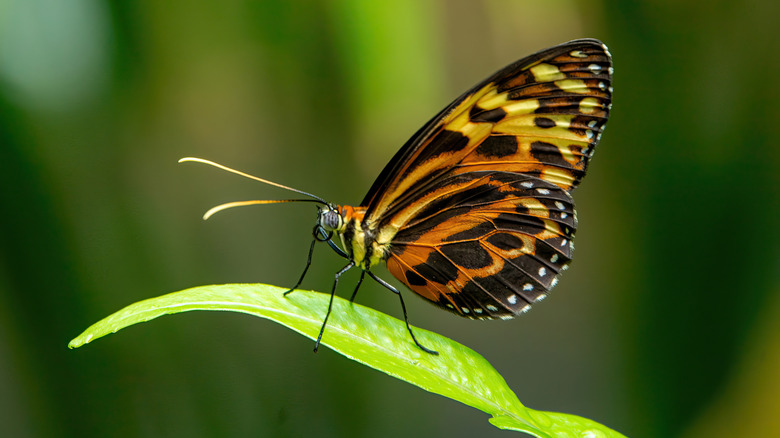
One pretty flower you don't want to overlook is called foamy bells (Heucherella). This stunning plant is a hybrid cross of Heuchera (coral bells) and Tiarella (foam flowers) that produces bright-colored leaves and tiny white or pink flowers that draw butterflies and hummingbirds like magnets. Foamy bells is ideal for shadier gardens and looks great along borders and pathways, and in rock gardens, too.
The best time to plant foamy bells is in the late spring or early summer, so the plant has time to establish its roots. When moving foamy bells from a pot to the ground, dig a hole in well-draining soil that is about twice the size of the pot and roughly the same depth. Space the plants 16 to 20 inches apart. Gently fill the hole with soil and lightly press it down around the base. Then, water deeply and slowly so the roots have a chance to get a good drink.
How to grow and care for foamy bells
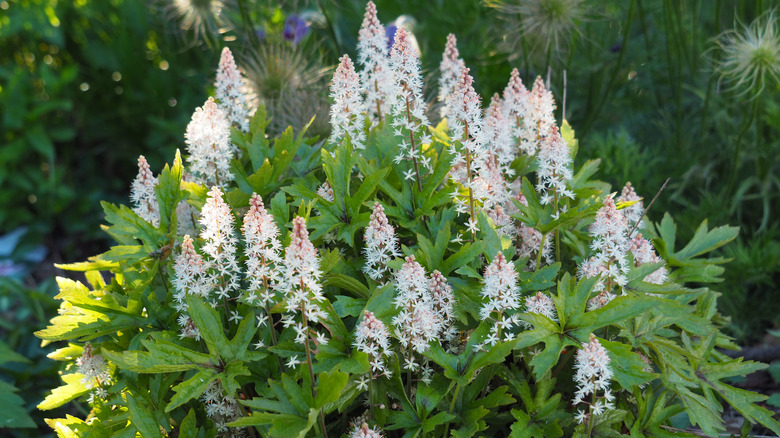
Growing foamy bells is relatively easy, making it a nice choice for inexperienced gardeners. It's a hardy plant that doesn't require specialized care. The best place to plant it in warmer climates is in an area that gets morning sun and afternoon shade to protect it from the worst of the day's heat. Be sure to check your local plant hardiness zone — if it's between Zone 4 and Zone 9, foamy bells will likely thrive in your garden. This attractive little plant does well when planted in small groups, and due to its small size, it makes a good choice for containers and window boxes, too.
As far as soil is concerned, you will want to choose a loamy soil that is well-draining. Water the plant consistently without overdoing it, and try to ensure that the soil has a pH level between 6.0 and 8.0. To prevent the soil from drying out too quickly, add a 2-inch layer of shredded bark around the base of each plant. This will help it retain moisture.
If you use a suitable soil while planting your foamy bells, you won't need to worry too much about fertilizer. However, you may want to apply a granular, slow-release formula like this Osmocote Smart-Release Plant Food Plus. But you can also spread high-quality compost around the plant in spring when new growth is emerging. Pruning the plant is simple: Just remove any spent stalks in early summer. This will encourage the plant to put out another round of blooms. In the early spring, be sure to remove all the dead leaves so the plant has plenty of room for all its new growth.