

Your Potato Plants Will Thrive With The Help Of A Delicious Herb
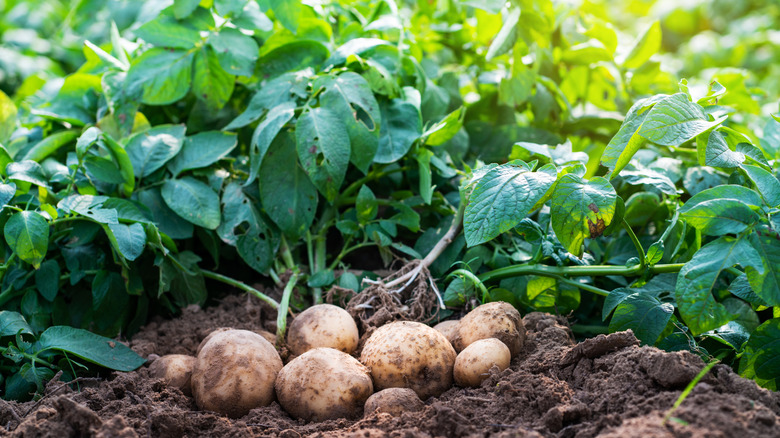
Potatoes may seem like just another basic garden crop, but they're actually the third most important food crop in the entire world, next to wheat and rice, with more than a billion people eating them each year. Potatoes taste great and can be fixed in a huge variety of ways, like this delicious side dish for a campsite dinner. With so much variety available, it's no wonder they are a common vegetable added to most gardens. Potatoes are very easy to grow, making them an excellent choice for budding gardeners. If you want to grow a great crop of spuds, there are vegetables you shouldn't plant with potatoes, like asparagus, but there's one tasty herb you can plant alongside these tubers that'll be a huge help: chives.
Chives are a popular herb belonging to the onion family and are related to garlic, scallions, leeks, and onions. They are used in a variety of cooked dishes. In fact, chopped chives are delicious on baked potatoes with butter and sour cream, so it makes sense that these two plants would complement each other in the ground, too. Chives are one of the easiest herbs to grow, making them a fuss-free plant perfect for beginners, and they do well in the ground or containers. These fast-growing plants can be started from seeds indoors and then transferred outdoors when the temperatures reach at least 65 degrees Fahrenheit. They do best in full sun and make great companions to a variety of fruits, vegetables, and herbs in addition to potatoes.
How to plant and care for your potatoes and chives
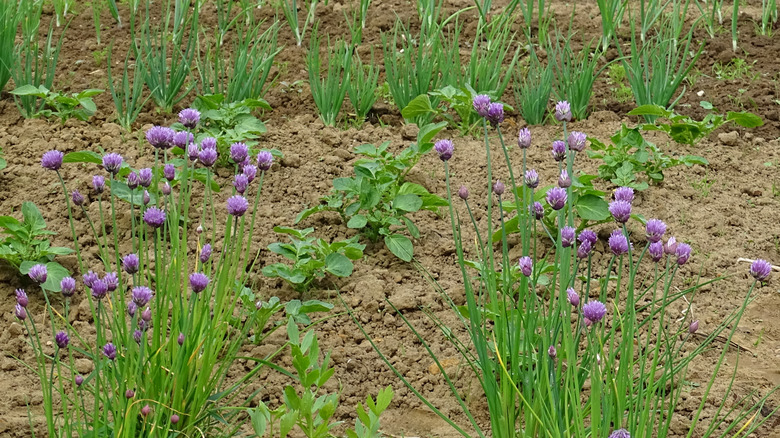
Chives are the perfect companion plant for potatoes for many reasons. One of the biggest ways that chives help is by repelling aphids, Japanese beetles, and mites, insects that can cause problems for the potato plants, especially aphids, which spread diseases. Their repellent properties reduce the need for chemical pesticides in your garden to get rid of pests. They are deer-resistant and even deter rabbits with their strong scent. Another way they help potatoes is by attracting pollinators with their purple blooms, which in turn can produce a better seed yield for the potatoes.
Chives can be planted next to potato plants, as their shallow roots don't pose any competition with the deep-reaching roots of potatoes. This means that neither plant competes with the other for nutrients from the soil or water. Chives add nutrients to the soil when their leaves decompose, which enriches the soil that surrounds the potato plants. Some gardeners chop up chives and spread them around their plants as a fertilizer. Potatoes and chives do best with a well-draining loamy soil with plenty of healthy compost mixed in. They both thrive in full sun, getting at least 6 to 8 hours of sunlight every day. Watering needs are similar for both chives and potatoes, so taking care of them is easy and can result in great yields from both.