

Hummingbirds Are Absolutely Obsessed With This Tall And Spiky Flower
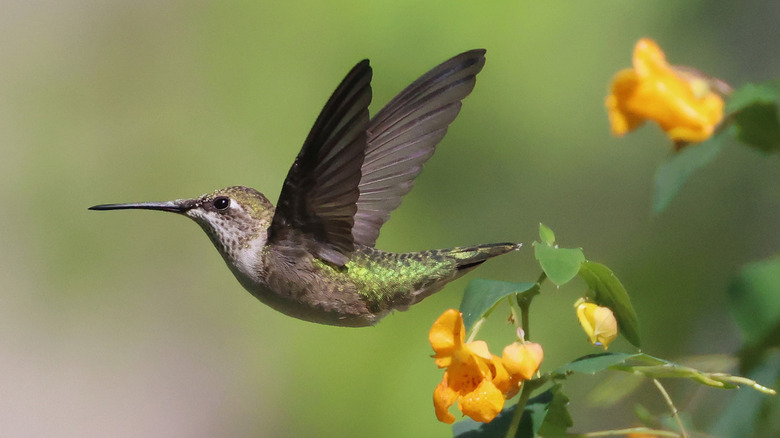
Hummingbirds are one of the most popular birds among birdwatchers. With their entertaining personalities and habits, they provide a lot of activity to enjoy. So, if you want to create a garden that will attract even more of these charming little fliers, there are many ways to do that.
For example, you can start by making sure that hummingbirds always have a source of clean, fresh water for them to stay cool and hydrated. Additionally, there's also the option of planting a variety of stunning plants that will attract hummingbirds to your garden. One colorful flower that hummingbirds are obsessed with is lupines. Also referred to as lupin or bluebonnets, this hummingbird favorite features palm-shaped leaves and tall, spiky flowers similar to pea flowers.
Lupines are available in a variety of colors, including pink, purple, red, blue, and yellow. That said, blue lupines are the most common variety in North America. They typically bloom in the late spring, starting in April, and continue to do so through June. However, this will depend on the climate, as they do better in cooler temperatures. The life span of these flowers runs between two and five years. Although they are deer-resistant, lupines also attract all your favorite pollinators — including butterflies, bees, and the much-loved hummingbird. Best of all, they're very easy to take care of, and they make a great plant for newbie gardeners alongside most other fuss-free plants that are great for beginners.
How to grow and care for lupines
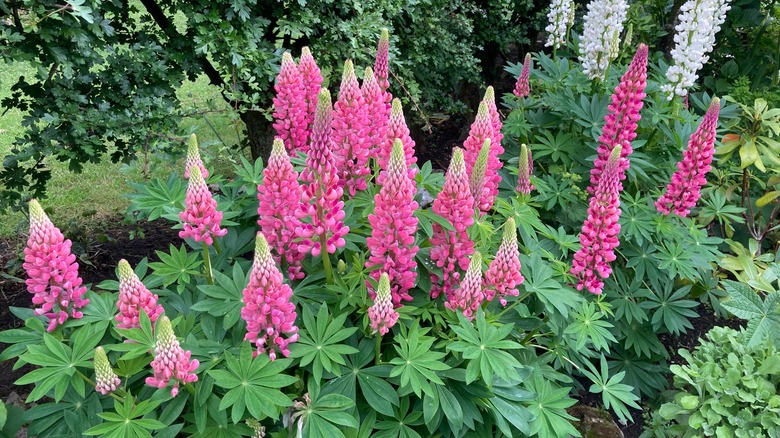
Lupines provide many benefits to the garden in addition to attracting many pollinators. For starters, they are part of the legume family, and do a great job fixing nitrogen levels in the soil and increasing its fertility. In terms of placement, the best spot to plant this low-maintenance plant is where it can get full sun. Although some can grow in partial shade, you will notice fewer flowers on your plants in shadier areas. However, the most important thing you need to keep in mind is to use soil that drains well. Lupines don't do well with overwatered soil, and prefer soil that is more acidic than alkaline. They also thrive in soil that's on the sandier side, which won't impede root growth.
For a few months after you first plant your lupines, you will want to water the plants on a regular basis as they get established. If you have planted them in containers, you will need to check the water frequently — especially in hot temperatures — and water as needed. If you have a type of lupine that has grown taller, you may find that staking or supporting the stalks can prevent breakage.
Once the flowers have faded, it's time to prune. To do so, cut back the plant to the ground, which will encourage them to produce another round of flowers. Once fall comes, cut all growth back to the ground to prepare for the next season. You will be able to tell it's time to cut them back when the foliage turns yellow.