

This Underrated Shade-Loving Perennial Is Deer-Resistant And Made For Moist Gardens
A shady garden can be an oasis that provides a wonderful place to relax and enjoy the outdoors even when it's hot outside. While there are many ways to keep cool in the summer while still enjoying your backyard – like wearing sunglasses and neck coolers — you can also trying growing trees, flowers, and other plants that grow beautifully in shady areas where you can stay out of the sun. There is no reason to let shade stop you from having the dream garden you have always wanted full of creativity and style. One underrated perennial that is ideal for your shady, moist garden is the leopard plant (Farfugium japonicum).
If you're looking for the perfect deer-resistant flowers in your yard, consider the unique-looking leopard plant. The shape of its large, glossy leaves is why it's also called the "tractor seat plant," since they look just like the seat of an old tractor. The small, bright yellow flowers that bloom are a great contrast to the deep green leaves and add a burst of color that brightens any garden. And best of all, deer tend to avoid munching on this herbaceous perennial.
This amazing plant typically blooms in mid-summer to late summer when a lot of other flowers have finished blooming for the season, and typically prefers U.S. Hardiness Zones 7 through 10. In warmer winter areas, the leaves will stay green all winter long — but in temperatures lower than 20 degrees, it will die to the ground and then come back the following spring. If you've got boggy areas in your yard, know that the leopard plant is tolerant of wet soil.
Planting and caring for your leopard plant
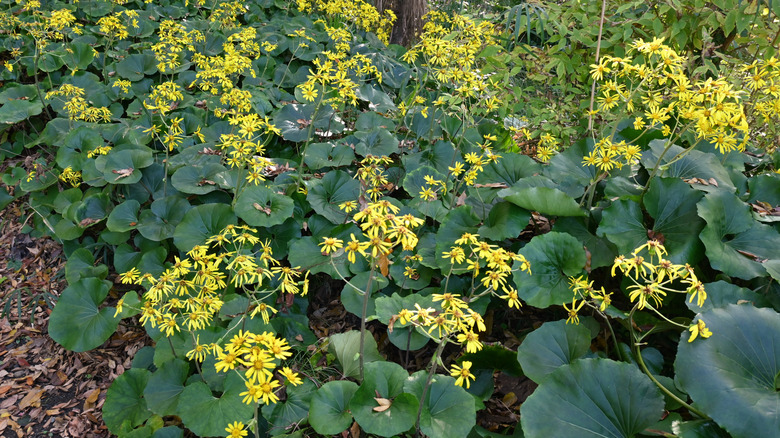
Planting and taking care of your leopard plant is not complicated at all making it a great choice for newbie and experienced gardeners alike. It grows well in damper areas and prefers well-draining soil that stays moist. Many gardeners grow leopard plant next to ponds and water areas of their garden because of the plant's preference for moist soil. It handles a range of soil pH levels and does best in organic-rich soil. Leopard plant is perfect for your shade garden because it thrives in shadowy areas — even full shade. Too much sun can cause the leaves to scorch and wither, but dappled or filtered sun is fine.
Leopard plants don't typically have many problems with diseases or pests, and are particularly resistant to deer. However, snails and slugs that can eat holes in the leaves and root rot can develop if the soil stays completely waterlogged without draining. Avoid overwatering and regularly inspect the plants' leaves for signs of pests. You can use a simple newspaper hack to keep pests out of your garden, such as slugs and sails.
To maintain your leopard plants, regular mulching can help with weeds and a balanced slow-release fertilizer applied in the spring can encourage flower growth. If you trim or deadhead any spent flowers, you may end up with a second bloom season — which will be great for the bees, butterflies, and other pollinators that will be attracted to the pretty yellow flowers.