

The Highly Poisonous Weed You'll Want To Keep Out Of Your Yard
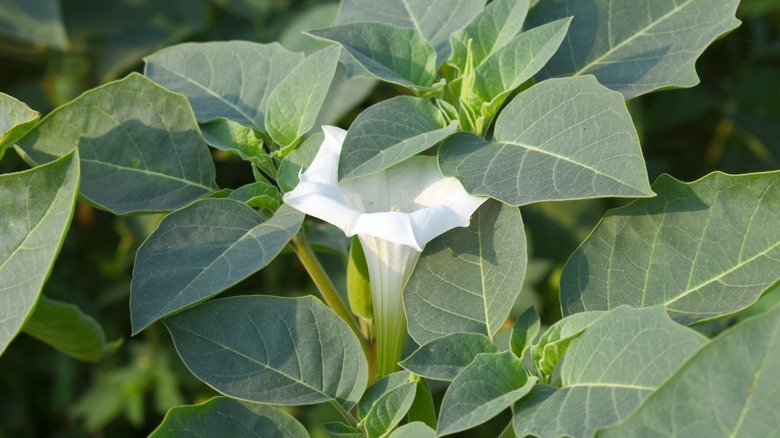
There are plenty of plants that could be growing in your yard that you might not know are deadly. If you haven't heard of jimsonweed, you may have heard of one or more of its other names: Datura stramonium (also referred to as "datura"), moonflower, and thornapple. A nightshade plant related to tomatoes, potatoes, and peppers, jimsonweed (and all of these plants) contain the alkaloid solanine — a compound that can lead to an upset stomach in some people, even in the smaller amounts found in edible nightshade fruits and vegetables.
Beyond solanine, jimsonweed also contains tropane alkaloids, which make it a hallucinogen with other psychoactive effects. Ingesting parts of this plant can lead to an overdose that may kill the person — which is precisely why you want to keep it out of your yard. Along with that, nightshade plants can also prove deadly to raspberry bushes you might have planted in your garden.
The first step to getting rid of jimsonweed is being able to spot it. These plants tend to grow in places that get little attention — think along ditches, in pastures, in wooded areas, and in all of those neglected places you probably don't mow regularly. An annual that blooms in the summer, jimsonweed produces distinctive white, spade-shaped leaves that smell like rot when crushed when it's young. As it matures into adulthood, the veiny leaves begin to grow spiked edges.
How to safely remove jimsonweed from your yard
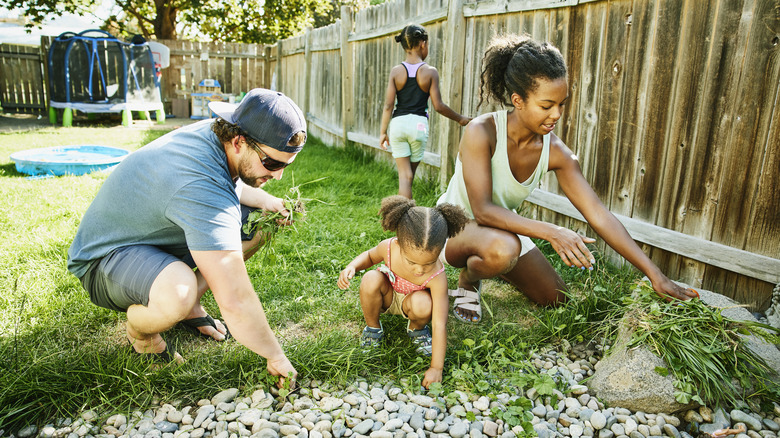
Thankfully, jimsonweed is easy to eradicate. While it spreads by seed, it has a shallow root system, which makes it easy to uproot and discard by hand. Although you don't have to worry about any major side effects from skin contact with this plant, you should still wear gloves during removal for safety, as a rash might occur. You'll also want to avoid touching your eyes or mouth while handling the plant, as the toxins can be absorbed through mucus membranes. Even if you do not directly touch jimsonweed while removing it, you should still make sure to wash your hands once you're done pulling out all the weeds.
Make sure to dispose of the plant in the trash rather than tossing it aside. Otherwise, you might risk accidental ingestion and even allow the seeds to spread once again. As for maintenance, using effective mowing techniques to control pesky weeds can also help you prevent jimsonweed from sprouting again.
If you don't want to pull out jimsonweed by hand, some experts recommend using a broadleaf herbicide to deal with the issue. However, because herbicides can have adverse effects on beneficial bugs, it's always better to weed by hand when and where you can.