

Beware Of Great White Sharks When Visiting A Popular East Coast Destination
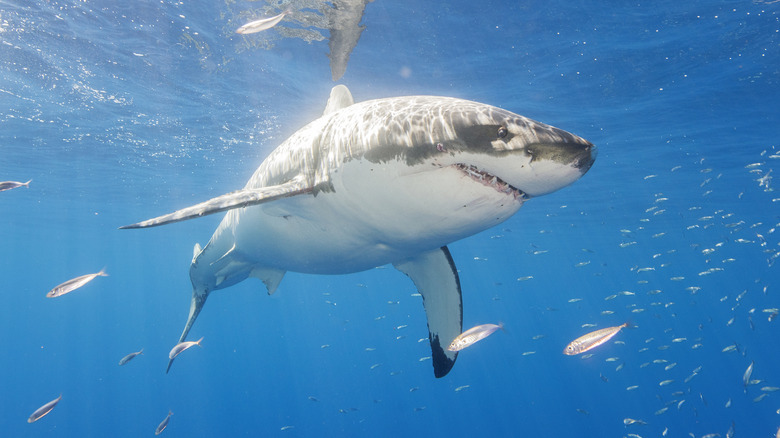
Some people dream of swimming in the ocean. Unfortunately, there are a lot of nightmares living within the sea — the great white shark being one of them. Even if the shark in "Jaws" was mechanical, the real thing can be nearly as frightening if you don't know what to expect. If you are visiting Massachusetts, and Cape Cod is a spot on your U.S. road trip bucket list, this is one place to be wary of great whites. In fact, the bulk of great white sightings along the Massachusetts coast are now usually near Cape Cod, especially during the summer. Don't let that keep you from visiting this gorgeous coastal area, though. There are multiple beaches, beautiful coastlines, and chances to enjoy the water in boats and kayaks.
When it comes to the risks of a shark attack, you'll rarely have any issues with great whites. Even if you're scuba diving, you're relatively safe, as long as you know what you're doing when a shark comes around and you know scuba diving safety tips. The main reason great whites love this area is the presence of gray seals, which they enjoy eating. In fact, one reason there are more Cap Cod shark sightings in recent years is because the seal population has increased. Let's take a look at the statistics and what you can do to help ensure your safety if you're swimming around Cape Cod.
What to know about great white sharks in Cape Cod
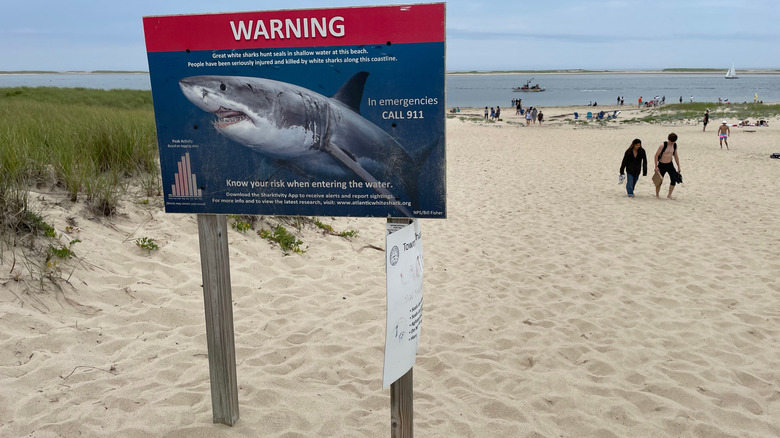
Great white shark attacks are so rare in Cape Cod that the last ones happened back in 2018. Unfortunately, one of those attacks was fatal (which was the first locally in 80 years). Drowning is a greater risk factor than shark attacks when swimming in Cape Cod. More people are bitten by jellyfish there than by sharks. The main thing to remember is that the sharks are looking for seals, not humans. Attacks most often happen when a person is confused as a seal — which seems strange, but if you're swimming near seals or in a place where fish are bountiful, the shark could think you're its prey.
That being said, that's the source of the top two tips for avoiding a shark attack — don't swim in fishing areas and stay away from the seals when you're in the water. Great white sharks are known to hunt in 15 feet or less of water (and Cape Cod's shark population spends half its time in shallow waters), so they're likely to be in areas swimmers frequent. While you can survive a shark attack, it's better to reduce your risk of bumping into one in the first place. Stay in very shallow water where your feet can touch the ground. Avoid a lot of splashing and try and do all in-water activities in groups. It's also useful to avoid areas that are murky and hard to see in. Also, take note of what you're wearing: Some wetsuits may make you resemble a seal, so choose ones with patterns or bright colors. If you follow the guides offered in the area on shark safety and listen to the lifeguards, you should be fine.