

How To Keep Hydrangeas From Drooping After Heavy Rain
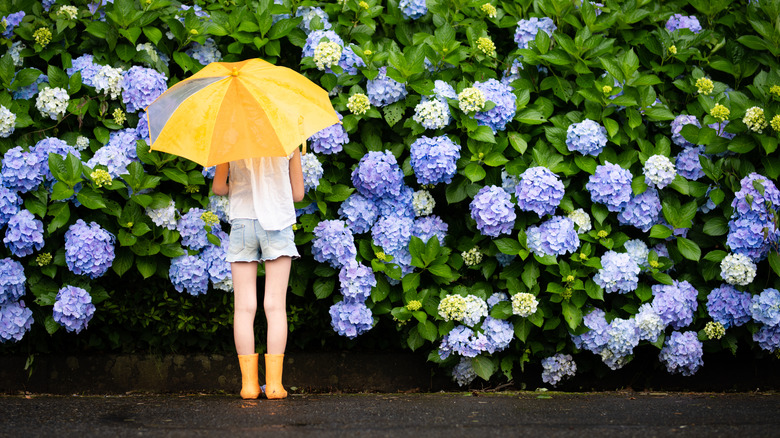
Why do so many people plant hydrangeas in their home landscapes? Big blooms. Yep, you like big blooms, and you cannot lie — and hydrangeas certainly deliver. In fact, hydrangea blooms can range from 3 to 12 inches in diameter, depending on the specific variety. With names like 'Big Daddy' and 'Incrediball,' you know these are some powerhouse blooms. What's more, these flowers have lasting power, giving you color from late spring through fall. So, it can be a bummer when your hydrangea blooms droop to the ground after a big rainstorm. But there could be a surprising fix: skipping spring pruning might provide extra support to those lovely flowers.
So, what's making your once-perky hydrangeas droop? Sometimes it's just their own bold blooms weighing them down, especially on top-heavy varieties. But floppy stems can also signal deeper issues like poor drainage, weak plant structure, declining health, or even too much humidity in the air. Those downward-facing flowers aren't giving up. With the right support and maybe even using alum powder to keep your hydrangea flourishing, you can help your hydrangeas stand tall again and bring their signature charm back to eye level.
How to keep hydrangeas standing tall even after a downpour
When top-heavy flowers meet saturated stems, it's a recipe for flopping. One of the best ways to prevent drooping is by skipping spring pruning. Last year's wood acts like a built-in skeleton, supporting new growth. Last year's wood acts like a built-in skeleton, giving new green growth some much-needed support. Instead, correctly deadhead spent flowers in late winter or early spring, but leave the structural stems intact. If your hydrangeas need extra support, try decorative iron stakes, gently tying stems to nearby fences, or inserting wooden dowels into the plant for subtle reinforcement. When flower heads are exceptionally large, zip-tying a few sturdy branches together creates a central column that resists collapse. Before a storm, try weaving stems together or tucking old wood or sticks into the plant for a little interlocking structure. Your hydrangeas will thank you with less flopping and more flourishing.
If rain is in the forecast, prepping your hydrangeas ahead of time can also help them weather the storm. Focus on selectively removing weak or spindly growth that's unlikely to hold up under pressure. You can also give your plants a mid-season trim to shape them without sacrificing strength. Keeping plants properly watered and mulched helps reduce stress, making stems more resilient when the skies open up. You might also try this household staple to help your hydrangeas thrive.