

The Rare, But Once-Common Wolf Species You'll Find In North Carolina
We may receive a commission on purchases made from links.
Wildlife getaways are trending and last-chance tourism is booming, as more and more people travel to see unique and rare landscapes and species across the globe. Heading to North Carolina in an attempt to see the American red wolf is a great way to combine these two pursuits without even leaving the United States.
While it was once found in prolific numbers across its native range of the American Southeast, the American red wolf has been on the endangered species list since 1967. In fact, American red wolves are so rare they are among the most endangered species of canids on the planet and were actually declared extinct in the wild in 1980. Fortunately, extensive restocking efforts over the past several decades have reestablished this species in the wild. However, even after these restoration efforts, US Fish and Wildlife currently pegs the number of American red wolves living in the wild at less than 20. Additionally, there are over 200 individual American red wolves living in captivity at various facilities in the U.S.
Even at its zenith, the American red wolf population's natural range was contained entirely within the United States. Their territory covered a wide swath from Texas to as far north as Pennsylvania. Their numbers dwindled drastically throughout the 1900s due to habitat loss and overhunting as a way to control the species, which was viewed as a nuisance predator. By the 1970s, the final few individuals to remain living in the wild were found in Texas and Louisiana. At that point, scientists knew they needed to act in order to save the species and began trapping the remaining animals in hopes they would be able to repopulate them throughout their native range.
Where to see American red wolves in the wild
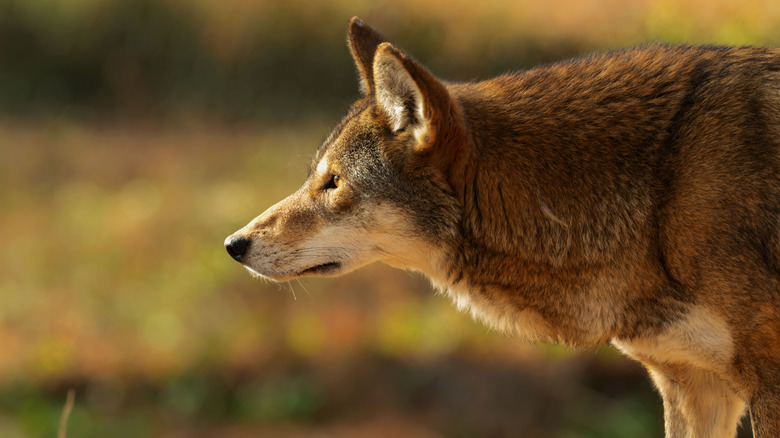
Although the initial restocking efforts were widespread throughout the native range of the American red wolf, the only population which was able to sustain itself was in North Carolina. Even at that, don't expect to see red wolves scattered throughout the Tar Heel State. Despite attempts to reintroduce red wolves to popular national parks such as the Great Smokey Mountains National Park and other locations, the only remaining wild animals are an experimental population concentrated in a small area on the Albemarle Peninsula on the far eastern side of the state.
Over the past couple of years, the vast majority of the sightings have come from Alligator River National Wildlife Refuge, where researchers have also documented a handful of litters being born. Additionally sightings have come from nearby Pocosin Lakes NWR, making these two wildlife refuges the best bet for spotting red wolves in their native habitat. In addition to red wolves, both Alligator River and Pocosin Lakes refuges support healthy populations of various species ranging from black bears to bobcats, making wildlife viewing a very popular activity at each.
Before heading out in search of red wolves, there are some wildlife watching safety tips for your next adventure you should know, even though you won't find this wolf listed among the most dangerous wolf species, primarily due to their scarcity and skittish nature. However, they are predators and pose a potential threat, especially if they are being fed by humans. Instead, maintain a safe distance using a pair of Bushnell H20 10x42mm binoculars or similar aids to get a good look from afar. Don't approach, feed, or handle a red wolf or any other wild animal you encounter. Any sighting should be reported to U.S. Fish and Wildlife.