

How To Save Money On Birdseed For Your Feeder
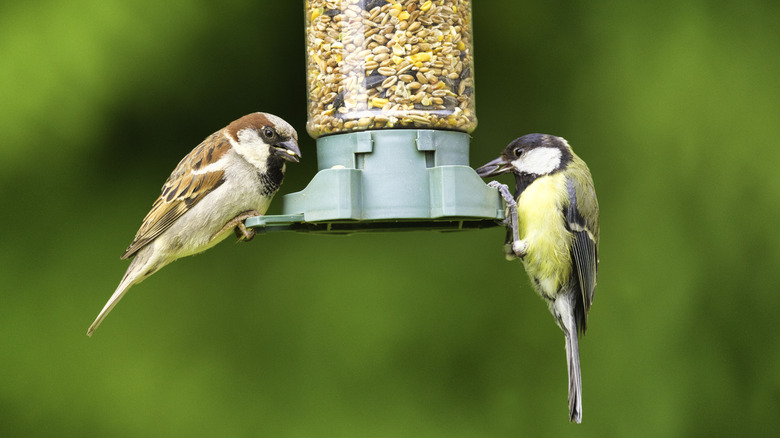
Birdwatching is a rewarding pastime, but it can quickly get expensive when your feeders are emptied time and time again! Fortunately, creating your own birdseed mix can be a simple and cost-effective solution. Unfortunately, many store-bought bird foods are packed with fillers like millet, flax, and wheat — ingredients birds often ignore. In addition, many packaged birdseeds contain a grain called red milo (also known as red sorghum), which birds often won't eat. By crafting your own blend with nutrient-rich foods like sunflower seeds, you'll save money, reduce waste, and provide your feathered friends with something they love.
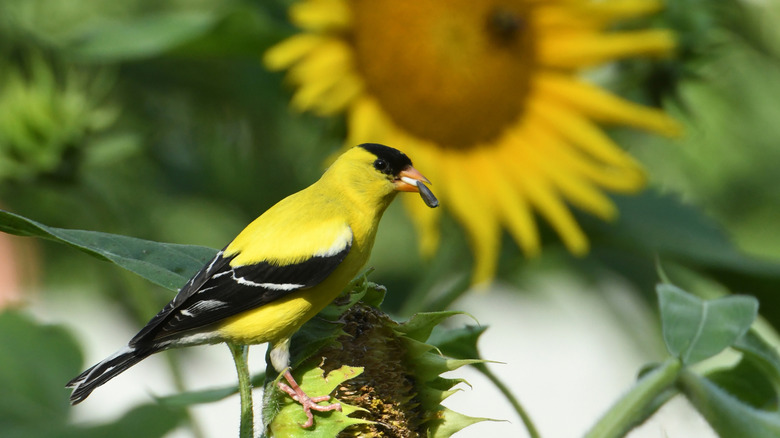
You can even grow your own bird food. Many homegrown blooms will produce seed that songbirds love. You can easily collect the seed from flowers like black-eyed Susans, coneflowers, sunflowers, and zinnias. Just deadhead the flowers when they're spent, collect the seeds, and fill you feeder with them. A big plus — by deadheading your plants, you'll encourage your flowers to bloom more — a win-win! Or, even easier: let the seeds remain in the spent blooms and hang the flowers from a string, such as from your porch or a shepherd's hook, to create a "bouquet buffet" for the birds. Another option: Let your old blooms stay on their stems so the birds can feast on the seed right in your flower patch. Doing so will attract the birds you want to your garden, like sparrows and goldfinches, which will pollinate your beautiful flowers and even reduce weeds and pests.
Attract more birds to your yard for less
If you don't have a flower garden to naturally attract birds, don't worry — you can still get seed cheaply to help you turn your yard into a bird-friendly haven. An easy way to do so it to buy seed in bulk so you can create your own custom mixes. Large bags of black-oil sunflower and safflower seeds are favorites among many songbirds and can often be found at feed stores or garden centers at reasonable prices. Just be sure to store your seed carefully, such as in airtight metal tins or heavy-duty plastic containers, to protect it from unwanted foragers like mice — especially if you plan to keep your seed in a garage or shed. The safest storage spot is indoors — such as in a pantry or closet where temperature and moisture levels will be more stable.
To attract more songbirds to your yard without overspending, rotate the types of seed you offer based on what's in season or on sale. You can also hang multiple feeders with different seed blends to attract a wider variety — without wasting expensive seed that only some birds enjoy. Blue jays, for example, love black-oil sunflower seeds, safflower will lure in cardinals and red-bellied woodpeckers, and juncos will forage for millet scattered on the ground. Need help determining which birds will be in your area and what they like to eat? The free Audubon Bird Guide app is a fantastic resource for identifying local species and tailoring your offerings to keep your backyard lively and full of birdsong to enjoy year-round.