

A Simple Lawn Watering Technique That'll Help Control Weeds

We may receive a commission on purchases made from links.
Across the country, weeds are the bane of those who love a lush, green lawn. Many lawn care DIYers spend countless hours and dollars trying to prevent weeds from popping up in their yard and eliminating them when they inevitably do. While there is a wide array of chemical herbicides on the market, they each come with potential pitfalls, such as altering the soil composition and posing potential health risks to people and pets. However, watering your yard — something you likely already do to ensure you have a healthy lawn — is one safe way you can control weeds. The key is, you have to do it properly.
While many may be familiar with using the one-third rule as a mowing technique to control pesky weeds, they may not realize that how they water their lawn can alleviate or add to their weed problems. However, this does not necessarily mean water more. In a somewhat ironic twist, watering too much can result in more weeds. Likewise, so can watering too little. So, watering your lawn is somewhat of a Goldilocks situation: It needs to be just right.
The just right amount varies depending on the type of grass you have in your yard. However, most often, lawn care experts recommend your lawn get 1 to 1½ inches of water each week. Keep in mind this can be via rainfall or watering/irrigating. To make sure you are hitting the sweet spot, it is a good idea to create a watering schedule. You should also take into account any rainfall, adjusting your watering efforts accordingly each week.
Proper watering can help control weeds in your yard
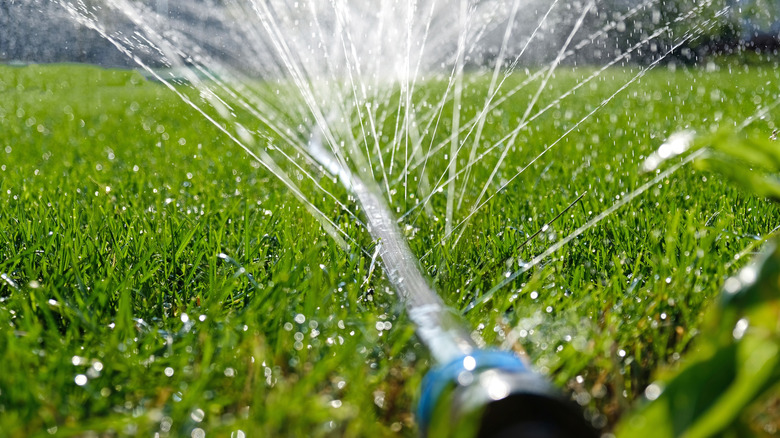
When it comes to watering as a means of controlling weeds in your yard, you are essentially attempting to give you grass the advantage and a way to outperform pesky weeds. That's where the just-right aspect comes into play. Overwatering your lawn basically makes your grass lazy, allowing it to establish a shallow root system that allows weeds to muscle their way in. Conversely, if you don't water your lawn enough, your grass will be weak and dehydrated, opening the door for a variety of weeds that thrive with less moisture.
An underground drip irrigation system is often considered the best method for delivering the right amount of water to your yard on a consistent basis. This is because the subterranean system makes for little evaporation and delivers water directly to the roots. However, you can accomplish the same end result with either a traditional garden sprinkler or sprinkler system.
Regardless of delivery method, experts agree the total amount of water should be delivered in one or two watering sessions, as the less frequent, deeper watering encourage strong, deep root structure. Deeper watering is better and why it's best to think twice before watering your lawn every day.
If you are using a sprinkler system, it is important to water at the best time of day (usually early mornings) to reduce evaporation and allow more water to be delivered into the ground. You also need to determine your sprinkler's output so you know how long to water your lawn. Utilizing the timer on your sprinkler system can help ensure you hit the mark each time. If you are using a hose-end sprinkler, incorporating a RainPoint programmable sprinkler timer can allow you to do the same thing.