

Try Martha Stewart's Transplanting Method For Thriving Hydrangeas

Hydrangeas are a favorite shrub in landscape design for good reason. Their big, globe-like blooms in soft shades of blue, pink, white, and purple turn heads and brighten up borders. Meanwhile, their deep green foliage adds reliable structure to your garden beds, especially when partnered with a must-plant ground cover. They support pollinators, offer stems perfect for cut or dried arrangements, and are low-maintenance once established. It's no surprise that more than 10 million hydrangeas are sold each year in the U.S., accounting for $91.2 million in sales and making them the second most popular deciduous shrub in the country. But for all their popularity, hydrangeas still need proper planting to reach their full potential. And Martha Stewart has a transplanting tip that just might change the way you plant these garden stars.
Stewart's gardening credentials go well beyond her public persona. Her personal estate is a living portfolio of what's possible when skill meets scale. She tends acres of carefully designed gardens brimming with flowering shrubs. That kind of hands-in-the-dirt credibility makes her advice worth listening to. She relies on root teasing before planting her hydrangeas to encourage better growth. It's a small but mighty move, and a smart one to borrow from a gardener who's been around the bloom-filled block a few times.
How to tease hydrangea roots before planting
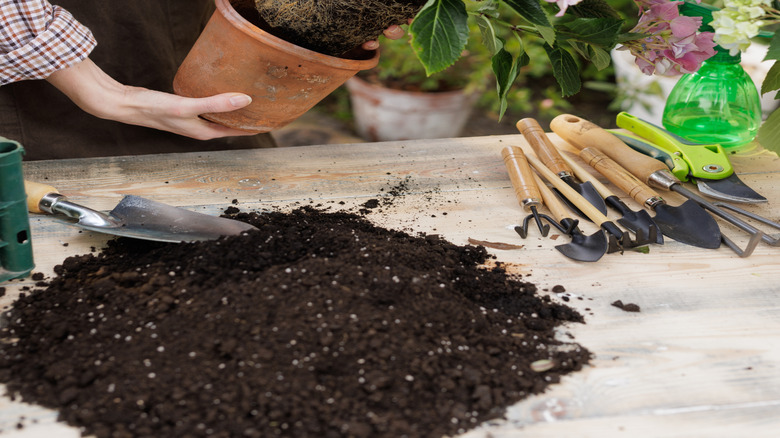
Root teasing sounds a bit dramatic, but it's really just a smart gardening move. Also called root scoring or root pruning, this technique encourages new growth. It works by breaking up dense or circling roots that form when a plant stays too long in its nursery pot. When you remove a hydrangea from its container, take a moment to inspect the root ball. If the roots are coiled or matted, gently tease them apart with your fingers or a blunt tool like a chopstick. This loosening encourages the roots to grow outward instead of continuing in a constricted circle, which means better access to soil nutrients and faster establishment in your garden.
If the root ball is especially tight, you may need to go a step further. Using a clean, sharp knife or pruning shears, make a few shallow vertical cuts about ½ inch deep around the sides and bottom of the root mass. This root scoring triggers the plant to produce fresh roots from those cut points. You can also trim away any damaged or excessively long roots while you're at it. For a final prep step, consider soaking the root ball in water for 15 to 30 minutes to fully rehydrate it before planting in an optimal spot in your garden. Once the plant is in the ground at the correct depth, water deeply and mulch around the base to retain moisture. You should water your hydrangeas often (about three times a week) for optimal growth. A little root prep at the beginning can lead to lush, thriving hydrangeas down the road, and that's an outcome Martha Stewart would approve of.