

A Must-Try Trick For Removing Moss From Your Driveways And Bricks
We may receive a commission on purchases made from links.
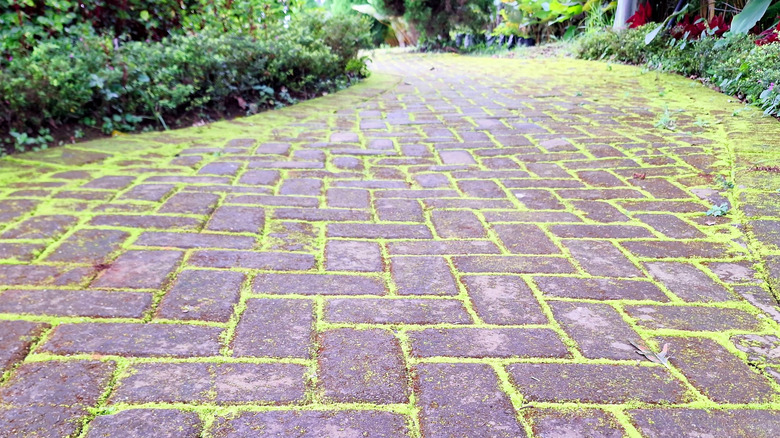
If you live in a humid area of the country, odds are you end up dealing with moss growing on bricks, sidewalks, and driveways. This is especially true if those surfaces are in places that receive little or no direct sunlight during the day. Combating moss in these areas can seem like a never-ending battle. However, you can utilize a common household staple to help you get the upper hand in the battle against moss. Spraying surfaces with vinegar is a must-try trick for removing moss from your driveways and bricks.
Beyond just changing the aesthetics of your home and yard, moss poses a variety of dangers to both you and your property. For one, it can make the surfaces quite slippery, making it hazardous to walk on sidewalks, yard stones, patios, or driveways on which it grows. Over time, it can also damage your brick. It does this over time by trapping moisture, which compromises the structural integrity of the brick. Additionally, it can cause stains and discoloration on our brick surfaces.
To prevent these issues and reclaim your brick structures from a mossy invasion, vinegar is a powerful ally. Not only is it great for treating moss, but it is just one of many uses for vinegar in your lawn and garden. Among other things, vinegar keeps pests out of yards and can be used as a natural weed killer. By using vinegar to clean moss from your bricks and driveway, you are likely to enjoy some other ancillary benefits as well.
How to use vinegar to get rid of moss
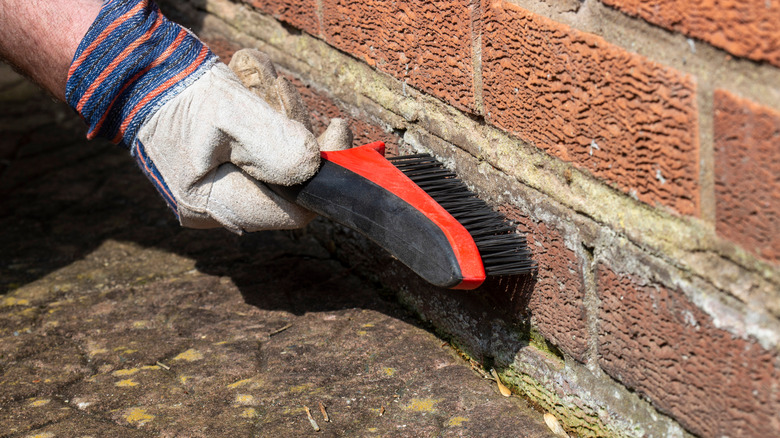
The first step to using vinegar to get rid of moss on your bricks and driveway is to gather up the supplies you'll need. These include a spray bottle or pump sprayer, water, garden hose, scrub brush, and, of course, vinegar. Vinegar, such as Iberia All Natural Distilled 5% White Vinegar, is recommended, as stronger solutions of vinegar may end up altering the soil chemistry too drastically. That said, for relatively minor moss outbreaks, you can still dilute the vinegar with water using a ratio of one part vinegar to two parts water.
Once you have your supplies, fill your sprayer with your vinegar and water solution. Then, spray the moss and wait at least 30 minutes for the vinegar to kill the moss. At that point, you can scrub away the dead moss with a brush and rinse the area with a garden hose. If you happen to have a power washer, you can utilize that instead.
While this method typically works well, particularly bad moss growths may need to be treated multiple times before all the moss is removed. Additionally, if the conditions in these areas remain conducive for moss growth, such as shady and humid, the moss will return at some point. It's a good idea to get in the habit of doing a vinegar treatment once or twice a year before any emerging moss growth gets out of hand. While you're at it, you can also clean your outdoor furniture with vinegar using the same methods to prevent moss, mold, and mildew, to keep everything looking its best.