

The Kitchen Staple That'll Help Keep Pigeons Out Of Your Yard
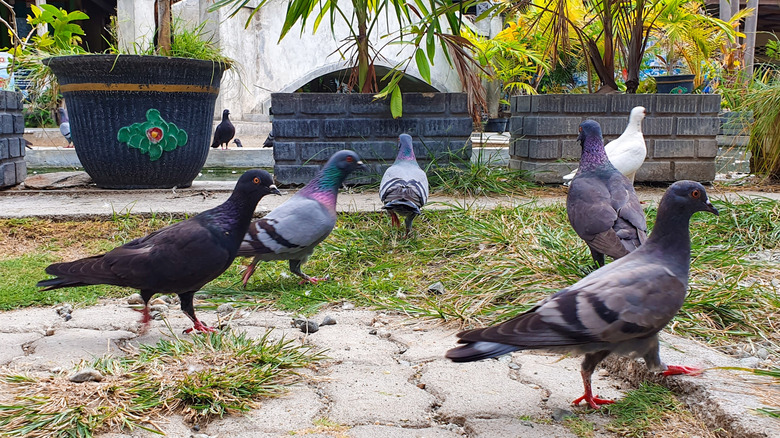
There are several territorial birds you don't want visiting your feeders, particularly blue jays and house sparrows. Though these species generally aren't a problem in the wild, they drive other birds away with their aggressive behavior. Then there are birds that shouldn't visit your property at all. These are creatures that make huge messes and spread disease. European starlings are a common nuisance, but don't overlook pigeon problems. You may not want pigeons in your yard because they carry other pests such as fleas and ticks. Pigeons and their droppings can also harbor E. coli and Listeria bacteria, as well as the pathogens that cause serious illnesses in humans, specifically cryptococcosis, histoplasmosis, and psittacosis. Plus, pigeon poo is smelly and corrosive. Preventing it is much better than cleaning it up. Pigeon nests can wreak havoc on your property, too, jamming up gutters and creating fire hazards in chimneys. To keep these problems from appearing in your yard, invest in a bottle of vinegar.
Pigeons are typically drawn to environments where food is plentiful, and they're not very fussy about what they eat. While the smell of food may bring them into your yard, the smell of fermentation may drive them away. Pigeons seem to dislike vinegar's scent because it's quite potent. This is probably why they steer clear of peppermint oil and garlic, too. Whether you mix vinegar with these ingredients or use it on its own, repeated applications may be necessary to remind pigeons that they're not welcome on your property.
Using vinegar to deter pigeons
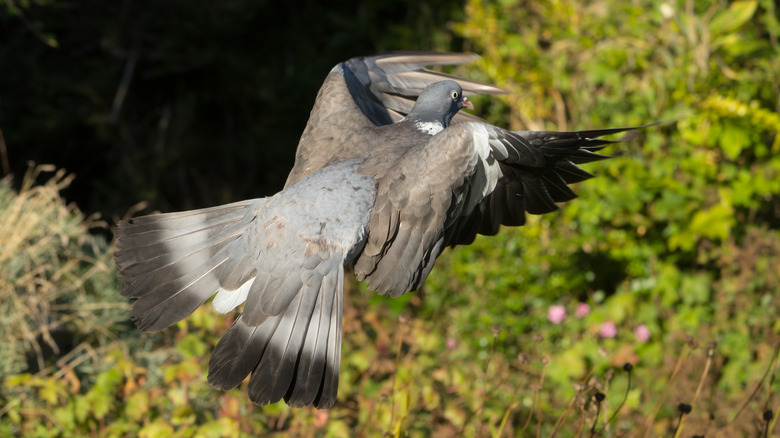
There are a few ways to use vinegar as a pigeon repellant in your yard. If possible, choose white distilled vinegar for this task since it has an especially acrid scent. In addition to making pigeons flee, this type of vinegar can keep other pesky critters out of your yard, including mice and raccoons. Fill a spray bottle with equal amounts of vinegar and water, then shake to combine them. Then, spray the solution where pigeons tend to congregate. Consider spritzing outdoor furniture, the perimeters of gardens, and the areas around trash cans. Also address gutters, eaves, and other sites pigeons might target for nesting. Respray these areas after rainstorms to keep the scent in the area.
Consider cleaning outdoor surfaces you were going to clean anyway with a vinegar solution. Using concentrated (30%) white vinegar on patio furniture, window sills, and garden gnomes not only will repel those flying rats, but also effectively wipe away mildew, sap, and even bird droppings. On garden or lawn perimeters, soak rags with vinegar, or fill open jars and set them around the space. Of course, you'll want to refresh both items from time to time.
Vinegar is non-toxic, which makes it safe for use around children and pets. For the most part, it's gentle on the environment as well. However, it can damage plants, particularly when used at full strength. This is why some gardeners use it as a weed killer. Vinegar tends to do the most harm to young, tender plants, so avoid using it close to prized seedlings. Since vinegar's pigeon-deterring power comes from its smell, applying it near spots these birds gather should be sufficient to send them flying.