

How To Turn Your Old Trash Can Into A Simple Rain Barrel For Your Yard

We may receive a commission on purchases made from links.
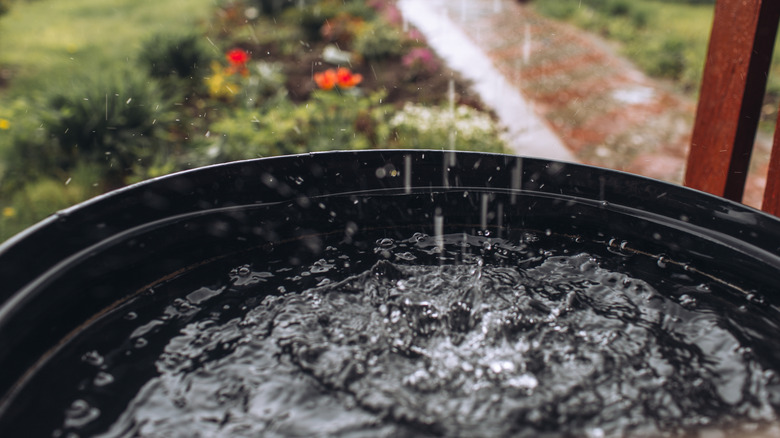
Barrels designed specifically for rain collection can be somewhat pricey, often retailing for more than $100. They can also be kind of bulky and immobile, with no wheels or handles to help move them around when partly full. Instead, take a look at that extra trash can that's been sitting around. Many communities have upgraded their systems and switched to city-supplied trash and recycle bins designed to fit the grabber arm on their collection trucks. As a result, those old, non-standard trash cans you used before the local upgrade might be stacked in a corner of the yard or behind the garage, awaiting some project that might require them. Why not repurpose one as a rain barrel? After all, rain water is better for plants than distilled water or hard water since it contains trace minerals and it's free. Collecting rainwater also helps you avoid major mistakes when watering the garden, too, making sure you have additional water when you need it.
Transforming a trash can into a rain barrel can be as simple as setting the can somewhere in the yard to collect water, turning the lid upside down and adding holes to help funnel water into the can. But added elements improve upon that concept. The best thing about a trash-can rain barrel is it's very customizable, allowing you to upgrade it with mesh to keep bugs and debris out, or a spigot near the bottom for easier water access and overflow drain near the top. The ease of the project is up to you, and you can always tinker with your DIY rain barrel to improve it over time. And remember to wait awhile if your barrel's just filled up: watering is one of the things you shouldn't do to your garden after a heavy rain.
How to transform a trash can into a rain barrel
Even a simple rain barrel benefits from a spout near the bottom for easier water access. Use a 1⅜-inch hole saw less than two inches from the bottom on the side of a flexible, rubbery trash can (any size). Place a ¾-inch bulkhead fitting in the hole so the threads go inside the can. Apply an outdoor-rated silicone sealant around the outer fitting to prevent leaks, then thread a hose bib onto the bulkhead, and you're all set! Set the rain barrel on cinder blocks or a wood pallet for easier access to the spigot when it's time to water plants.
Decide whether the rain barrel will attach to a downspout. If not, drill four or five holes, each at least an inch wide, on the center peak of the trash can lid (a domed lid works best here). Use weatherproof tape to secure fine netting such as the garden netting pest barrier from Garden Tailor over the drilled area, so there are no gaps around the perimeter of the netting. Flip the lid upside down (to catch water and so no one sees your tape job), then secure it by drilling small holes around its perimeter and through the flat lip of the trash can. Use zip ties or wire to secure lid to can.
For a rain barrel that connects to a downspout, purchase flex drain in a length that'll reach a point where you can connect it to your home's downspout. Cut a hole into the can lid that fits the flex drain, then push the flex drain through it and attach the lid back onto the can. Attach the other end of the flex drain to your downspout.