

How To Create A More Accessible Campsite
We may receive a commission on purchases made from links.
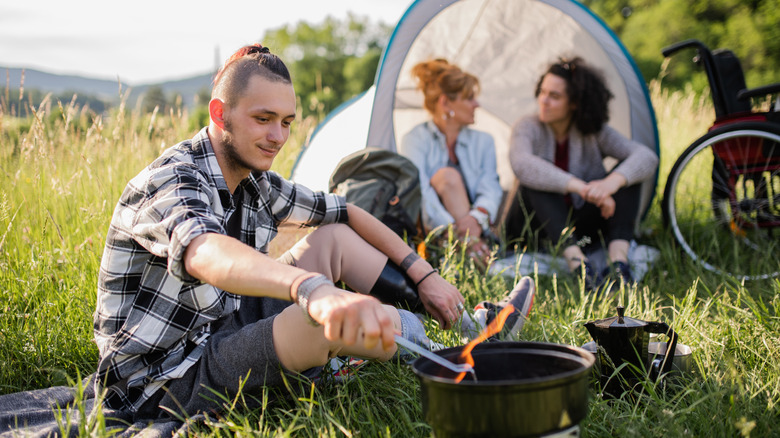
There are a variety of reasons people choose to camp and a number of benefits that camping provides those who overnight outdoors. However, many campers face challenges that can hinder the enjoyment of camping and prevent them from gaining all the benefits the activity has to offer. The Americans with Disabilities Act (ADA) does require public and private campgrounds to make their infrastructure accessible. But that alone doesn't solve all the issues facing campers with various disabilities, different abilities, and limited mobility. Luckily, with proper research, planning, packing, and campsite setup, it is possible to create a more accessible campsite.
Ensuring accessibility begins during the planning stage of a camping trip. One of the biggest mistakes people make when visiting national parks or other campgrounds is not doing adequate research prior to their trip. Be sure to spend time exploring the types of accommodations available and accessibility options at various campsites. You may even discover some national park activities you might not know about that will enhance the camping experience. However, the biggest takeaway from your research is knowing what each campground you are considering offers in the way of accessibility so you can pick the perfect campsite for your next adventure based on your needs and plan your camping trip accordingly. Once you've found the perfect spot, it's time to pack the right gear, and plan your campsite layout for best results.
Pack the proper gear

Not bringing along the right gear is a camping trip packing mistake to avoid for any explorer. It can be infinitely worse when it comes to someone needing assistance or adaptive gear. This begins with the most basic of pieces of equipment, such as tents and sleeping setups. Make sure the tent has a large enough opening and high enough vestibule to allow easy access and maneuvering. Additionally, having extra space — either inside the tent or by way of an attached screened area — to store gear can be of great assistance. For sleeping arrangements, sturdy elevated sleep platforms like the Coleman Trailhead II large folding cot are typically easier to access that ground pads for individuals with mobility issues.
In addition to camp basics, be sure to pack any adaptive or specialized gear needed for outdoor activities such as fishing, skiing, nature watching, or paddlesports. If you're unfamiliar with some of these gear options, a quick search online will locate a wide range of specialized products for any sport or activity. Toting gear around can also be limiting, so investing in a daypack or bag designed to affix to a wheelchair or walker can be well worth it. It is also a good idea to choose rain gear that can quickly and easily be put on in case bad weather moves in unexpectedly.
Campsite layout can make a difference
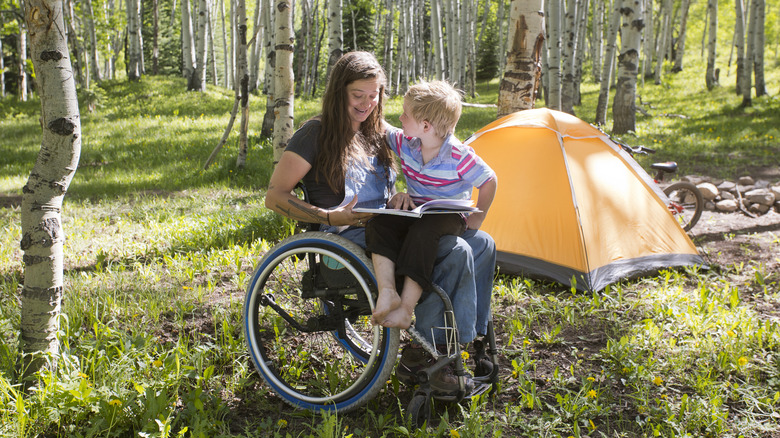
Beyond choosing the right campground and packing all the proper gear, how you lay your campsite out can make a big difference. Plan the placement of your tent and cooking area in a manner that allows for efficiency, easy access, and convenience. For example, place cooking supplies and implements somewhere that doesn't require a lot of movement to access while cooking. It is also important that to have plenty of stable surfaces at the appropriate height for meal prep, cooking, and other camp tasks. If the campground features different camp areas, look for the ones near accessible bathrooms, trails, or other facilities.
Additionally, it is good to keep your campsite tidy by packing essentials that keep the campsite clutter-free for ease of movement. Allow plenty of space and firm ground for maneuvering with crutches, walkers, wheelchairs, or other adaptive equipment. As you set up your campsite, also keep in mind what activities you intend to enjoy while camping. For instance, you can set up a birding or wildlife watching station in advance that you can quickly and easily reach from your tent, as well as a station to easily clean and store any gear needed.