

The Kitchen Staple That'll Help Keep Weeds From Growing In Your Gravel
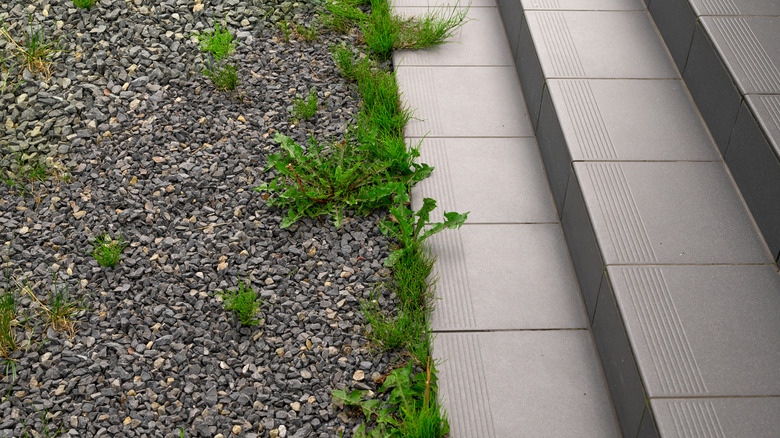
Weeds are an unfortunate part of having a yard or garden. They pop up everywhere — in vegetable gardens, flower beds, gravel paths, and even between concrete slabs. Weeds can cause a host of problems. Some act like parasites, attaching to plant roots and killing them off. Others compete for space and nutrients, weakening healthy plants and making them vulnerable to pests and disease. On top of all that, they make everything look messy and unkempt, ruining all the hard work you put into your yard. Fortunately, a common household item — baking soda — can help prevent weeds from growing on your gravel walks and driveways. Also called sodium bicarbonate, baking soda kills weeds by altering the pH levels in the soil and sucking the moisture out of the weeds, causing them to wither and die.
Due to its effects on soil pH, it isn't recommended to use baking soda to kill weeds around your vegetables and flowers or on large expanses of your yard, but it can be a great choice for getting rid of the weeds in your gravel. The baking soda method is most effective on shallow-rooted, broadleaf weeds — like chickweed or clover — because it targets the plant surface. However, it doesn't work as well on deep-rooted weeds like crabgrass or dandelions. That's because baking soda doesn't soak into the soil enough to reach those stubborn roots. If you do have dandelions in your yard, consider not pulling or killing them, because they do have garden benefits.
How to use baking soda to help kill weeds in your gravel walks and driveways
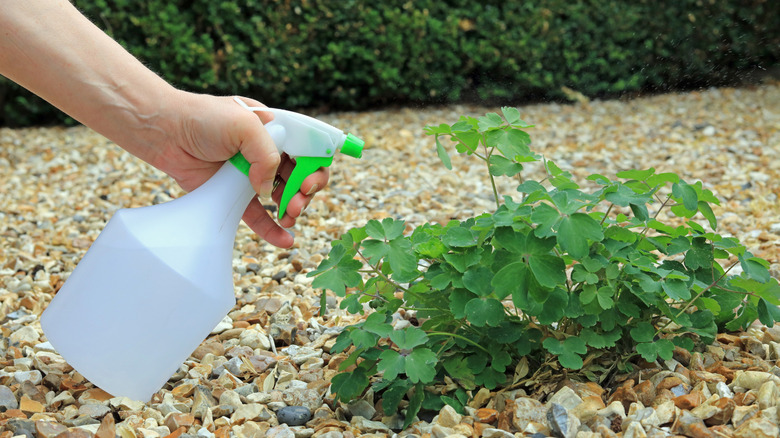
Baking soda has an array of uses from cleaning the house to being used for a variety of health-related jobs, so it may not surprise you to hear it can work on managing those pesky weeds too. You can keep your gravel weed-free with baking soda and other methods like using weed barrier fabric, adding more gravel, applying pre-emergent weed killer, or spot-treating with vinegar or boiling water. People like using this method because it is very easy and inexpensive to make and can be put into any empty spray bottle. Be sure to rinse your spray bottles thoroughly with warm, soapy water so there are no residual chemicals being mixed with the baking soda. The most common solution is 1 cup of baking soda to a gallon of water mixed well so the baking soda dissolves completely. Using warm or hot water dissolves the baking soda better than cold water.
Once your baking soda spray is mixed, hold the spray bottle close to the weed and spray it all over the leaves and base of the plant. Avoid spraying on windy days, as the baking soda can be blown onto your good plants and flowers and have a harmful effect on them. Give each weed's leaves and roots a good soaking before moving on to the next one. Remember not to spray the baking soda mix on any weeds near vegetables, flowers, grass, or any plant or tree you want to keep. While baking soda is a more natural product, it can still dry out your good plants and mess up the soil's pH, causing unwanted growing problems.
An alternative baking soda method you can use to reduce weeds in your gravel
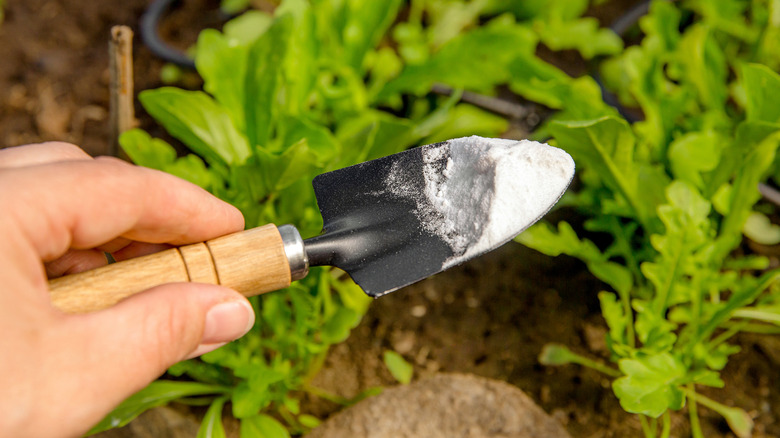
An alternative weed-killing baking soda method involves sprinkling it directly on dampened weeds in gravel areas. Grab a hose for this method and wet each weed, one at a time. For deeper-rooted weeds, soak the area about 1½ inches down before applying 1 teaspoon of baking soda to each plant. Once again, avoid using this method on windy days — baking soda can drift into unwanted areas.
Some gardeners add vinegar or lemon juice to boost the effectiveness. Many say it works better than baking soda and water alone — feel free to try this variation if you believe your weeds are extra stubborn. The best thing about the baking soda method is that you are not being exposed to any sneaky potential hazards that can be in gardening products. You are getting rid of your weeds without using toxic chemical herbicides and that is so much better for your health and the environment.