

The Lacy Flat-Topped Flower HGTV's Joanna Gaines Is Obsessed With
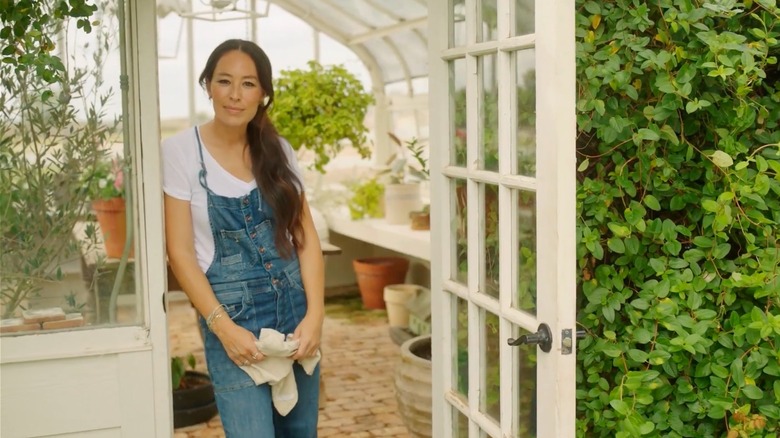
If you follow her on Instagram, it's plain to see that HGTV's Joanna Gaines enjoys cultivating plants ... especially the flowers in her garden. One of the species that pops up frequently is a beautiful, lace-like one, fittingly known as Queen Anne's lace. Its large, umbrella-shaped flower head and flat style make it a great filler to include in flower bouquets. But perhaps what Joanna Gaines loves the most about these flowers is their easy-to-grow nature. One variety she particularly adores is called 'Dara,' which blooms in shades of purple, pink, burgundy, and even chocolate.
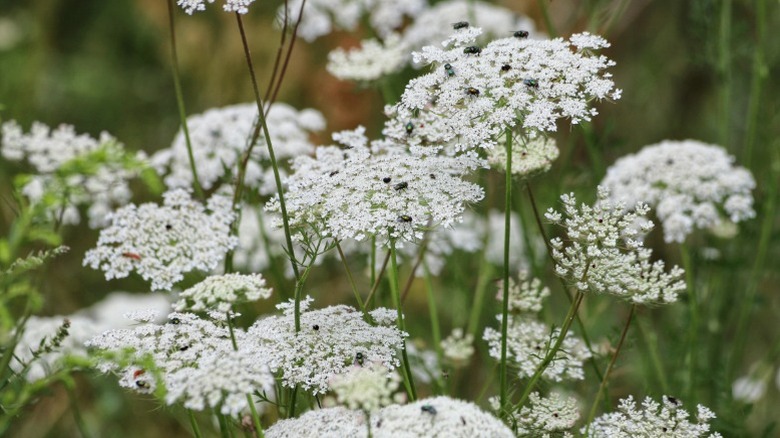
Also known as wild carrot, Queen Anne's lace is the wild version of cultivated carrots. This lacy flower is not native to the U.S. and was brought over from Europe by colonists, primarily due to its medicinal uses as an anti-inflammatory and digestive aid. The flower is easily identified by its tall stems with tiny white flowers clustered together, about 2 to 4 inches around. This plant is also sometimes called bird's-nest, because of the way the compound flowers curl inward and turn brown as the seeds ripen.
How to grow Queen Anne's lace in your outdoor space
If you want to enjoy this flower in your home, it's important to recognize its poorer qualities. Despite not being classified as invasive in all states, Queen Anne's lace has weedy tendencies mean you should be conscious before planting it anywhere. In Washington state, for example, it is a Class B noxious weed, which means the sale of its seeds is heavily regulated. In other states where it is not classified as a noxious weed or as invasive, it's still vital to not irresponsibly plant it. Luckily, the 'Dara' variety that Gaines loves is considered to be less aggressive than other types of Queen Anne's lace.
Although a simple way to reuse dead flowers to help your garden grow is to add them to the compost heap, it's best to never put plants that grow aggressively in with your regular compost. This can help reduce the spread of fast-growing plants in your garden. When you plant certain perennials in your garden, they'll never leave, but that's not ideal when it comes to Queen Anne's lace. To reduce the spread of this vigorous plant, you can remove the seedheads early. Using containers is another good way to grow these beautiful flowers so that you can add to them to bouquets without constantly worrying about them overtaking your in-ground flower beds.
Tips for cultivating Queen Anne's lace in your garden
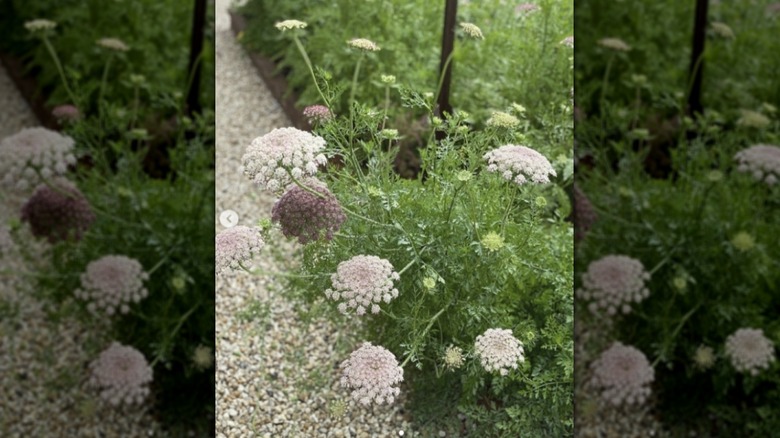
Although you may need to contend with its rapid growth habit, Queen Anne's lace can be a lovely addition to a flower garden. Joanna Gaines uses her 'Dara' flowers in lively arrangements alongside dahlias and zinnias. Luckily, 'Dara' is similar to zinnias in that it's very easy to grow. It doesn't discriminate when it comes to soil types, and can tolerate moist or dry conditions. Just remember to be careful where you plant this species, as it grows a long taproot and can be difficult to remove once established.
If you're taking Joanna Gaines' top tips for growing a successful garden, remember to start small. Queen Anne's lace can be a good beginner option because of its low-maintenance needs. A nice accompaniment to bouquets, these blooms make for a long-lasting cut flower. In fact, Queen Anne's lace is ideal for its long, sturdy stems and intricate, delicate flower caps that can frame another flower beautifully in any arrangement.