

How To Prevent And Get Rid Of Crawfish Holes In Your Lawn
We may receive a commission on purchases made from links.
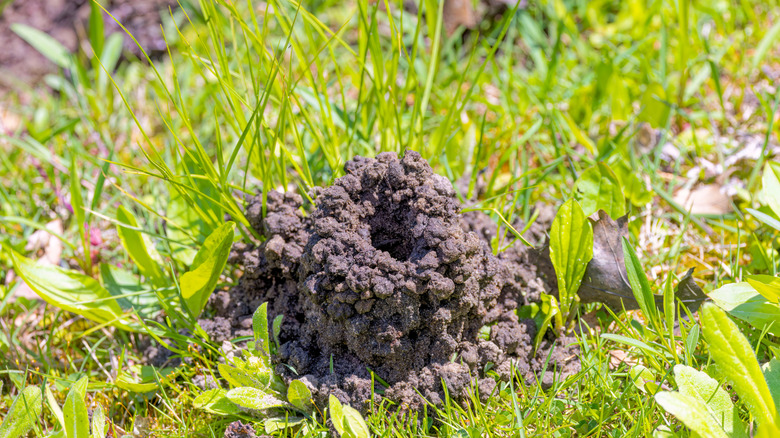
Although they are considered among the best bait to use for freshwater fishing, most people, even fishermen, don't want to see crawfish building mounds in their yard. Crawfish (or crayfish), and their accompanying holes, actually pose little to no harm for the grass in your lawn. But, their holes and towering chimneys are unsightly and an inconvenience when mowing. As anyone who has had these crustaceans take a liking to their yard can attest, getting rid of them can be an exercise in frustration. However, the easiest, safest, and most humane way to prevent and get rid of crawfish holes in your lawn is to make your lawn less inviting to these crustaceans by correcting or draining areas that get soggy with standing water.
Crawfish are actually aquatic creatures, with the vast majority of the population living in rivers, streams, ponds, and lakes, particularly in the American southeast. They are also known to burrow into the ground, making tunnels which are easy to identify by the rounded wall (or chimney) that stretches up to 8 inches above the ground around the entry hole. Not surprisingly, these holes and chimneys are common sights along the banks of various waterways. However, it is also not uncommon for crawfish to create holes in areas a substantial distance from any body of water.
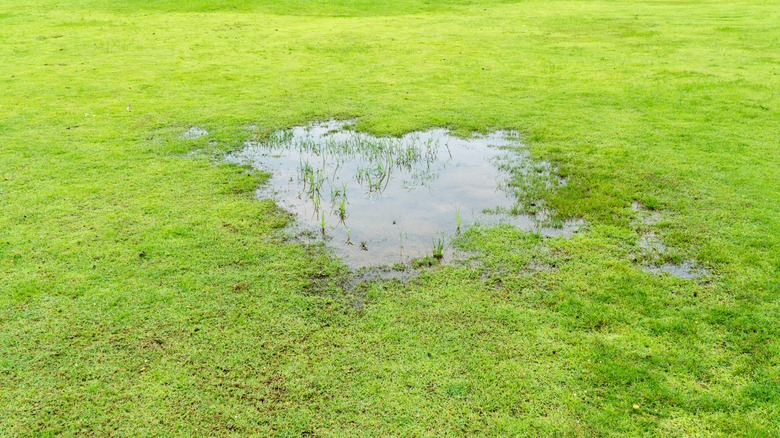
When they are looking for a suitable location to dig, crawfish will seek soil with a high moisture content. If your yard regularly has standing water or parts which remain soggy, it is likely crawfish will be clamoring to get there sooner or later. As a result, the best way to ensure they stay away is to make sure no portion of your yard remains excessively wet. Depending on the underlying cause, there are several ways to solve a saturated lawn issue.
Don't let your lawn become a crawfish farm
While a quick search will likely offer plenty of ways to attempt getting rid of or preventing crawfish holes in your lawn, ranging from trapping to using various deterrents, these alleged solutions are typically time consuming, ineffective, and, in some instances, not legal. Biologists do say trapping or catching crawfish is one possible method, they also say it is so time consuming that is impractical to implement in many instances. Additionally, there are no chemicals currently approved for crawfish eradication in the United States and attempting to poison them can pollute waterways and ground water supplies.
With that in mind, your best solution is to make your lawn a less inviting environment for crawfish habitation. This means making sure you do not have perpetually saturated ground or frequent puddles of standing water. To address these problems, the first step is to make sure your lawn is level, filling in any low spots. It is also helpful to dethatch your lawn to remove standing water, as a heavy mat of thatch will trap water on the surface. You also need to look at your watering habits. Determine the best time of day to water your lawn, so it can be best absorbed, and think twice about watering your lawn every day, as this can lead to continuously oversaturated soil.
If drainage is the answer, reassess where you downspouts pour out. Areas that receive a lot of runoff may require trenching to drain the water away. Another options in these areas is to install a French drain, like the NAACOO no-dig French drain or VEVOR trench drain system. However before you take this option on, it's worth knowing what to consider before adding a French drain to your yard.