

What To Consider Before Trying To DIY Your Own Lawn Sprinkler System
We may receive a commission on purchases made from links.
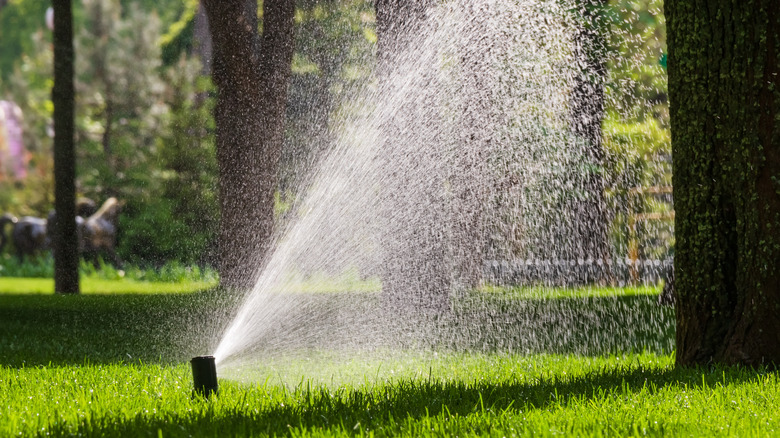
Automated lawn sprinkler systems are a great way to make sure your lawn is properly watered. You are able to set them to the best time of day to water your lawn and adjust it so it gets just the right amount of water each time. There are even smart systems that can keep your lawn perfectly green all year long by automatically adjusting to the grass's needs throughout each season. A sprinkler system is also an update that adds value to your home. These systems can be costly, leading many intrepid homeowners to attempt doing it themselves. However, in addition to cost, there are other things to consider before trying to DIY your own lawn sprinkler system, including the legalities and logistics of doing so.
Cost is certainly one of the main motivators for DIYing a lawn sprinkler system. Having a system professionally installed will typically run a few thousand dollars or more, whereas it is possible to DIY a system for a fraction of that cost. You can create a DIY lawn sprinkler system from scratch by buying all the necessary components or can purchase a kit like the Rain Bird 32ETI in-ground automatic sprinkler kit. Whichever route you take, keep in mind there may be hidden costs, such as needing to purchase new tools if you don't already have all the necessary implements, which can also run into the thousands. The final sticker price for DIY may end up being more than what you initially imagine.
Planning, preparation, permits, and purchases
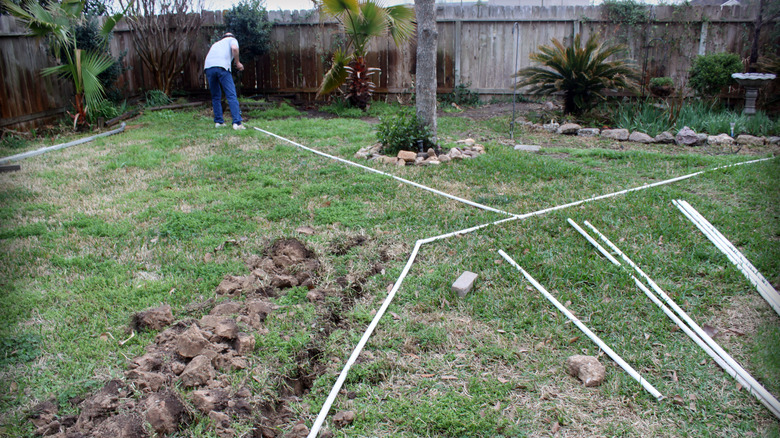
As with any project, the first step to creating a DIY lawn sprinkler system involves planning. Begin by mapping out your yard and creating watering zones so you can ensure each area gets the right amount of water. Be sure you take into account not just the grassy areas of your lawn, but also any other features such as gardens, flower beds, sidewalks, and driveways. You will also need to check with your local municipality and/or HOA to see if any restrictions apply or permits are needed. Finally, be sure to check with the utility companies and calling 811 to make sure there are no buried utilities in the path of your planned sprinkler system.
Next, determine the type of system you want to install. Then, based on your plan and type of water system, purchase all of the necessary components, including PVC or polyethylene pipe, timers, valves, connectors, and valve boxes. In order to ensure you get the proper components, you will need to know the water pressure or PSI for your home, along with the meter or pump size, size of the service line, and flow rate. So you can see this already isn't a weekend project. Keep in mind, even if you purchase a complete kit, there are often additional components that may be necessary in order to fit within your yard. Also, now is the time to do an inventory and purchase any additional tools you may need for the install.
With those tasks done, you'll prepare your yard for the installation. It's a good idea to mow the lawn, making it easier to dig trenches and work with various components. Then, mark your lawn to match the plan you've drawn up. You can use stakes, string, or spray paint to mark the location of the pipes and sprinkler heads.
Installing a DIY sprinkler system
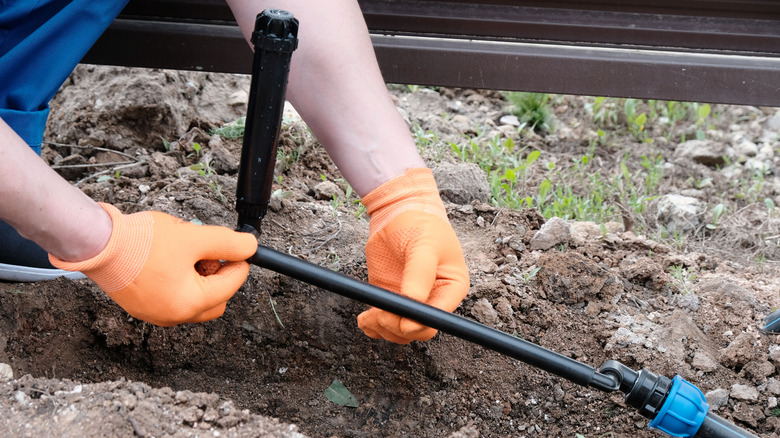
When it's to install your DIY sprinkler system, your main considerations should be your time and skill level. While the task isn't terribly complicated, it does take at least a basic level of plumbing skill, the ability to do a fair share of manual labor, and quite a bit of time. The first step in the installation is to dig all necessary trenches. Though only around 6 inches deep, digging these trenches can still be difficult depending on the soil composition of your yard. So, although the digging can be done by hand with a trenching shovel, it is typically best to rent a trenching machine. This will add to the cost of the project, and you will need to know how to use one.
If you are creating a sprinkler system from scratch, then once all trenches are dug, the next step is making the connection to the water supply line. Again, you don't necessarily need to be a master plumber, but you do need at least some plumbing skills to be able to splice into this line. If you don't feel entirely confident in your ability to do so, you have a couple of options. You can hire a plumber to make all the critical connections, or buy a kit that includes a faucet connection, such as the aforementioned Rain Bird kit. Making the remainder of the connections, laying the pipe, installing the heads, and backfilling the trenches are typically simple enough for DIYers with at least basic handy skills.