

Easily Remove Ticks After A Hike With The Help Of A Common Household Staple
We may receive a commission on purchases made from links.
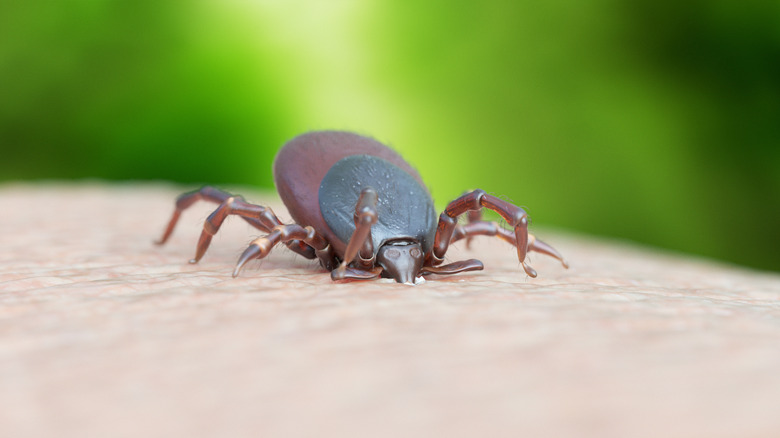
Avoiding tick bites is high priority for anyone who spends time outdoors, whether in their backyard or on a backcountry trail. Unfortunately, these tiny pests are often difficult to spot if they haven't already begun feeding. However, you can easily remove ticks after a hike with the help of a common household staple. Lint rollers, which are typically used to remove things like dust, pet hair, and, as the name implies, lint from clothing, can also be used to remove unseen ticks from your clothing, gear, and body.
Removing ticks as quickly as possible is imperative to reduce the chance of contracting dangerous diseases spread by ticks. The only sure-fire way to ensure you're not potentially exposed to Lyme disease or other infections is using tips to avoid ticks while hiking. But it's not always possible, and even the best tips aren't infallible. Removing them before they latch on to your skin is the next best thing. This not only prevents the possibility of contracting infection or disease, it also keeps you from transferring ticks to your car, home, and yard. This is where the lint roller comes in as a first line of defense.
How to use a lint roller to remove ticks
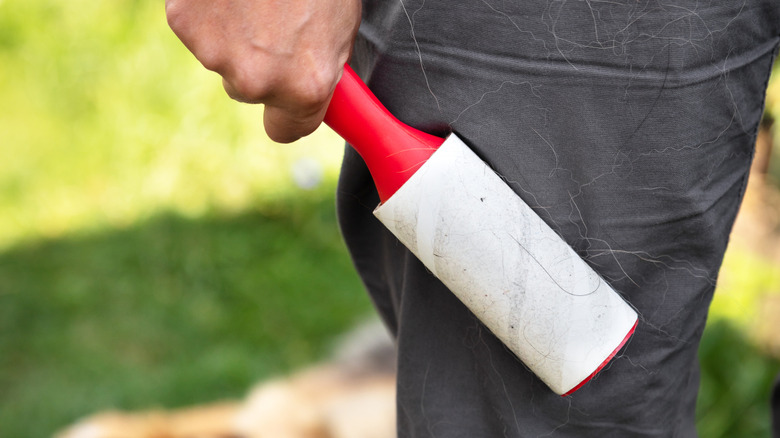
Using a lint roller, like the Scotch Brite every day clean lint roller, to remove ticks is really no different than using it to remove dog hair. However, timing is key. As soon as you get off the trail, pull out the lint roller and go over your clothing and gear. This will pick up any small, unseen ticks on these items and prevent them from being transferred to your vehicle and getting its hooks into you. You can also use the lint roller to check for small, unseen ticks on your pets.
While this is a good way to get any small ticks that have blended with your clothing or on your pet's hair, it does not work for ticks that have buried in your pet's fur or embedded in your skin. So, using a lint roller is the first step. Once that is done, do a visual inspection on your pet and yourself, then toss your clothes in the dryer using high heat for at least 10 minutes to kill any ticks that may have been missed.
It is important to know how to properly remove ticks should your visual inspection turn up any embedded ones. In the event a tick has latched on to the skin, it is important to remove it without breaking off the head and allowing it to remain attached to the skin, which often leads to infection. To remove the entire tick, it is best to use a device such as the HomeSafe tick removal tool, although you can also use pointy tweezers (not flat eyebrow tweezers) if you grasp the tick firmly by the head before removing.