

What To Know Before Planting Roses During The Summer Months
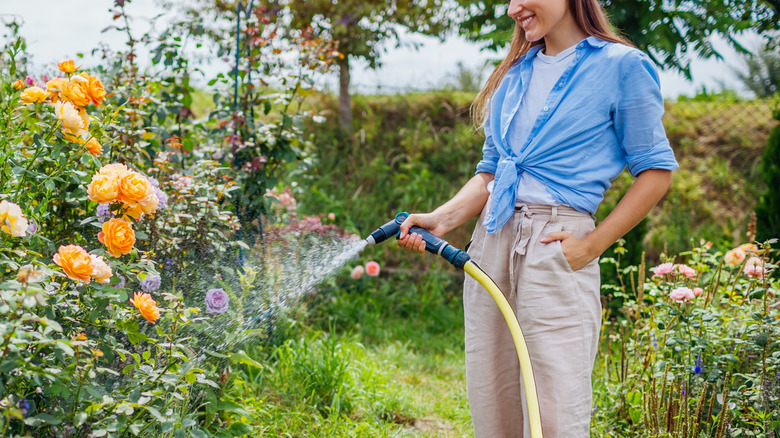
When it comes to versatility, roses take the cake. Roses make great companions for a variety of other flowers, including beautiful ground-cover pansies, and they're at home in casual cottage gardens as well as super formal settings. Plus, their blossoms come in numerous shades and shapes. Though roses aren't particularly hard to grow, they may fight for their lives when planted in the summer. For starters, the intense heat many gardens experience during this season can make freshly planted roses feel stressed out. So can summer thunderstorms, which often deliver wind, hail, and downpours. These stressors makes ill health more likely.
Some summertime stressors are more serious than others for rose bushes. Temperatures above 90 degrees Fahrenheit are extra dangerous and may make additional mulch necessary. The strong winds of severe thunderstorms can lead to wind rocking, a condition that restricts the growth of new roots. Droughts are another factor to consider. They're common during the hotter months in many parts of the United States, and roses need consistent watering as they adjust to their new home. If rainfall dwindles and they don't get enough visits from a watering can, they may perform poorly.
Potted roses tend to perform well when installed in early summer, whereas bare-root specimens prefer to hit the garden in early spring. Generally speaking, potted roses can be planted during other parts of the summer as well, as long as they're not exposed to extreme heat. That said, they may need some TLC to thrive.
Tips for planting potted roses in the summer
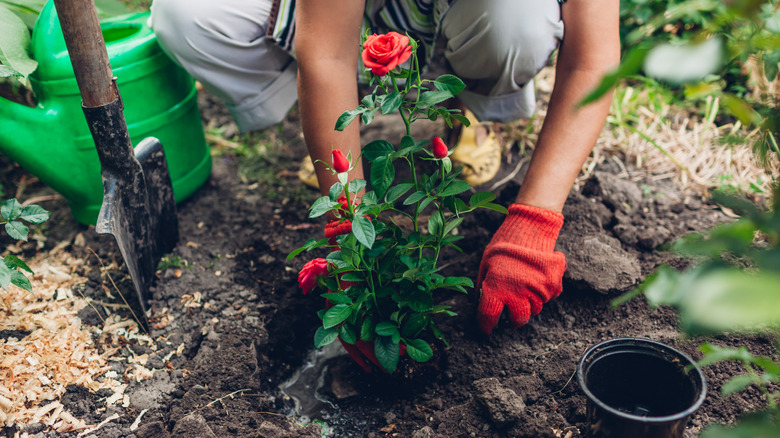
Unlike bare-root roses, potted roses are in growth mode, so they can be a bit finicky when their growing environment changes. Do everything you can to minimize transplant shock when planting them in the summer. Specimens experiencing this condition often develop leaf scorch, which may present as yellow or brown areas on the borders of leaves and between their veins. Wilting and curled foliage are also common, and affected roses may also grow slowly.
Choosing heat-tolerant rose varieties is wise if summertime planting is on your agenda. Several types of roses are known for handling heat waves with grace. Firefighter hybrid tea roses brave summer heat like champs, as their name suggests, and climbing roses, especially the robust New Dawn variety, can manage high temperatures as well as humidity. Knock Out and floribunda roses have a reputation for withstanding heat too.
Give your roses a sunny spot to grow, and they're likely to reward you with beautiful blossoms. That said, consider giving your new roses a temporary shading structure when the sun's rays get especially intense. A shade cloth or garden umbrella should help prevent heat stress and sunburn. Keep in mind that early morning is the best time to water your roses. Also, mulch your roses soon after planting. In addition to retaining moisture the plants need when acclimating to a new home, mulch helps keep them stay cool on hot days. Aim for a 2-inch layer of mulch and a 2-inch space between the mulch and the plant's stems. Then, refresh your garden's mulch the following year.