

The Best Method For Cleaning Your Backpack After A Camping Trip
We may receive a commission on purchases made from links.
For many outdoor enthusiasts, getting the most out of their gear is important. Proper maintenance plays a key role in extending the life of outdoor gear, as well as ensuring it functions properly. With that in mind, if you've spent the time looking for and the money to purchase the perfect backpack for your hiking and camping needs, you will want to make sure it lasts. To that end, it is not only important to avoid mistakes when packing for a hike — such as overloading your pack which can damage it — it is also necessary to keep your backpack cleaned and maintained. The best methods for cleaning your backpack after a camping trip involve minimal supplies and takes relatively little time.
Cleaning your backpack after a camping or hiking trip not only helps maintain your pack in good working condition and extends its life, it also helps prevent the spread of invasive species. Campers can inadvertently introduce invasive species to different areas when seeds, eggs, insects, or other hard-to-notice lifeforms hitch a ride on a pack and are transported to a new place. This can happen when something attaches itself to the backpack or is contained within one of the pockets. However, a simple cleaning can usually help eliminate such a threat.
Routine cleaning should happen following every trip
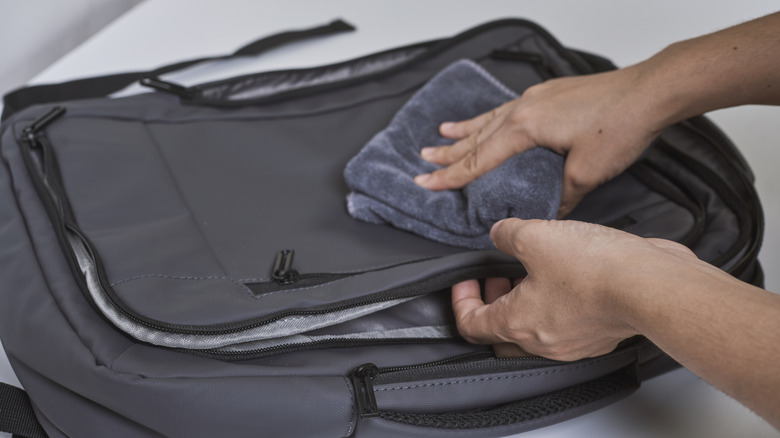
After each trip, you should do at least a quick cleaning of your backpack, even if it doesn't appear particularly dirty. If you assume you just throw it in the washing machine, think again. Doing so can damage or even ruin your backpack. This cleaning will need to be done by hand. However, it's relatively quick and simple to do. Just gather up a few supplies, including a soft nylon-bristle brush, a washcloth or sponge, and some mild, fragrance-free soap such as Uncle Todd's Wild Wash.
Start by emptying all the pockets and compartments on the backpack. Leave the zippers open, turn the pack upside down, and shake it to dump out any dirt, seeds, or other debris that may have found its way inside. This is best done over a trash can so the mess is contained. Then wipe all the interior surfaces with a clean, dry sponge or washcloth. If necessary, use the brush to lightly clean the zipper teeth (don't use detergent here, as many zippers have a waterproofing treatment). Next, dip your sponge or washcloth in warm soapy water and gently wipe the exterior. Scrub only as necessary to remove any particularly harsh grime. Once that is done, rinse the soap from the sponge or washcloth, rewet it with clean water, and wipe down the outside of the pack once again.
Once that is done, hang the pack to dry. Don't hang it in a sunny spot, as UV light can degrade the material over time. Instead, hang it in a shaded spot outside or somewhere indoors. Once it is completely dry, repack your emergency 10 essentials supply kit for hiking and other important items so they don't get left behind on your next outing.
Sometimes a deeper clean is necessary
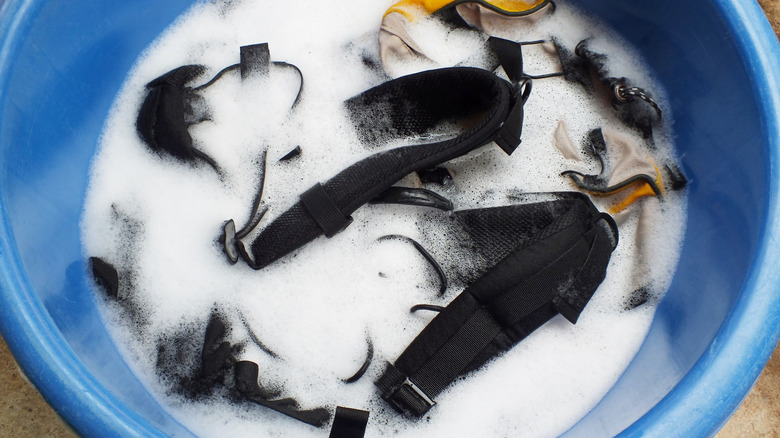
From time to time you will need to do a deeper cleaning of your backpack, especially if the hike was a particularly grueling one. It all depends on the state of your pack. When the time comes, you will need all of the same supplies you use for your simple routine cleaning, along with a vacuum cleaner and large wash tub or bucket. If you don't have a large tub, you can use a bathtub or sink.
Begin by emptying and shaking out the pack. Use the vacuum cleaner with a crevice tool attached to clean all of the pockets, interior seams, and compartments. Next, take off any removable attachments, including straps and frames. Those items should be lightly scrubbed with a wet soapy sponge or washcloth, just as you would during a routine cleaning. The pack itself should be placed in a tub of warm (not hot), soapy water. Move the pack around the tub to create a washer-like agitating action. Empty the tub and refill it with clean water (no soap), and repeat the process until you are satisfied all the soap is out of the pack.
After the wash and rinse is complete, hang the pack and all of its components to dry. Be sure to leave all zippers open while the pack is drying. When everything is thoroughly dry, reassemble the pack, place essential gear back in the proper compartments, and prepare to store the backpack. This means give the pack a quick looking-over. Repair any damaged areas you see, such as loose seams or small holes. Then, store the backpack in a cool, dry place without binding or compressing it into an unnatural shape.