

The Two Small But Venomous Spiders That May Be Calling Your Backyard Home
Most people don't like spiders regardless of whether or not they're venomous. After all, they're strange little (hopefully) creatures with eight eyes and just as many legs. But you also don't have to look closely to get freaked out by them. There's just something upsetting about a creature that wraps its prey in a soft white cocoon of silk for later consumption. Whether or not they bother you, there's no denying that spiders serve a valuable ecological role in your backyard. If you have a garden, you may not want to kill spiders because they'll devour pests like aphids and caterpillars. Conservationists even use them as an indicator of a healthy ecosystem. However, while spiders are helpful, they can be dangerous.
There are 20,000 spider species in the United States, and most are venomous, but very few can puncture human skin. The black widow and the brown recluse are the only lethal spiders in the country, but they're among the most dangerous on earth. Black widows are the most common, inhabiting every state with the exception of Alaska. On the other hand, brown recluses primarily inhabit the South and the Midwest. While thousands of people (mostly children) are bitten by arachnids, deaths are incredibly rare, with the total of spider-related fatalities each year being less than three. Most people just become ill, which can be incredibly painful and frightening.
That's why it's important to avoid spider bites by recognizing spaces where they're likely to hide. Once you've identified these parts of your yard, it's important that you make your family, especially any children, aware of the dangers.
Where you might find venomous spiders on your property
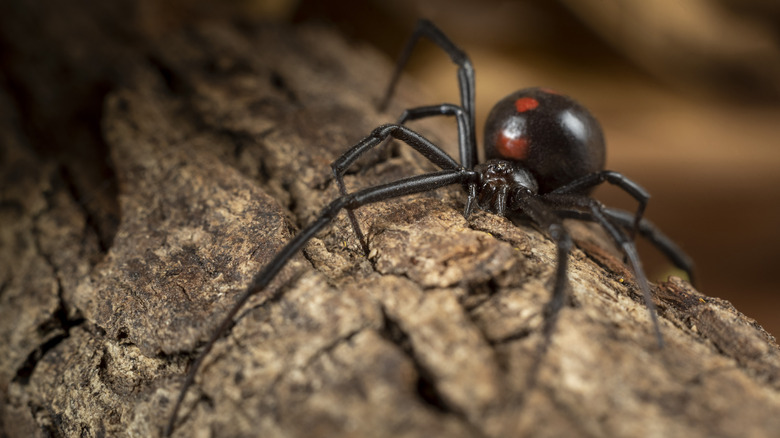
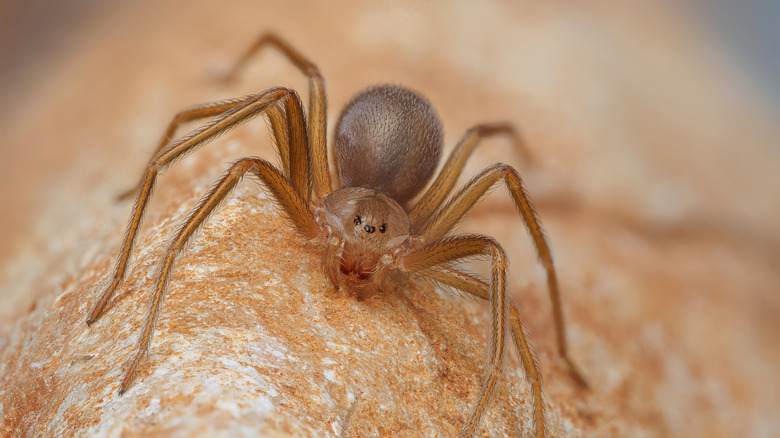
Before you try to identify venomous spider habitats, you should learn how to identify the spiders themselves. The body of a female brown recluse is usually around 1/4 to 1/2 of an inch long, with a leg span of 1 inch. These critters are covered in tiny hairs, and they have single violin shaped brown spots on their backs. Black widows are easier to identify because they're so distinct and memorable. These shiny black arachnids can range from 1/2 to 1.5 inches in length when you factor in the leg span, and the females have red or orange hourglass markings on their undersides.
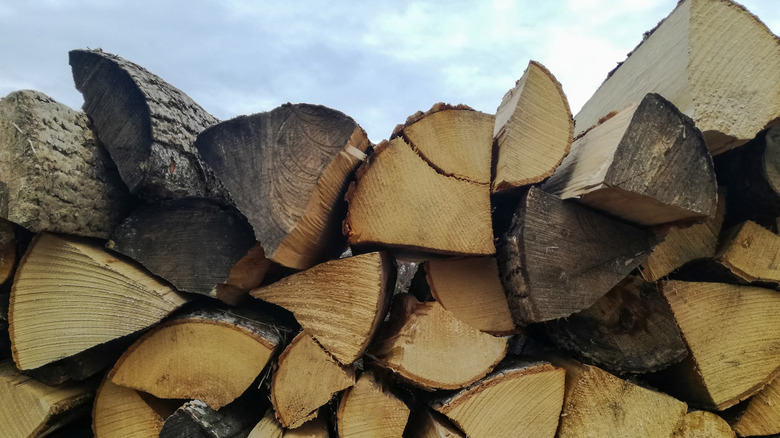
Black widow spiders prefer dark, sheltered environments where they can weave their tangled webs. Brown recluses have similar preferences. If you have a woodpile, you should put some gloves on and check to make sure that these types of spiders aren't living in there. They also love piles of leaves, so you should make sure to not let piles stay in your yard for too long. They also like to hang out under porches, so if you have a porch, consider putting up screens to prevent children from crawling under. Both species also commonly live in sheds, so make sure you do your spring cleaning. Playhouses are also common spots for these venomous creatures.
While checking these spaces for spiders, it's important to know what to do if you encounter one. The obvious choice is to kill it, which is simple enough with a folded-up newspaper or a liquid insecticide. But you can also trap the spider in a jar and take it to an outdoor space where they're unlikely to harm anyone. Either way, remember that these spiders usually only bite when they sense danger.
What to do if a venomous spider bites you
The symptoms of black widow and brown recluse bites are similar. There will almost instantly be a burning redness at the affected site. You may even see double fang marks if the culprit was a black widow. If you were bitten by a brown recluse, you'll see a purple area around the site encircled by a white ring and a red ring. These symptoms may be followed by a headache, nausea, fever, eyelid swelling, and leg paralysis.
Bites from black widows or brown recluses are serious and require immediate medical attention. You can either call 911 or take a trip to the ER. If you don't have immediate access to medical attention, there are a few steps you can take. Start by using soap and water to wash the bite, and then apply an ice pack. Next you should elevate the site (which will help prevent swelling), apply a topical antibiotic, and take pain relievers if you need them.