

A Popular Plant In The Mint Family That Can Help Keep Ticks Out Of Your Yard
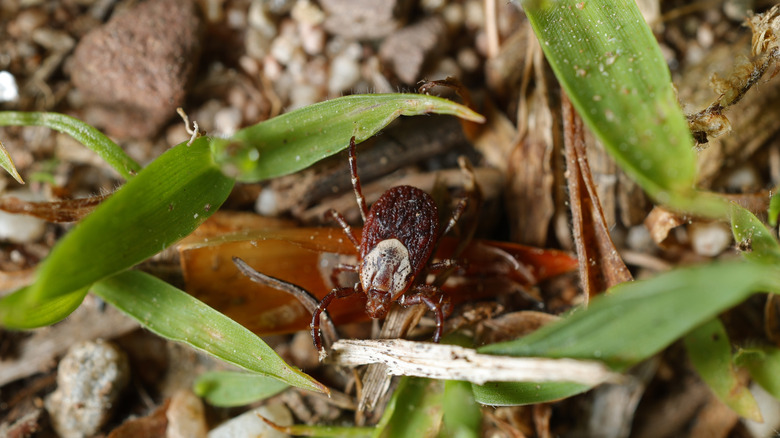
Sharing your yard with wildlife can be fun, especially when it comes to colorful birds and mischievous squirrels. However, there are some animals that you'd rather not share your outdoor space with, such as ticks. After all, an enjoyable day outside can quickly take a turn once you've discovered a tick bite. Fortunately, you can repel ticks and insects from your yard with the right plants — like thyme (Thymus vulgaris).
That's right, thyme isn't just good for cooking: it can also be a low-maintenance, natural way to discourage insects and arachnids like ticks from wandering your yard. This is because thyme contains thymol, a chemical compound known for repelling insects. All types of thyme have the ability to repel creepy crawlies, but creeping thyme works especially well not only because of its deterrent capabilities but because of its ability to tolerate foot traffic. Because of this, it's a perfect ground coverage solution in your yard if you're wanting to add a splash of green while discouraging insects and ticks from coming near.
Before you run to your nearest nursery to pick up thyme, it's important to remember that, while helpful, this plant won't always provide perfect results. Some insects or ticks may still appear in your yard, even with plenty of thyme plants sprawling across the ground. However, studies have shown that it may have potential use as a repellent.
How to grow thyme in your yard to deter ticks
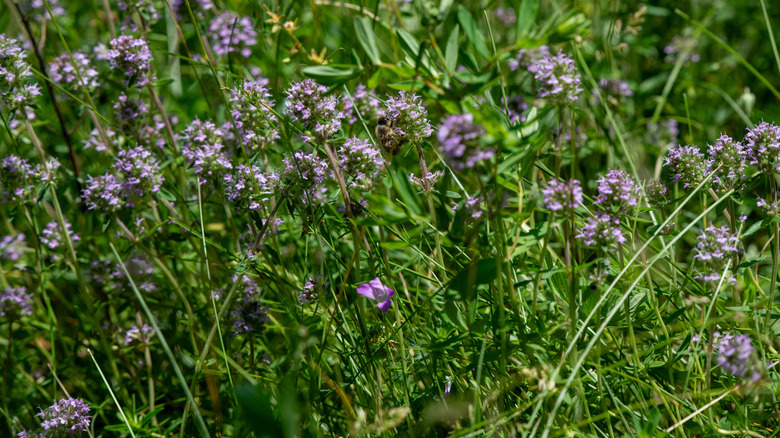
If you haven't quite honed your green thumb yet, don't worry — thyme is easy to grow, and after it's well established in your yard, it doesn't need much care. It can require regular pruning, but other than that, its day-to-day care is simple enough to easily add in to your outdoor chore routine. Even when working with a short-growing plant like thyme, it's important to wear the right gear, like gloves, when pruning to avoid sneaky gardening dangers, such as splinters or sharp shears.
As far as USDA zones, there's no set answer for thyme as a whole. Different varieties will thrive in different zones. However, overall, you're looking at zones 5 through 9 in regard to German thyme, 7 through 9 for lemon thyme, and then a whopping 2 through 9 for creeping thyme. Determining your zone and looking at your local climate can help you pick the right variety.
With your USDA hardiness zones nailed down, you have to choose how to start your plant. In many cases, growing from seed can be difficult because of its germination process. As a result, you may want to purchase a plant or propagate existing cuttings instead. Thyme grows best in full sun and is drought tolerant. However, this tolerance comes with a caveat: it requires well-draining soil to prevent any pooling water that might cause issues. Fertilizing your thyme plants doesn't need to be a hassle either. You can provide organic matter during the early spring to help with growth and offer a small amount of mulch in the winter if you live in an area with colder temperatures.