

How To Spot And Remove Spotted Lanternflies In Your Yard
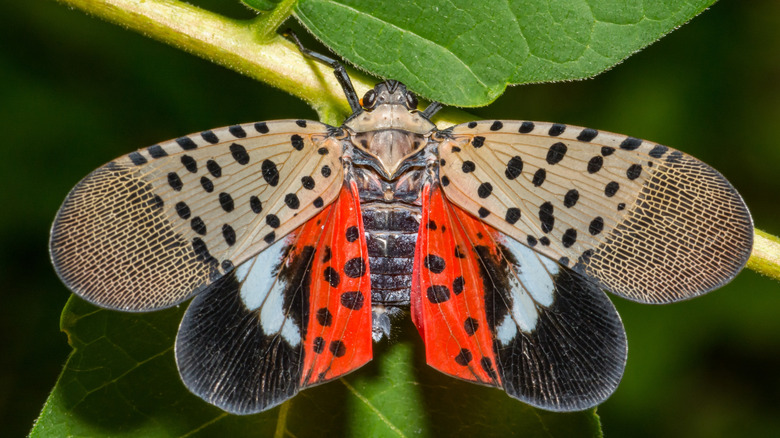
The spotted lanternfly (Lycorma delicatula), although native to China, India, and Vietnam, appeared in Pennsylvania in 2014. Then, within seven years, it had spread across 10 states, and as of 2025, they've landed in a total of 17 states. At first glance, it may seem like this little fly is harmless. After all, it doesn't bite or sting, and the only prey of this sap-sucking insect is plants. However, its appetite has proven to be quite a problem in the United States, which is why it's important to remove the lanternfly whenever possible.
To eat, lanternflies use specialized mouths to pierce the surface of a plant and extract the sap. While they eat from a variety of plants, like fruit trees, they especially like the invasive tree-of-heaven. Then, they excrete honeydew, the same sticky substance you might find on your houseplants if you have a pest problem. This can attract other pest insects and sooty mold, leaving native plants in jeopardy.
The first step in managing spotted lanternflies may sound simple: identify them. Both adults and nymphs look different at each stage, and you'll need to spot the egg masses too. These are typically covered in gray, mud-like patches about an inch long and often appear on stones, tree bark, outdoor furniture, or even your car. As a result, if you live in one of the states where spotted lanternflies are currently active or in nearby regions, it's important to learn how to properly identify lanternflies so you can remove them. However, you want to make sure that you're removing spotted lanternflies individually, as pesticides don't just target spotted lanternflies — they also target the helpful insects you don't want to kill. Thankfully, with just a few quick tips, you can learn how to identify and safely remove lanternflies in your yard.
What you should do if there are spotted lanternflies in your yard
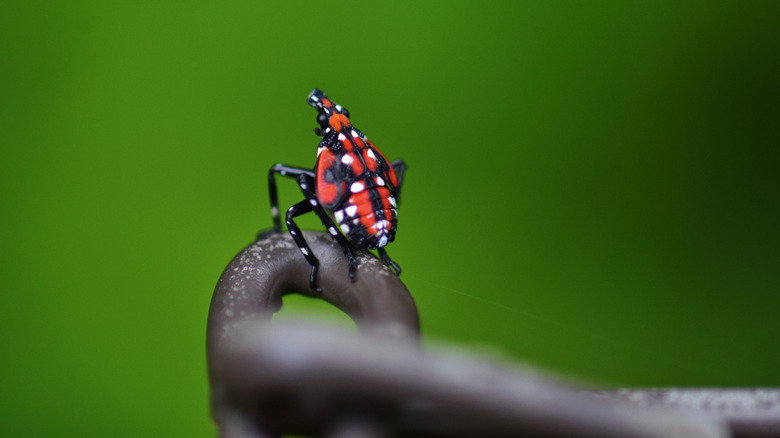
If you think that you've found a spotted lanternfly in your yard, the first step is identifying the right species. There are several spotted lanternfly lookalikes that can be easily mistaken for this invasive insect, so you want to make sure you have the right bug before beginning the removal process. First, make sure you're in an area where spotted lanternflies have been seen in the United States. While there is still a chance that lanternflies have spread elsewhere, this can be a great initial indicator of what species you're dealing with.
After hatching, these small insects are completely black and covered in white spots. As they age, they develop more red hues before reaching adulthood. As adults, these flies have bright white and red wings with black markings. You may not see the red coloration on their wings unless they're in-flight, however. When their wings are closed, it's much more common to see only white and black with the faint hint of red beneath.
Once you've confirmed a spotted lanternfly, you may need to report the sighting to your state's agricultural department. From there, you can get started on removing them. Manual removal may be the most effective – squash them with a shoe or gloved hand or drop them in a container of rubbing alcohol. That said, these insects are quick, so some folks have turned to vacuuming them instead. While you could also use a sticky trap, be mindful to add a protective screen to avoid harming beneficial insects. As for the egg masses, scrape them off with a putty knife (or similar tool), and proceed to crush them to prevent hatching.