

How Much It Typically Costs To Install An Inground Pool In Your Backyard
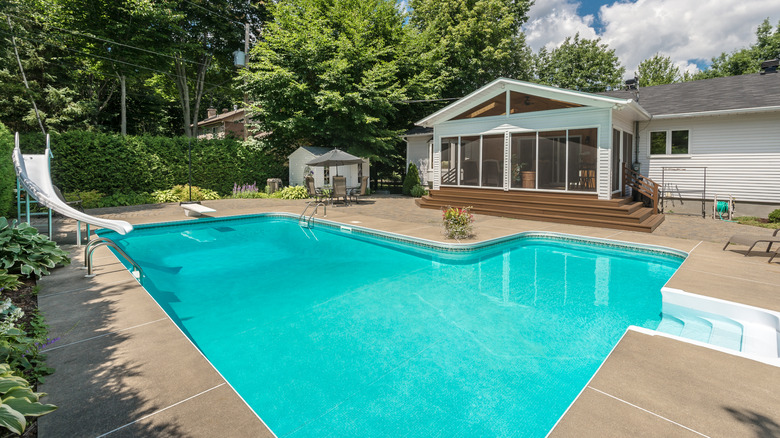
When the weather gets warm, few things sound as good as a dip in a refreshing pool. Installing an inground pool can transform your backyard into a summer oasis that's perfect for beating the heat. Plus, it's even one of the outdoor upgrades that can raise the value of your home depending on your location. However, taking on such a monumental project is a big commitment. It's important to research and know what you're getting into before you dive in — including the price tag.
Unfortunately, there is no single cost for an inground pool. Instead, there are various factors that dictate how much installing an inground pool in your backyard will cost, from the shape and size of the pool to any permitting and landscaping needed. The experts at Royal Swimming Pools note that the average base cost of an inground pool may range anywhere from $22,000 to $100,000, with installation costs starting at $10,000 and extending as high as $20,000 in 2024. But even then, this range may look different depending on where you're located (California runs much higher than Florida, for example). In order to better understand where your pool installation may fall on this range, you should learn more about the various factors that can impact the cost of your pool.
Factors that affect inground pool costs
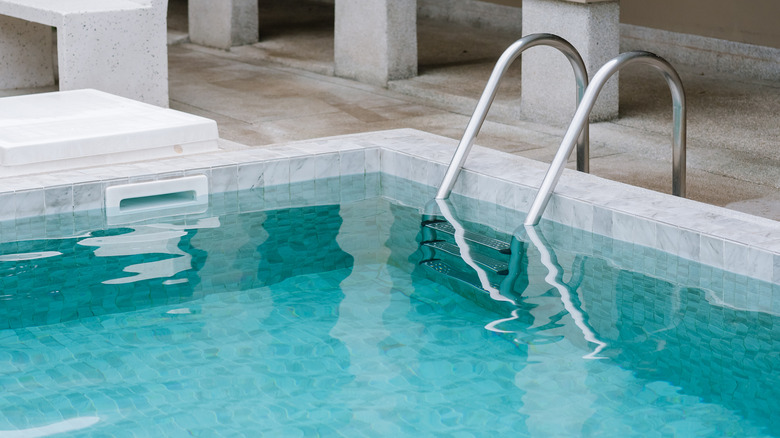
Like any home renovation project, the overall cost of your pool varies based on several factors. Deciding your must-have features can help you figure out where to save on your pool installation and where you should splurge.
When it comes to the cost of your pool, size, shape, and depth, along with materials, are going to play a large role in the cost of your pool. Smaller, shallower pools will cost less than larger, deeper pools, and if you want to stray into a fun shape, that can add to the price tag too. As for materials, you have three traditional choices: concrete, fiberglass, and vinyl. Each has its own benefits but its own downsides as well, and the varying prices of these materials reflects their durability, lifespan, customization, and maintenance. For example, vinyl is the cheapest material you can choose for your pool, lowering your initial investment, but it does come at the expense of less durability and a shorter lifespan than the other two options.
You'll also find that there are a lot of logistics affecting inground pool costs. For example, unless you DIY this project, labor costs can increase how much you spend installing your pool. Other facts like excavation, landscaping if needed, and permits can also impact your inground pool's price tag. However, these are all just factors that impact the cost to install your inground pool. Once it's up and running, there are a few more expenses you should consider before choosing if an inground pool is the right choice for you.
Other expenses to consider
After your new pool is installed, the project isn't finished just yet. Instead, there may be safety regulations you need to meet, as well as maintenance factors to take care of. Safety regulations vary depending on where you live, and your maintenance factors may not look the same if you plan on keeping your pool open year-round rather than closing it during the winter.
As far as meeting safety requirements, depending on your location, you may need to add a deck or patio (there is a difference) to surround your pool with sidewalk as well as fencing. These can be easier to DIY than the pool itself, reducing your overall costs, but they're still essential to keep in mind. Some homeowners may also find that a new pool can increase other property expenses as well, such as homeowners insurance or property taxes.
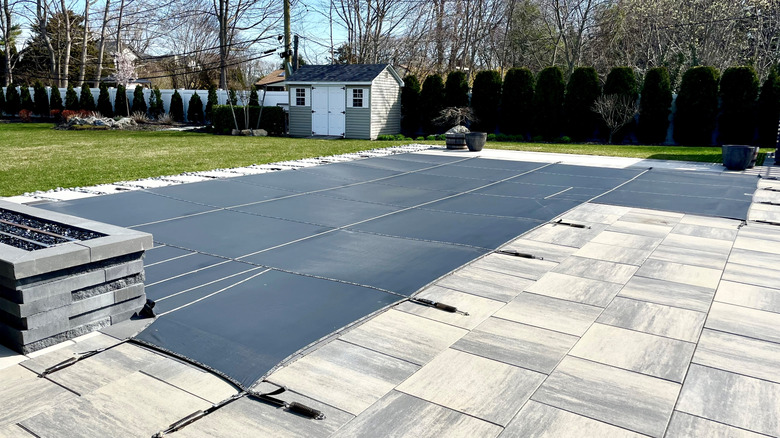
If you plan on keeping your pool open year-round or have a sheltered pool, this next potential expense may not apply. However, if you plan on closing your pool during the winter, then you may want to invest in a pool cover — and choosing the right cover is essential for preventing common pool winterization mistakes. If you live somewhere with mild winters and just want enough coverage to keep small debris out, you can probably get away with a basic winter cover, costing around $100. However, if you want a higher level of durability, automatic features, or a cover that provides more support for added safety, you may be looking at significant cost increases for your inground pool: Solid and mesh pool covers run around $1,500 or more, and automatic covers skyrocket into the $10,000 to $20,000 range.