

Why You Should Think Twice Before Veering Off-Trail At National Parks
We may receive a commission on purchases made from links.
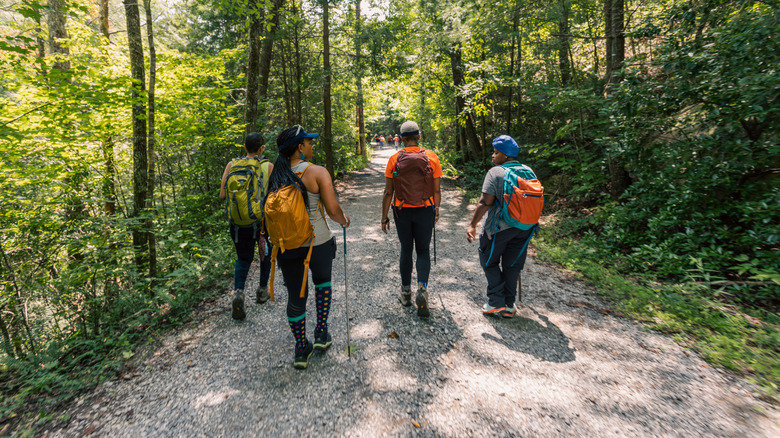
Most hikers are driven by a sense of adventure and a desire to see various elements of nature. So, it is only natural there will be temptation to wander off the trail from time to time. However, whether it be to get a closer look at a plant, flower, animal, or to simply see what lies beyond the view the trail affords, there are a number of reasons you should think twice before veering off-trail at national parks. Regardless of why you may want to blaze your own trail, this is a hiking mistake to avoid as it can lead to a number of detrimental results, including inflicting damage on fragile ecosystems and leading to erosion and habitat loss. Additionally, there can be safety concerns and, in some national parks, even legal ramifications.
To protect both yourself and the plants and animals within national parks, you should always check the rules and regulations before heading out on your hike. Again, in many national parks, it is permissible to venture off-trail. In other parks, it is strictly prohibited. There are also some parks that allow off-trail exploration in some portions, but restrict it in others. Not knowing the rules before you go can result in legal hot water with the U.S. Department of Justice (DOJ) should you venture off the trail.
The 2025 case of a trail runner facing a prison sentence for taking a shortcut that carried him off-trail in Grand Teton National Park brought the specter of potential prosecution to the forefront. However, there have been plenty of instances of charges being filed against hikers who left the trail, including instances of hikers having to foot the bill for being rescued after going off-trail.
Staying on-trail embraces the Leave No Trace principles and ensures your safety
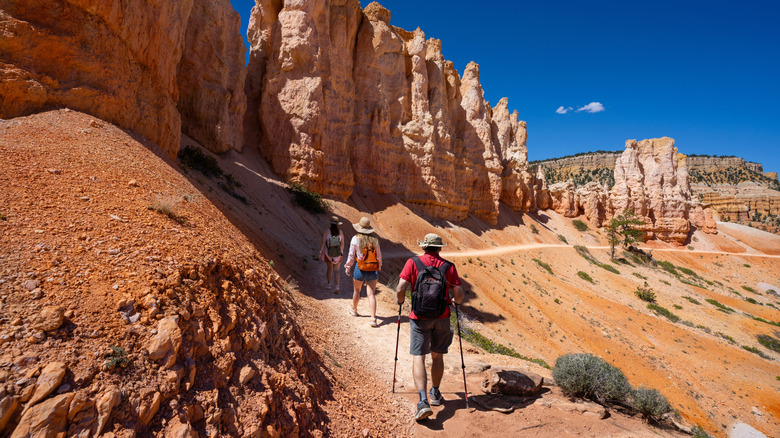
Besides avoiding serious legal issues, there are a number of other reasons you should avoid going off-trail in national parks. Although the principles behind the Leave No Trace mantra is embraced by the outdoors community in general, veering off the established trails often contradicts that stance. In fact, not following the Leave No Trace philosophy is one of the biggest mistakes visitors make at national parks. Damage caused to national parks by such behaviors costs millions of dollars in repair each year.
Unfortunately, some of the damage done by hiking off-trail in prohibited areas may be irreversible. In many instances, areas of national parks that are designated for on-trail-only hiking are sensitive ecosystems that may also be home to protected or endangered plants and animals. Traipsing off-trail in these areas can kill or severely harm these species. It can also lead to erosion and/or habitat loss, which has long-ranging ramifications for a variety of plants and animals.
Another big reason that hikers are required to stay on marked trails is the risk of dangerous terrain. Venturing off-trail in prohibited areas can quickly put you in harm's way. Even worse, you also run the risk of becoming lost. Given that some unofficial trails and game trails may actually look like designated trails if they've been used often, it is a good idea to carry a device like the Garmin eTrex Handheld GPS Navigator to ensure you are able to stay on the proper trails. If you do accidentally wander off-trail, retrace your steps as soon as you realize the mistake and get back on the designated trail.