

The Dangerous Type Of Trail That Can Get You Lost Quickly While Hiking

We may receive a commission on purchases made from links.
Most hikers have somewhat of a sense of adventure. Many also enjoy seeing wildlife up close and in its native habitat. However, trying to combine these two things by following game trails — paths created by traveling wildlife — can be a big mistake. Not only can this dangerous type of trail get you lost quickly while hiking, but game trails are also fraught with several other potential perils. As a result, unless you are 100% certain of where you're going and know how to recognize clues that indicate a bear or other dangerous creatures are close, you may want to refrain from following them.
Often times, hikers, or hunters scouting for upcoming seasons, do indeed follow game trails for various reasons ranging from finding where animals are feeding to locating a shortcut. Sometimes, hikers follow game trails out of simple curiosity. Other times, these well-worn trails may be mistaken for an actual hiking trail, as they are often well-worn from animals frequenting them over the course of many years.
Regardless of why or how you find yourself on a game trail, getting lost is easy, so you must be sure you can track your direction and progress. You don't know whether the game trail will actually continue in the direction you're headed — or continue at all. However, as a worst-case scenario, should the trail begin going in a different direction or come to an abrupt stop, you can always backtrack by following the trail in reverse, as you would with any other type of path. This will ensure you get back to where you started. But it may also cost you valuable time. So, depending on your available daylight, you may want to think twice before following an unknown pathway.
Precautions to take when following game trails
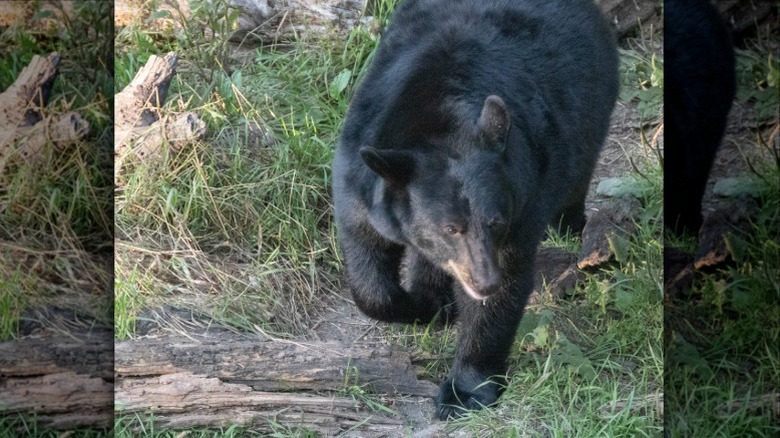
By definition, game trails are made and used by wild animals. Seeing animals across an open field is one thing, surprising them in the confines of a narrow passageway through dense brush is quite another. With that in mind, it's a good idea to make noise to avoid bears and other animals when following game trails. It is also wise to carry bear spray even if you aren't in bear territory, as products such as SABRE Frontiersman MAX Bear Spray can be used to deter a variety of animals should they become aggressive.
You should also know how to recognize animals' presence in the vicinity. As you move down the trail, continuously scan the area in front and to the sides. Likewise, frequently look at the ground in front of you, checking for signs such as fresh tracks or scat. Trees and branches along the trail can also yield clues, such as clumps of fur from animals passing through. In areas frequented by bears or mountain lions, claw marks on trees are another indicator these animals may be nearby.
Another thing to be aware of when following game trails is that most animals tend to have better ability to grip trails, particularly those along steep inclines. As a result, many game trails wind perilously close to steep drops, sharp rocks, and other hazards that animals such as sheep, goats, and deer avoid much more easily than human hikers. Pushing along the trail in areas such as this is a hiking mistake to avoid. Instead, proceed with caution in these areas, know your limitations and don't push beyond them, especially in low light or wet conditions.