

What To Know About Wild Camping And How To Determine If It's Right For You

We may receive a commission on purchases made from links.
There are many reasons people go camping. However, the underlying thread that connects all of these motivations to overnight outdoors is the desire to experience nature on a deeper level. As a result, camping has endured as a very popular outdoor activity, with more than 80 million Americans spending nights outdoors each year. Interest in the activity continues to grow, with more than 5 million Americans trying camping for the first time as well. However, the growth and popularity of camping is one of the driving factors behind another trend — wild camping — as many more experienced campers eschew the developed campground experience in search of something a bit more removed from civilization.
Wild camping, which is sometimes referred to as "dispersed camping," entails camping in the wild. Specifically, it means setting up camp away from any type of developed campsite, campground, or amenities. You will also sometimes hear the term "primitive camping," which is similar in meaning. However, primitive camping usually involves hiking to predetermined sites that may have a few amenities, like a rock fire ring for instance, but are designated as spots to camp. By contrast, wild camping involves setting up camp in non-designated areas with no nearby amenities.
Although wild camping has somewhat of a romantic and idyllic aura to it, it isn't necessarily for everyone. As is the case with any outdoor pursuit, there are both pros and cons to this activity. So, before heading out on a wild camping adventure, it is prudent to be aware of both. That way, you can plan the perfect camping adventure for yourself and be properly prepared should you decide wild camping is the right choice for you.
Reasons you may want to try wild camping
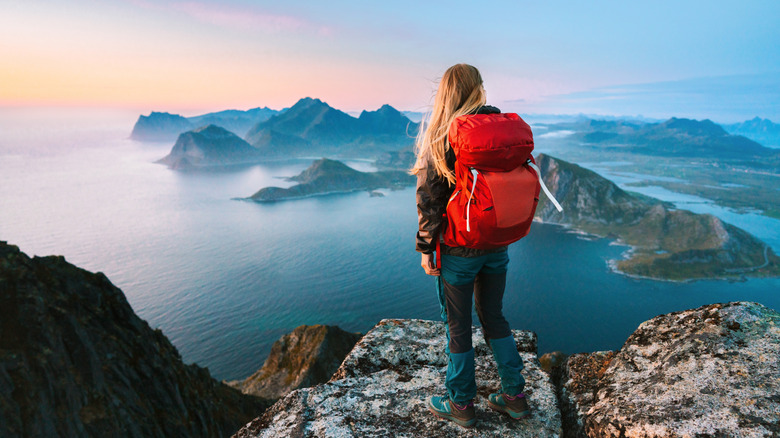
If you enjoy spending time in nature, away from other people, you will likely find plenty of reasons to try wild camping. One issue with many developed campsites is they are quite often crowded. With so many people in close proximity, camping in a traditional park campsite may make it tough to feel as if you are any more connected to nature than you would be at an Airbnb in town. So, if you value solitude and isolation, wild camping will allow you to make your way back into areas where you are much less likely to encounter others.
Wild camping is also a good way to become immersed in the natural world. Further away from crowded campsites, you will experience less light and noise pollution, which is ideal for stargazing and nature watching. This makes wild camping the perfect choice for observing animals exhibiting natural behaviors. In fact, many of the best national parks for wildlife watching offer wild camping opportunities. Ditto for many state and national parks that are known for their starry skies. Many wild camping opportunities are available beyond the U.S. as well.
The fact you are not trekking to a predetermined campsite, where countless others have already stayed, can also stoke a sense of adventure. That adventure is usually only limited by your willingness to explore and move from spot to spot. Using an easy-to-carry, simple-to-set-up tent like the Coleman Sundome, you can change campsites as often as you like during your wild camping adventure. Additionally, there is often minimal, or no fees charged for wild camping, so you will be able to extend your stay without worrying about incurring substantial costs.
Things to consider before going wild camping
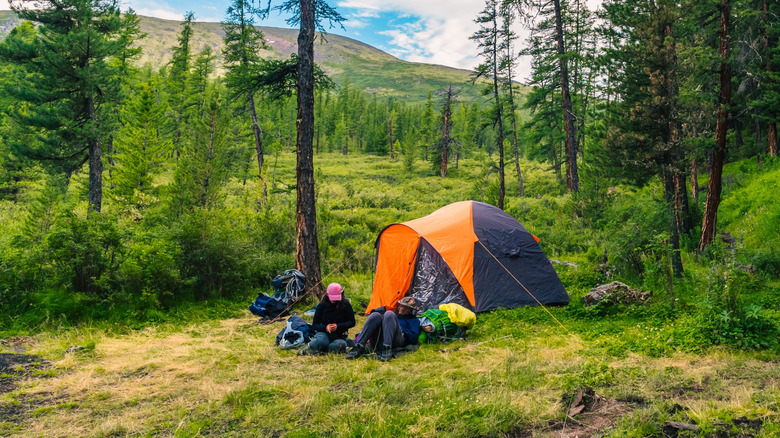
Before jumping headfirst into wild camping, however, there are a few additional things to consider. For one, you need to find a place to go, and while many state and national parks allow wild camping, not all do. So, it's best to check in advance, and see if any permits are needed. Also keep in mind that even if the park location allows wild camping, there no amenities will be included. This means you need to pack everything in and, just as importantly, out. That includes your water supply. With that in mind, you should consider carrying a device like a LifeStraw Personal Waterfilter, which enables you to safely make use of any natural water supply you come across, such as lakes and rivers.
While wild camping, you may also find that isolation — which sounded so appealing — is, well, isolating. Should so something go wrong, you are on you own and can't necessarily rely on help to arrive quickly. Additionally, you'll have to rely on yourself for awareness of changing weather conditions. So, carrying an emergency kit is absolutely imperative, as is being competent in at least the basic camping and survival skills. You will also need to know how to handle potentially dangerous wildlife encounters. With that in mind, a wild camping excursion may not be the best if you are camping alone for the first time.
Finally, you should be proficient in navigating to avoid getting lost in the woods, since there are no predetermined campsites or trails. So, you will need to be able to find your way back to camp if you roam off hiking or nature watching. Likewise, you'll need to navigate back to your vehicle at the end of the trip.