

The Popular Camping Tent You Should Avoid Using When Backpacking
We may receive a commission on purchases made from links.
If you're a backpacker looking to camp along the trail, there are an endless number of decisions to make. You'll need to choose the right backpack for your hike, plan for any emergencies, and perhaps most importantly, ensure you have the right tent for the experience. For many campers, it's impossible to go wrong with the geodesic dome tent, as it provides superior protection from the outdoors, efficient use of space, and offers many luxuries that a small pop-up tent simply can't accommodate. They're also useful for long-term camping for festivals or in rough weather conditions. Unfortunately, those looking to backpack through nature will quickly find that geodesic tents offer many downsides as well — including size and weight — which prevent them from being an appropriate choice.
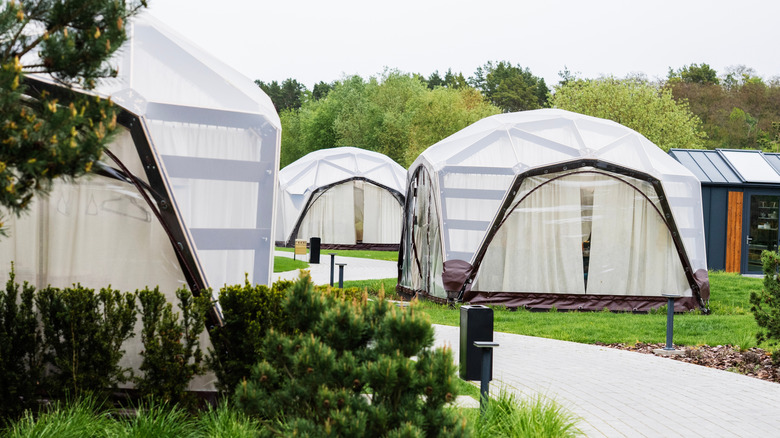
For those that don't know, geodesic tents are strong, dome-shaped structures with circular bases. They incorporate many poles, creating triangular "segments" in the canopy that mimic actual, hard-sided geodesic dome structures. Unlike a standard A-frame, geodesic tents offer a durable, reliable structure with lots of interior space. This is perfect for campers looking to set up a base and stay put for multiple nights, and there are even hard-sided, semi-permanent versions for glamping. But it poses significant complications for backpackers interested in picking up and moving further down the trail as they travel.
The most obvious reason why a backpacker would shy away from a geodesic dome is simple: the weight. These domes are often made for many people and can weigh anywhere from 10 to 50 pounds, They also take up a lot of precious backpack real estate. If you need to easily carry your tent in your backpack, you'll almost certainly need to explore other options.
What tents are suitable for backpackers?
As you can imagine, the set-up and take-down process for geodesic dome tents is also significantly more involved than that of a one- or two-pole hiking tent. This can make the complex structures a real headache for those who intend to get an early start on the trail. If you're settling in to a campsite for the week, a geodesic tent is an excellent option, but it certainly doesn't lend itself to the daily, minimalist grind of a backpacking adventure where supplies are measured in tenths of ounces. Obviously, this doesn't mean backpackers have to settle for a low-quality sleeping experience: In fact, bringing appropriate shelter is one of the hiking essentials you need in an emergency.
As long as you're not camping somewhere freezing, or surrounded by trail predators, consider investing in a light or ultralight frame tent. These tents, which include the NEMO Equipment Hornet Osmo 2-person ultralight backpacking tent (2.09 pounds), offer extremely lightweight fabrics, in order to provide quick and easy set-up experience. If harsh weather conditions are a key concern for your destination, opt for an all-season tent, which relies on stronger materials for a more insulated camping experience. These structures, which include the MSR Access 2-person lightweight 4 season tent (3.63 pounds), will generally be a little heavier, but still significantly lighter and easier to set up than a geodesic model.