

The Popular, But Surprisingly Dangerous Time To Hike At Mt. Rainier National Park
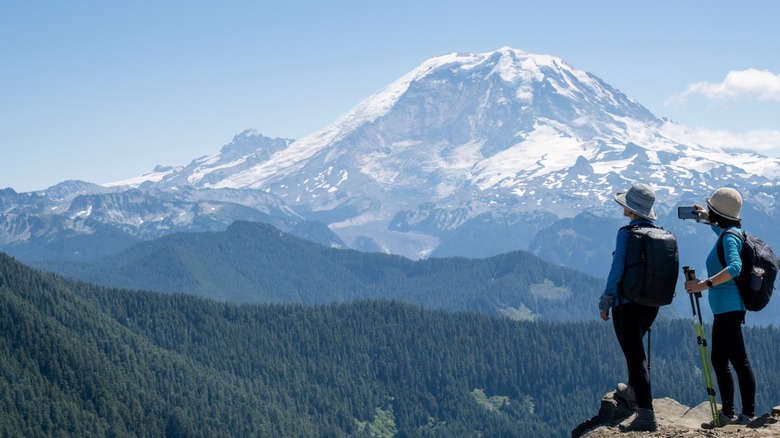
Mt. Rainier National Park, the fifth oldest park in the U.S. national park system, is a popular destination in Washington State all year round. Located on the western slope of the Cascade Range, one of its main attractions is Mt. Rainier itself, the tallest volcano in the contiguous U.S. and the ultimate focal point of the park. With its unpredictable weather patterns, Mt. Rainier is one of the most dangerous mountains to climb in the U.S. Many amateur hikers would assume that the most dangerous time to venture out on a trail in Mt. Rainier National Park is in the winter. However, springtime leading into early summer is actually more dangerous due several factors, including an increased avalanche risk. From unexpected spring snowstorms to shifting snow packs, it's vital to stay alert when hiking in Mt. Rainier between April and July.
Snow can remain at higher elevations even into the month of July. Spring lasts longer in Mt. Rainier depending on your location, which means the warmth of areas like Longmire will make the cold air and snow even more surprising as you drive up to the Paradise area that sits at 5,400 feet elevation. It's important that you know how to call for help when hiking in an area with no service, because cell service is often limited to visitor centers at higher elevations.
Staying safe on Mt. Rainier trails as the snow melts
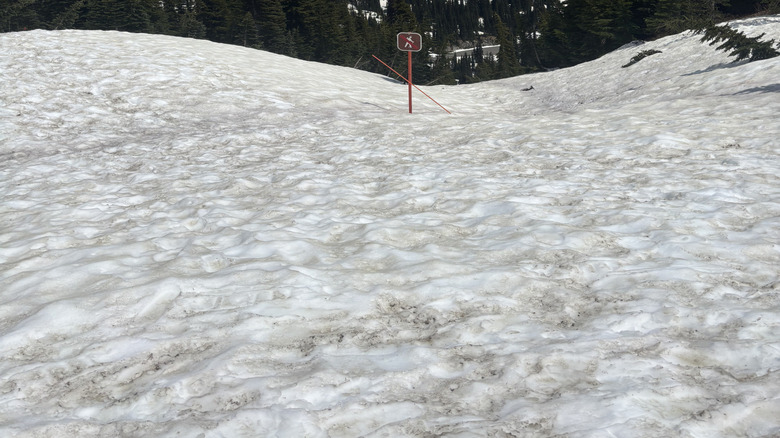
If you're planning a trip to Mt. Rainier in the unpredictable window from April to July, avoid making these massive hiking mistakes at all costs, including not checking trail conditions and not having a contingency plan. If you monitor the weather, you can know in advance if you should prepare for snow or cold. Furthermore, you should know what you will do during an emergency, such as a minor injury or pop-up storm. Your safety is your own responsibility, and most hazards are unmarked along even the most popular trails in the park, although rangers place poles in an 'X' shape or signs to warn hikers when they can.
To take safety into your own hands on Mt. Rainier, make sure you can identify potential hazards. Snow bridges form over streams or moving water, so listen for the sound of running water below the surface and don't go forward if you hear it. Avoid stepping too close to the edge of a path, because the snow there is likely a ledge or snow cornice that can easily collapse under enough weight. Also remember that temperatures fluctuate from early in the morning until the evening. You can encounter firm snow, mushy snow, and even ice all in one day of hiking. At the very least, expect a slippery ascent and descent on any trail, and bring the right shoes and gear, such as trekking poles, for the best experience when hiking into late July on Mt. Rainier.