

Grow These Two Plants Together For A More Hummingbird-Friendly Garden
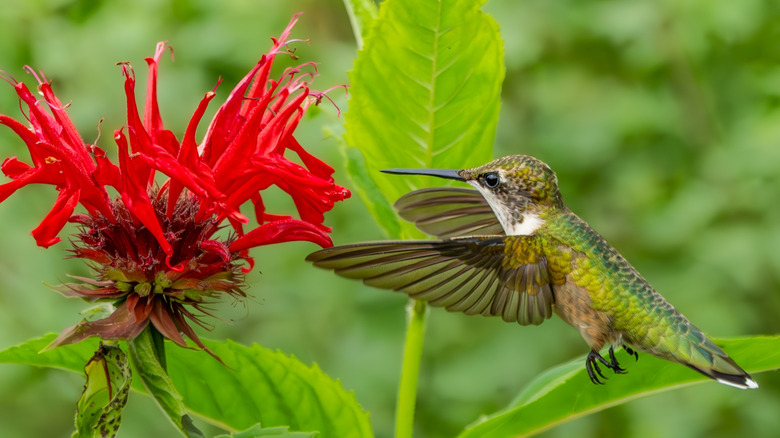
Some plants are better at attracting hummingbirds to your garden when they're grown in pairs. For example, there's lantana (Lantana camara) and the blanket flower (Gaillardia × grandiflora). Lantana's eye-catching flowers come in a variety of colors, including bright oranges and pinks that make hummingbirds' tiny hearts flutter. Long-beaked hummingbirds also appreciate the tube-like shape of this plant's blossoms, so they tend to seek them out. Additionally, ruby-throated hummingbirds use blanket flower nectar as fuel for upcoming migrations. They key is making them aware of these flowers, which usually don't bloom for very long. Since adding red to your garden can lure more hummingbirds, consider choosing this hue for your blanket flowers.
When planted on their own, blanket flowers tend to attract butterflies, bees, and songbirds. In warm climates, their first flowers appear in the late spring and the largest number of blossoms occurs in the summer. Lantanas typically start flowering around the time blanket flowers hit their peak. In the process, they let hummingbirds know that nearby blanket flowers have tasty nectar to offer them, too. Plus, lantanas bloom until the first fall frost, keeping your garden full of color — and nectar for hungry hummingbirds — after your blanket flowers have finished their vibrant display.
Lantanas and blanket flowers are easy to grow near each other. That's because they share a preference for full sunlight, neutral soil pH, and USDA hardiness zones 7 through 10. Keep the soil of both plants slightly damp and make sure it drains excess water well. Drainage is especially important for lantanas, which can be prone to root rot.
Special considerations for lantanas and blanket flowers
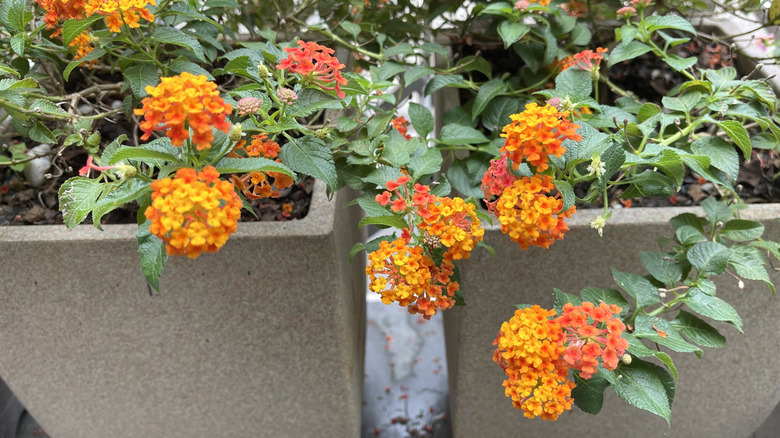
Though lantana isn't officially considered invasive in the United States, it's known for its fast and furious growth. This means it's capable of taking over a garden if left unchecked. To prevent this problem, consider planting it in containers. It's happy to grow in hanging baskets as well as large pots you can station near an in-ground flower bed. Some varieties can grow as wide as 5 feet and as tall as 6 feet, so plan accordingly when choosing a container.
Blanket flowers don't spread as readily as lantanas. Helping them bloom for as long as possible is likely to be your main concern. Removing flowers that have reached the end of their blooming cycle, a process known as deadheading, encourages blanket flowers to blossom for a longer period of time. To deadhead these flowers correctly, snip off spent blossoms and any parts that contain seeds. This gives your plants more energy to put toward flowering.
If you have small children or pets, steer them away from lantanas since they are poisonous when ingested. Hanging baskets can help keep these flowering shrubs out of reach. Blanket flowers, on the other hand, aren't toxic. In fact, goldfinches love to snack on their seeds.