

The Common Mowing Mistake That'll Add To Your Lawn's Crabgrass Problem
We may receive a commission on purchases made from links.
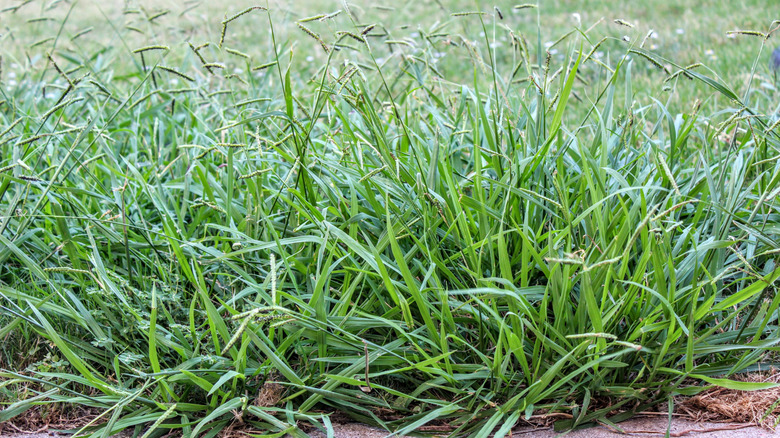
Are you tired of unsightly clumps of crabgrass conquering your beautifully manicured yard? If so, you're not alone. Weeding your yard can be time consuming, increasing your garden workload as you spend hours kneeling and tending to these frustrating weeds. Plus, it may seem like all your work in the yard is in vain when the dreaded crabgrass returns in just a few days. Like with other lawn problems, prevention is often the best cure, and if you're struggling with keeping crabgrass from returning time and time again, the problem may lie not in your weeding methods but your lawn-mowing routine.
While crabgrass may be the bane of your existence, at its core, it's just a plant. And, like all other plants, it has favorable conditions where it grows best. When you cut your lawn as short as possible, it may seem like a clever way to reduce yardwork through less frequent mowing, but it's actually a lawncare myth that may be doing more harm than good.
While your grass may faint under the intense beams of heavy sunlight, crabgrass thrives in it. In fact, crabgrass prefers hot, dry conditions. When you cut your grass short, you take away much of the shade that the longer blades were providing the soil with. This, in turns, increases the temperature, creating an environment where crabgrass can thrive and outcompete your grass. Instead, there are better ways to keep your yard picture-perfect while controlling crabgrass, as well as removing it if it becomes a problem.
How to control crabgrass
One of the best ways to avoid crabgrass in your yard is to utilize a mowing technique for weed control to stop crabgrass naturally. Cutting your yard short can be tempting, especially with how busy summer can get, but leaving your grass longer can help with any pesky weeds. When you leave your grass at least three inches long, it can shade out any potential weeds like crabgrass and develop a healthier root system for a picturesque lawn. With the cooler soil temperatures provided by longer grass, you can also reduce how much water your lawn needs, which is especially helpful during the warmer months.
If you're committed to your low-maintenance yard routine but don't want to deal with crabgrass, there are other ways to find balance too. For example, you can consider one of the various grass alternatives for a no-mow yard. While these may look a bit different than you're used to, you can choose options that fit your lifestyle and climate, taking some of the burden of frequent yardwork off your plate. Grass alternatives like clover may not hold up as well to foot traffic as grass, but they provide dense ground coverage that helps fight weeds.
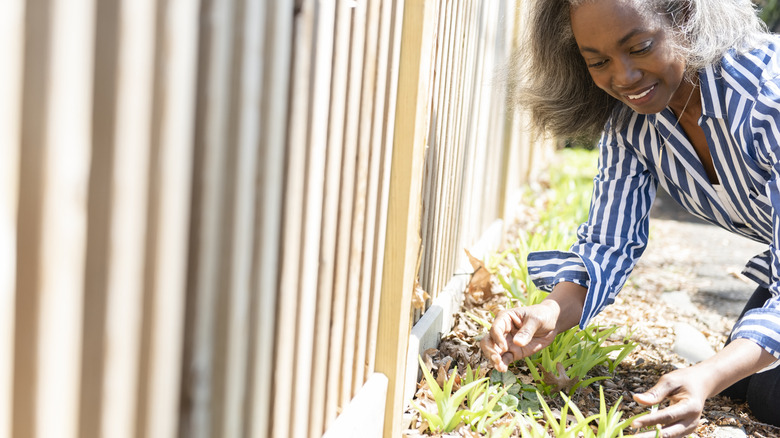
Even with a consistent routine and tip-top lawn care, crabgrass may still make the occasional appearance in your yard. If you're dealing with just a small infestation that involves a clump here and there, then the best way to remove crabgrass is manually. Thankfully, gone are the days of needing to kneel in your yard in the summer heat and pull weeds by hand. Instead, you can purchase an extended weeder like the Grampa's Weeder that pairs a weed-grabbing claw with a long handle for more comfortable weeding.