

Waterproofing While Hiking And Camping Just Got Easier With A Must-Pack Essential
We may receive a commission on purchases made from links.
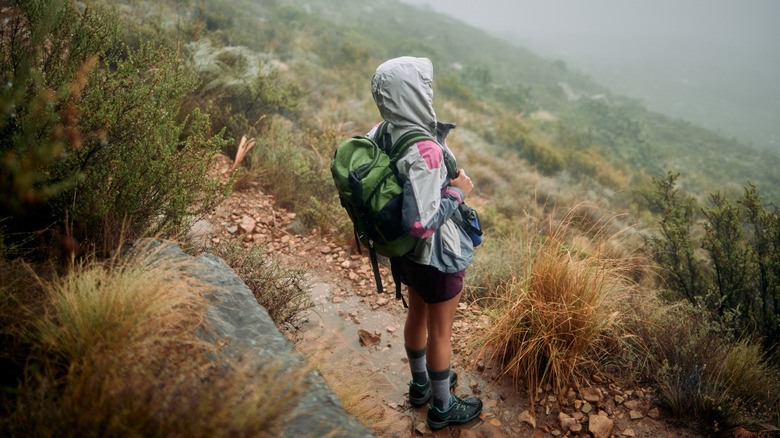
Everyone loves being outdoors on perfect weather days. However, anyone who has spent much time hiking and camping knows there will be times when it is impossible to avoid getting rained on. When the inevitable happens, there are no shortage of hacks to keep your gear dry. Unfortunately, when in the field, waterproofing can be a real hassle. Methods that seem simple while safely working in your garage can be much more difficult to execute if you are caught in a thunderstorm while tent camping or find yourself in a deluge while on the trail. However, waterproofing while hiking and camping just got easier with a must-pack essential — beeswax.
While there are a number of synthetic waterproofing sprays and liquids, beeswax holds several advantages over these products. For one, it's natural and eco-friendly and, because it contains no chemicals or artificial ingredients, it is safe for adults and children alike. It is also easy to use, allows the fabric to remain somewhat breathable, and is very effective on porous, natural fibers like cotton and canvas. Additionally, it doesn't require an elongated drying period in order to be effective. Although you can typically do neater work and give a more even coat if you have the luxury of time and are working in controlled conditions, beeswax can also be used for emergency waterproofing with almost immediate effectiveness.
How to use beeswax to waterproof hiking and camping gear
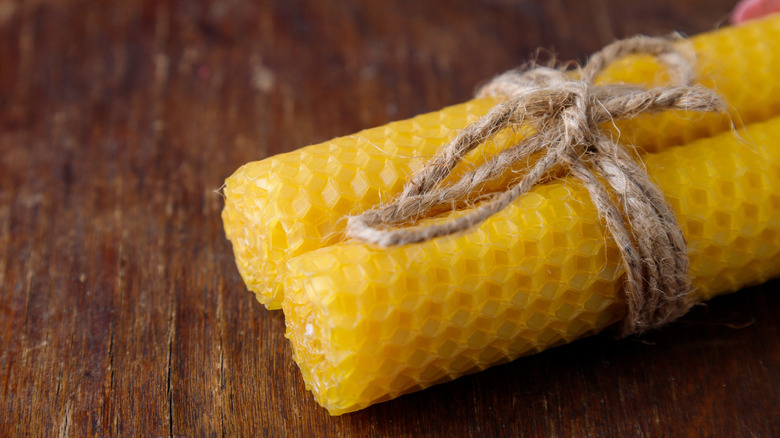
There are several ways to apply beeswax in order to waterproof your camping gear. To start off, you have to decide what kind of beeswax to use as it can be purchased in several forms. Beeswax candles, bars like Alternative Imagination 100% Beeswax Bar, and pellets are all common. Additionally, wipe-on products such as Skidmore's Premium Beeswax Waterproofing are also available. These wipe-on versions are the simplest of all to use. As the name implies, you only need to wipe the beeswax waterproofing substance on with a cloth or sponge to make your hiking and camping gear water repellent.
Using beeswax in any other form, such as bars, candles, sheets, or pellets, takes a few additional steps. One common method is to melt the beeswax in an old saucepan, then brush it on the material you'd like to waterproof. Another way to do it is essentially the opposite. Start by rubbing beeswax all over the material, then use a heat source to melt it into the material. When working at home, a hair dryer can accomplish this. When in the field, a lighter, propane torch, candle, or campfire can be used. Yet a third method combines the two. This involves melting the wax before applying, then heating it again after it dries on the fabric.
While beeswax is handy to pack in your hiking emergency kit for field repairs, it is also good to regularly reapply to various pieces of gear before heading out on an adventure to ensure they are waterproof. That is because waterproofing does not have an indefinite life. Even if you bought the best boots for a wet hike, for instance, they won't remain that way if you don't reapply a waterproof seal from time to time.