

How To Repurpose A Coir Doormat In Your Garden's Compost Pile
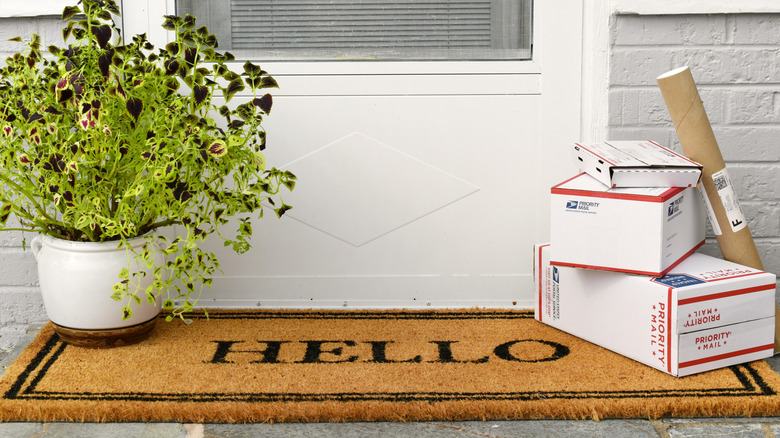
When it comes to doormats, all materials are not made equally. Some mats are made of rubber, some contain synthetic materials, and yet others are made of coir, which is just a shorter name for coconut husk fibers. A coir doormat is that classic brown, bristly material that works wonders when it comes to scraping mud, debris, and slush off shoe soles when anyone wipes their feet on the mat. Coir is quite common as a doormat material because it's renewable and durable, and it resists rot. It's also completely biodegradable, assuming the mat is made entirely of coir.
Even though it's durable, a coir doormat doesn't last forever. It's prone to shedding and could break down over time after years of weather extremes and general wear. The good news is that any shed fibers, as well as the doormat as a whole, can be added to the compost pile. It's also a worthwhile material to repurpose in other ways, such as cutting it into smaller mats to use as a mulch that deters pests around your plants.
How to compost a coir doormat
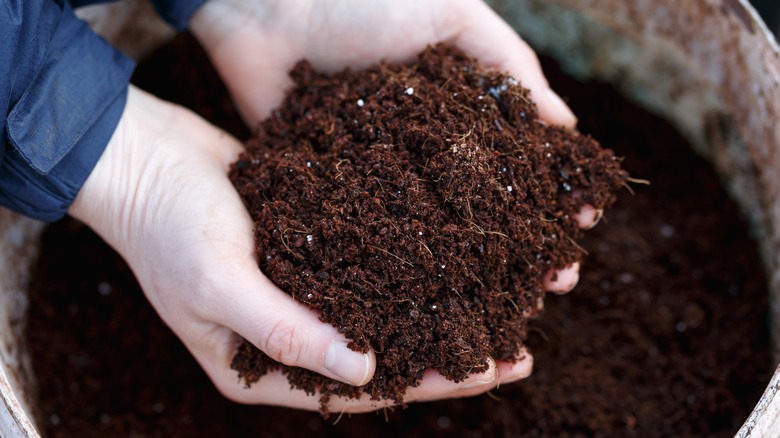
Prepare an old coir doormat for composting by taking it outside and flipping it over to ensure it doesn't have an added synthetic backing, as that should never go into a compost pile. If you wish to save every last coco fiber, work over a tarp, as the mat will shed a bit as you work with it. If the mat does have a backing, remove the backing and discard it if it's in no condition to reuse for another project.
While wearing durable work gloves to prevent skin irritation from the coarse fibers, tug at the coir doormat along any places it's already starting to separate. If that proves difficult, use strong shears or a utility knife to slice it apart. Making the doormat bits as small as possible helps it break down faster in the compost pile, as is true for other items that go into the compost, such as banana peels or watermelon rinds. You can even add natural wine corks to the compost pile while you're at it. Coir counts as carbon-rich brown matter in compost, while fruit rinds, peels, and similar food waste are nitrogen-rich green matter.
Layer brown matter and green matter in the compost pile and turn it regularly with a shovel or pitchfork to prevent compaction. Add a little water from time to time if it dries out, as a little moisture is helpful too. Mix other coir shreds from the doormat into the garden as a soil amendment. The fibers help aerate the soil and improve soil structure.