

Get Rid Of Slime Mold In Your Garden With The Help Of A Common Household Staple
We may receive a commission on purchases made from links.
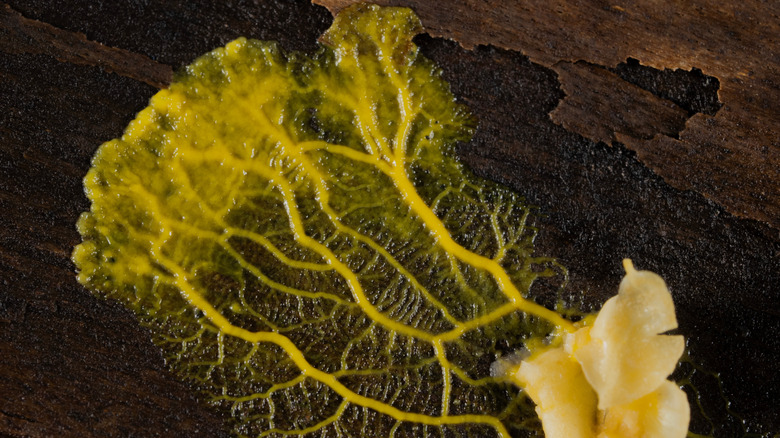
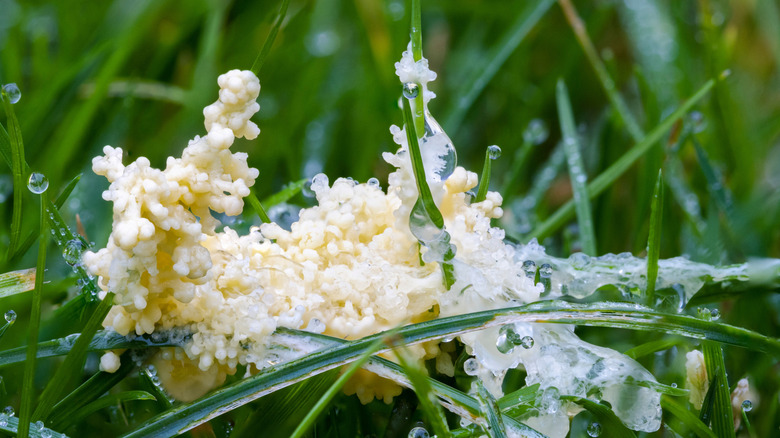
Midway through the summer, when the heat and humidity reach their peak, you may encounter slime mold on your lawn. This slimy stuff comes in many colors, including red, yellow, white, or gray. While it's not a true fungus, it shares similarities. For example, it reproduces with spores and is single-celled. It may look simple, but this organism is more complex than you might think. In fact, it can move toward the decaying organic matter that it consumes. A lot of people want to get rid of slime mold because it's unsightly, but it's important not to use fungicides or chemicals that can kill organisms that strengthen your soil's health. That's why some people use hydrogen peroxide instead of Roundup.
Before you go after the slime mold in your yard, it's important to remember that it's not necessary to get rid of it. The idea that slime mold is harmful is a lawncare myth that you can stop believing. Slime mold does not damage your grass or plants, although it might rely on them for structural support. Also, it's not dangerous to pets or people. The mold will also break down dead material, which is valuable to any ecosystem's health. However, since the mold spreads quickly, it's understandable that you would want to control how much of it grows in your yard, and here's how hydrogen peroxide can help.
How to use hydrogen peroxide to remove slime mold from your backyard
You'll need a few things before you get started on this project. Gather gloves, a spray bottle, a soft-bristled brush, and a bottle of hydrogen peroxide. You want your hydrogen peroxide to be about 3% because anything higher can damage grass and other plants. Fill the spray bottle with nine parts water and one part hydrogen peroxide.
Use the brush to scrape away clumps of the mold, and then spray the mold with the mixture. After a few minutes have passed, pour water over the spot where you sprayed the mixture. Revisit the spot a few days later, and if the slime mold is still healthy, repeat the process. It's also a good idea to test your hydrogen peroxide mixture before applying it to large swatches of grass. So, before you go after the mold, you can spray the mixture on a portion of grass behind your shed or under your porch. If the grass dies after a few days, then further dilute the mixture. But if the grass stays healthy, then use the mixture on your mold.
Slime mold isn't the only kind of mold that can take over your lawn — snow mold is also common. However, there is a crucial lawn care step that you can take to stop it from spreading or appearing in the first place: Lawncare experts say that keeping dead leaves out of your yard can prevent mold from growing.