

How To Stay Safe While Hiking Near Waterfalls
We may receive a commission on purchases made from links.
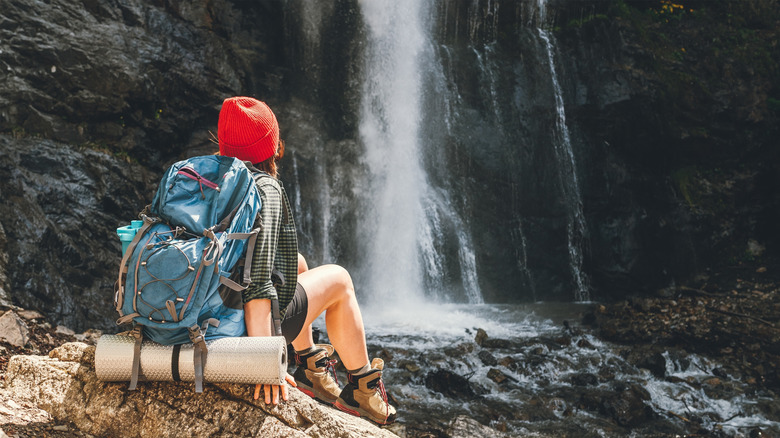
One of the most spectacular sights you can see while hiking is water cascading over a sheer cliff or steep incline. So it's little wonder that waterfalls hold so much attraction for hikers. However, even though many believe waterfalls are good for mental health, at times they can be detrimental to physical health. This is evidenced by the numerous incidents resulting in injury and death by hikers visiting waterfalls across the U.S., including several recent fatal falls. This spate of tragedies underscores the need to take extra precautions when hiking around these beautiful, but potentially deadly, natural features. So before you hit the trail in search for sheets of falling water, it is important to know how to stay safe while hiking near waterfalls.
Considering some of most dangerous hikes in the U.S. are on trails featuring waterfalls, it is critical you be prepared, including carrying the 10 hiking essentials in case of emergencies. Anyone hiking to a waterfall needs to be properly dressed from head to toe. They also need to follow all the trails and posted signs. While the water may be tempting after a hot hike, in order to stay safe, it's best to stay on dry land. Keep in mind, that even the land surrounding a waterfall may not be all that dry, so expect tricky footing in some spots. Additionally, even if you are on a trail that allows dogs, you need to keep pets and children close to you while hiking near waterfalls.
Wear the right shoes and check the weather
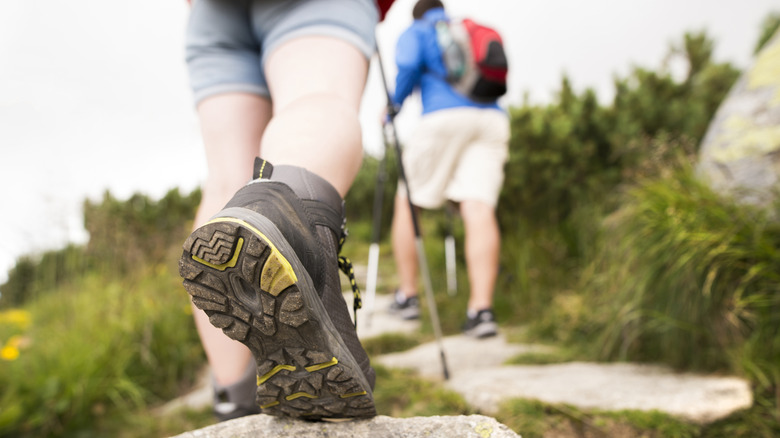
No matter the trail, one of the biggest hiking mistakes to avoid is wearing the wrong footwear. Although not wearing the right shoes can cause discomfort or possibly minor injuries on any trek, while hiking around waterfalls wearing the wrong hiking shoes can be dangerous in many ways. Even during the summer months, you should avoid wearing sandals or flip-flops. While it may be tempting considering the wet conditions, you need ankle support for uneven terrain and good traction on the often slippery surfaces. Therefore, it is much better to choose the best hiking boots for wet conditions — a lightweight pair made from waterproof materials that provides excellent support and grip.
While it is always wet around waterfalls, it is still important to check the weather before and during hiking to make sure you aren't dealing with extra water from falling rain. This should be a part of your preparation for every hike, of course. However, waterfall trails are often on serious inclines. Rain can change the conditions of these paths dramatically, quickly creating a dangerous situation. Additionally, many trails near waterfalls are subject to flash flooding. High winds should also be monitored, as they add to the danger, especially in areas with a precipitous drop.
Not only should you be aware of the weather forecast, you should dress appropriately for the conditions. Even if no rain is forecast, it's a good idea to carry some lightweight rain gear in your pack. Often times the air is filled with mist at the base of a waterfall. Although that may feel refreshing in the summer, during the chillier times of year, the rain gear can help keep you dry as you approach the falls.
Stay on trails and don't jump in or swim
Regardless of where you are hiking, it is always recommended to stay on the trail. This helps prevent getting lost and protects plant and animal species. When hiking to waterfalls, it can be tempting to leave the trail in order to access the river or get a better view of the falls. However, given that there are often steep drops leading to the rivers around waterfalls, accidentally falling over the edge is a very real possibility if you leave the trail. So, stay on the trail, accessing the river and falls only at designated access points and viewing areas.
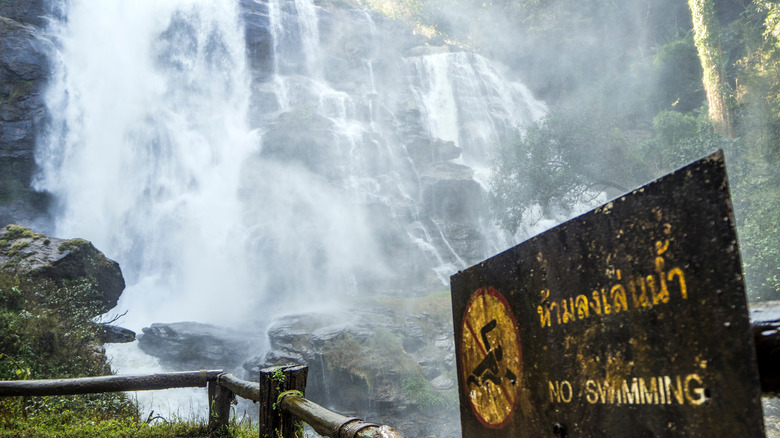
Once you do reach the water, don't automatically assume you can swim there. In fact, the water at the base of many waterfalls is off-limits to swimming. Before entering the water, first be sure it is actually allowed. Even if you are able to get into the water, be aware of the often strong currents, as well as underwater objects. Never attempt to exceed your own abilities by entering areas that you are unsure of. Additionally, never jump off falls into the pools below. The water in these pools may be shallower than you realize, have unseen objects scattered around, or have currents that make it difficult to surface.
Avoid slippery rocks and don't risk it all for a selfie
Falling over the edge of a waterfall can lead to serious injury or death. To limit the chances of that happening, you need to be well aware of where you are and what you're standing on at all times. Even if you are wearing a great pair of wet condition hiking shoes like the La Sportiva TX Canyon Approach hiking shoes, you need to try and avoid stepping on slippery rocks. This can be extremely difficult given the spray from waterfalls often coats rocks along the trail. Rocks in or near the river are going to be wet as well, and often covered with moss or other growth causing them to be extra slick.
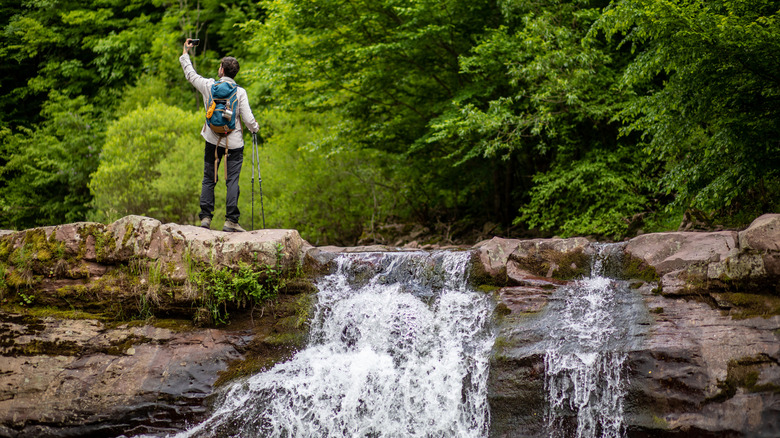
One of the most common reasons people lose focus of their surroundings — besides looking at the waterfall — is taking photos. While it is natural to want to capture images of the scenery at the end of a hike, you need to be aware of your surroundings while snapping those photos. The distraction tends to amplify when taking selfies. While focusing on trying to get the perfect shot of yourself with plunging waters in the background, it is easy to forget where you are in relation to the edge. Rather than risk it, ask another hiker to take the photo for you. Regardless of how it's taken, stay a safe distance from the edge at all times.