

The Best Method For Watering Your Peace Lilies
We may receive a commission on purchases made from links.
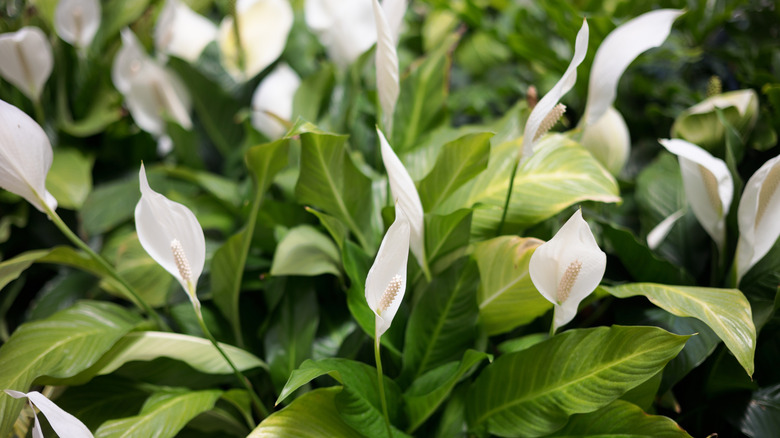
Peace lilies (Spathiphyllum spp) are extremely popular plants throughout the U.S. This is partly due to their visual appeal and, for those keeping them indoors, their ability to purify the air. The fact they are also considered fuss-free plants that are easy for beginners to grow is yet another reason for their popularity. However, although they are relatively maintenance-free, they still require some attention, particularly when it comes to watering. As for their moisture needs, it is important for growers to strike a balance, as peace lilies thrive in moist soil, but can fade fast if there is too much water. While there are several ways to provide them with water from above and below, to make sure the proper moisture level is maintained, it is important to find the best method for watering your peace lilies.
Regardless of which method — or methods — you eventually settle on for watering your peace lilies, it is equally important to be able to tell when they are in need of more moisture. Since they are native to rainforest and tropical regions, peace lilies do best in humid environments that naturally maintain the soil moisture level. Given that, in the U.S., most are kept indoors and household air tends to be quite dry, it is necessary to consistently monitor the moisture level of the soil surrounding the plant. One way to be able to tell if the soil is too dry is to monitor the leaves. Drooping or wilting indicates a lack of adequate moisture. You can also feel the top inch or so of topsoil. By contrast, if the plant's leaves turn yellow, the soil may be oversaturated.
Ways to water your peace lilies
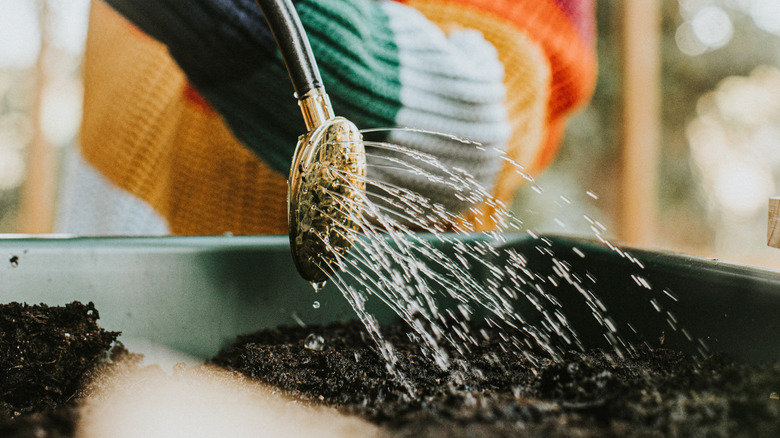
When it is time to water your peace lilies, there are several options from which to choose. Pick the most convenient method, as well as which is most practical based on the size and location of the plant. Watering the soil surrounding the plant with a watering can is a simple and perhaps the best way to avoid the common mistake of overwatering. To make sure you add the right amount, continue to add water until it starts to run out of the drain holes in the pot. Dump any residual water that remains in the tray beneath the pot. If the plant is tight to the edge of the pot, it can be helpful to use a narrow spout waterer such as the Qilebi Watering Can for Indoor Plants.
If the pot and plant are able to be easily moved, you can also top-water by placing it in a sink or tub and running water directly from the spout. Again, add water until it runs from the drain holes. Allow the plant to sit and drain all excess water before returning it to its regular location. Whether using a watering can or sink spout, when top watering, it is helpful to water the soil all around the plant to wash away excess salt or mineral buildup from atop the soil.
You can also bottom-water the plant by adding water to the tray the pot is sitting in. As the water is absorbed into the dirt, continue to add more. The best way to ensure the right amount is to wait about 10 minutes after filling the tray, then test the topsoil. Repeat this process until the topsoil is moist, draining off any remaining water in the tray.