

Discover The Way Bears Behave In The Wild At A Must-Visit Alaska Destination
We may receive a commission on purchases made from links.
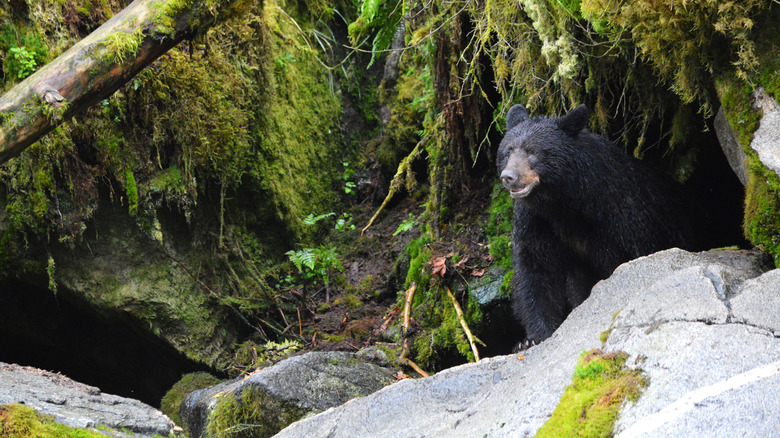
Wildlife getaways are increasingly popular, and bear watching tops the list for many adventure travelers. Considering Alaska is the state with the highest bear population, it is little surprise that it is also home to many of the best national parks for bear watching. However, one of the absolute best places for viewing these massive mammals is actually a national forest. Tongass National Forest — the largest national forest in the country — is not only home to a healthy population of both black and brown bears, it also features a half-dozen bear viewing sites. Among those is the Anan Wildlife Observatory, which is a perfect spot for visitors to discover the way bears behave in the wild.
While there are bear watching destinations throughout the United States, Anan is unique in that it allows visitors a relatively safe platform from which to view bears going about their normal routine, including hunting salmon. Given that both the black and brown bears (there's a difference) that frequent the area are among the most dangerous types of bears, and bear attacks are on the rise, this is no small consideration. Additionally, the isolation of the observatory means bears see relatively few people, which is starkly different than many other national parks and forests where bears have become habituated to humans.
Why Anan Wildlife Observatory is an ideal bear viewing spot
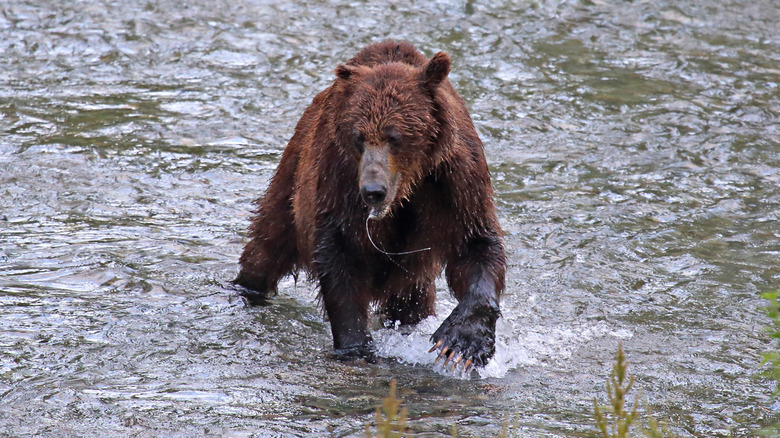
There are several factors that combine to make Anan Wildlife Observatory an ideal bear viewing spot. For starters, Alaska is home to a combined black and brown bear population in excess of 130,000 animals, more than any other state in the U.S. Additionally, much of Alaska's landscape has remained uninhabited and in a natural state. This certainly describes the area around Anan Wildlife Observatory, which can only be reached by boat or floatplane.
The remoteness, lack of development, and wide-open wilderness of the Tongass National Forest and Anan Wildlife Observatory not only means the bear population can thrive (the Tongass has the highest density of black and brown bears in the world), but also allows them to maintain their natural behaviors and habits. One of those natural behaviors is hunting, catching, and eating migrating salmon. Anan Creek, which flows next to the observatory, sees a huge migration of pink salmon each summer. This both draws in an increased number of bears and affords visitors the unique opportunity to view bears harvesting salmon.
Another benefit of a visit to Anan for viewing bears in the wild is the stable viewing platform and onsite facilities. The observatory features a covered viewing area, multiple viewing decks, and a designated photo blind. Outhouses are also available onsite. These amenities add to both the safety and comfort of an otherwise rugged and remote location (you'll need to bring in your own drinking water).
What to know before visiting Anan Wildlife Observatory
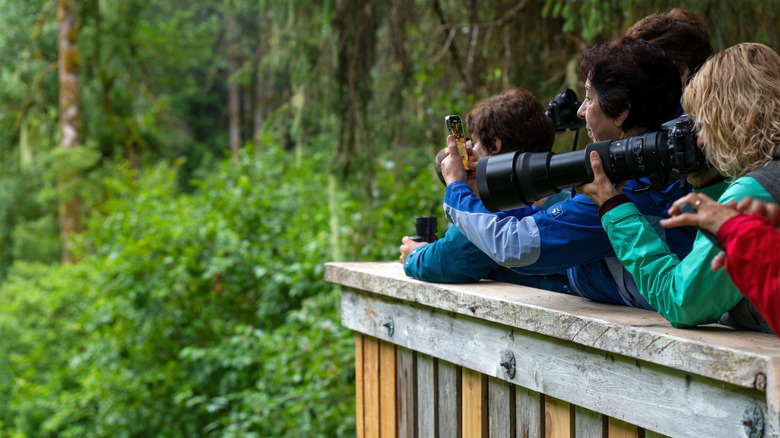
The main thing to know before visiting Anan Wildlife Observatory is you can only get there by boat or floatplane, although both guided and unguided trips are possibilities. With a guided trip, transportation to and from the observatory is typically included. However, if you are going on an unguided excursion, you are responsible for your own transportation. This means you can either arrive in your own boat or floatplane, or hire a private boat or plane. Additionally, if you are not taking a guided tour, you will be required to purchase a permit ahead of time if your visit coincides with the peak viewing time, which runs July 5 to August 25.
During peak viewing season, the trailhead is staffed by Forest Service employees, who will check your permits and give a quick orientation on trail and bear safety. From the trailhead, it is a half-mile hike to the observatory. The trail itself is nearly three feet wide and covered in gravel, although it can be slippery if rainy weather moves in. If you hope to utilize the photo blind, you'll be climbing about three stories worth of stairs.
Even though the observatory is a relatively safe platform from which to view bears, the entire area is densely populated with bears. Visitors are encouraged to safely carry bear spray so it is conveniently accessible on the trail. Additionally, if you are not familiar with products such as SABRE Frontiersman Max bear spray, it is important you learn what bear spray is and how to use it before venturing to the observatory. While there, you should always follow safe bear practices, such as making noise to avoid bears while hiking, give them plenty of space, and never feeding them.