

How To Quickly Treat Rust Fungus On Your Lawn
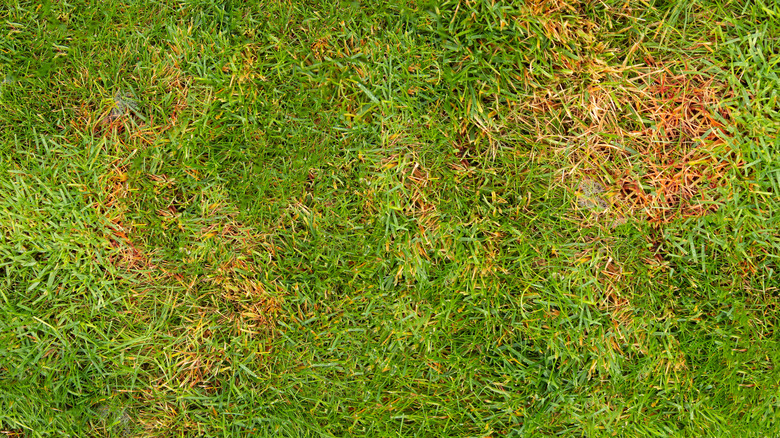
Your lawn is one of the first things people see when visiting. After spending so much time and effort tending to it, you want your yard to be picture-perfect. However, even when you do everything right and take all the secret steps professional landscapers recommend for a dream lawn turned reality, you may find yourself faced with dreaded rust disease. When it comes to keeping a healthy, picturesque yard, preventing lawn rust using simple tricks is the best solution. However, if you miss the window to stop rust fungus before it becomes a problem, there are still ways you can quickly treat it.
Lawn rust is a type of fungal disease most often seen in Kentucky bluegrass, perennial ryegrass, and tall fescue. With this yard ailment, you'll find your grass is coated in an orange-brown powder. What starts out as a minor hassle can quickly grow into an aesthetic nightmare as your once vibrant yard is left discolored, weak, and unhealthy by lawn rust.
If you're in the midst of battling lawn rust, don't pick up the fungicides yet. Instead, implement these simple lawn routine changes to try and tackle the problem at its root (pun intended).
How to treat lawn rust in your yard
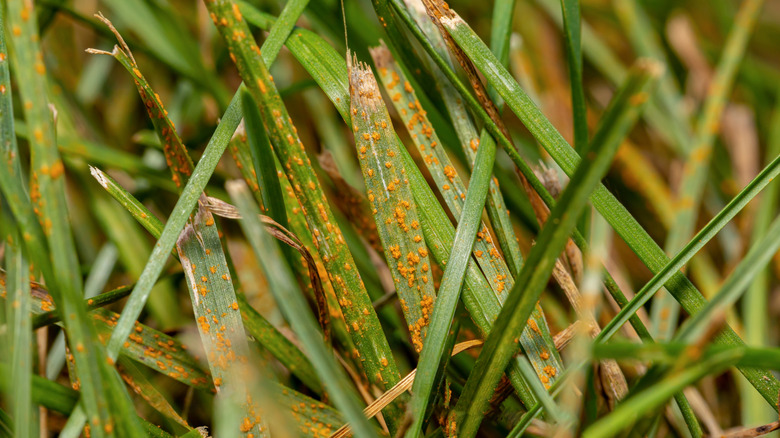
Dealing with lawn rust is frustrating, and it can be tempting to rush to the hardware store and purchase fungicide at the first signs of this annoying lawn disease. However, fungicide isn't actually recommended for treating lawn rust as a first option. Instead, it's best to try a few simple changes to your lawn care routine and rely on fungicide as a last resort, on a well-established lawn before winter dormancy sets in.
To treat lawn rust in your yard, start by identifying any areas where you may be falling into the trap of common lawncare myths you can stop believing. Start by assessing how much you're watering your lawn. Daily watering may be needed in some circumstances, but, overall, it's better to water deeper and less frequently. This satisfies your grass' need for hydration without overdoing it and creating the perfect soggy place for rust fungus to thrive. Watering during the morning rather than the evening can also be helpful, giving your grass ample time to dry rather than sit in moisture.
If switching up your water routine doesn't solve the problem, there are a few more steps you can take before resorting to fungicide. Trimming back trees and shrubs that are creating shady, moist areas on the lawn can help. Depending on the time of the year, your lawn may benefit from additional fertilizer, or it may require aeration to help water drain and maximize nutrient absorption.