

Here's How Often You Should Really Be Cleaning Your Backyard Birdbath
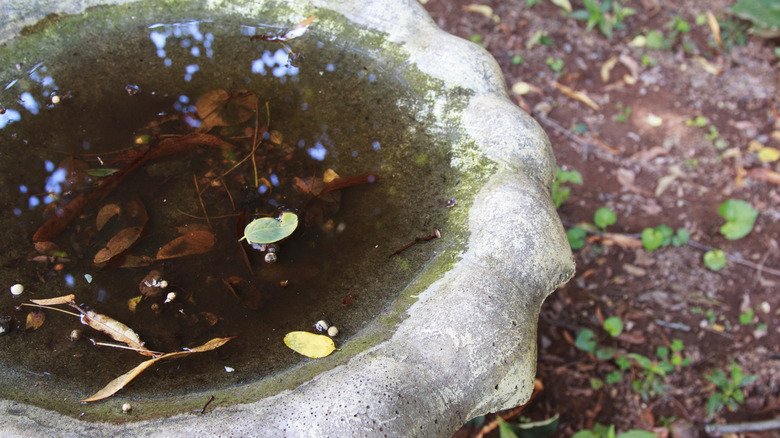
A birdbath is a proven way to attract new feathered friends to your backyard, but there's a bit more to maintaining it than simply refilling the water when it gets low. Birds, like people, appreciate clean water in their baths. It's surprising just how quickly birdbaths get dirty, especially during hot summer weather or after multiple birds splash around in the water. Leaf debris, dirty rain water, bird droppings, and algae are all capable of mucking up that water seemingly overnight. Mosquito larvae are another reason to clean your birdbath frequently, even if the water seems relatively clean otherwise. Water that sits still for days on end could result in a hatch of fresh mosquitoes, otherwise known as the bane of backyard activities.
How frequently you should clean a birdbath depends upon several factors including the temperature, but as a general rule of thumb, plan on cleaning it every two to three days. It's a good idea to always wear rubber gloves when handling the basin part of the birdbath due to germs and bacteria that tend to accumulate on the basin and in the water.
How to properly clean your birdbath and slow down algae growth
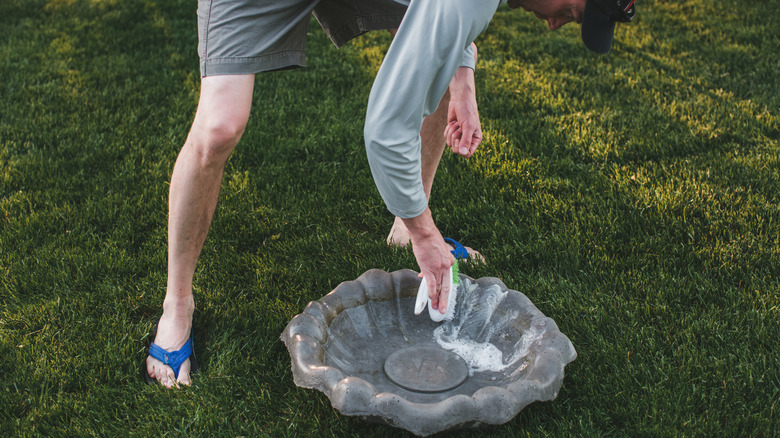
To clean a birdbath, first dump the old water into a flower bed or somewhere the ground can absorb it. Avoid being splashed by the water, if possible, to keep yourself and your clothes clean. Use a hose to spray any caked-on gunk out of the birdbath, or dump a bucket of water into it to help rinse out residue. Add a little more water and scrub the basin with a nylon-bristled scrub brush. You may wish to keep the brush just for birdbath-cleaning use to avoid spreading contaminants elsewhere. Dump out the water once again.
Mix 9 parts water with 1 part white vinegar, then dip a clean scrub brush into the solution and scrub the basin again. Scrub any detailed or textured areas where algae or scum may build up. Avoid using typical household cleaning solutions in a birdbath. Standard soaps such as dish soap aren't a good idea, as any residue could remove some of the oils that waterproof a bird's feathers. Once the basin looks clean, rinse it out, then let it dry so all remaining vinegar evaporates. Refill the basin with fresh water once again.
To help slow algae growth, place the birdbath in the shade, and dump the old water and refill it frequently. Scrub the bath right away if you find algae in it. Adding a moving water feature such as a fountain or bubbler attracts more birds thanks to the sound of the moving water. The same motion also makes the water less attractive to breeding mosquitoes.