

The Drought-Tolerant Cascading Flower That Blooms Throughout The Hottest Summers
We may receive a commission on purchases made from links.
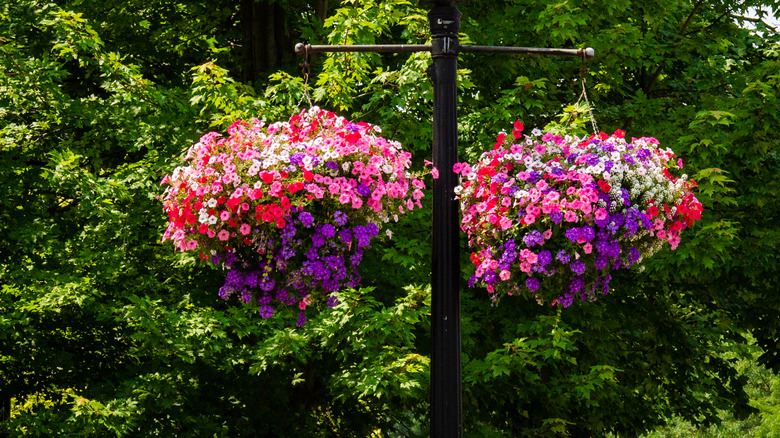
Plants growing in pots, baskets, and other containers have different hydration needs than their in-ground counterparts. In addition to requiring a higher volume of water, they typically have to be watered more often. Many benefit from a cool drink twice daily when the weather is especially hot and sunny. These generalizations don't really apply to the cascading plant known as the fan flower (Scaevola aemula). It seems to be gunning for the title of "toughest thing you can grow in a hanging basket." If the soil in its container dries out during a heat wave, it will keep making oodles of flowers just to show you it means business.
Fan flower is native to hot, dry regions of Australia, so it's no surprise that it can handle desert-like conditions. In the United States, you can grow it as a perennial in USDA hardiness zones 10 and 11 and an annual elsewhere. This colorful, fuss-free plant is ideal for gardening beginners and people who've nearly given up on plants because they've forgotten to water them so many times. Fan flower is quite an adaptable garden resident, welcoming full sun or partial shade and soil pH ranging from acidic to alkaline. It will even grow on rock walls that most other plants won't touch. Its maintenance needs are minimal, too. You won't have to put a bar of deer-deterring soap near your garden since fan flower isn't very appealing to these woodland creatures. There's no need to deadhead its blossoms, either, so you'll have more time to simply enjoy your yard.
The main issues to avoid when growing fan flowers
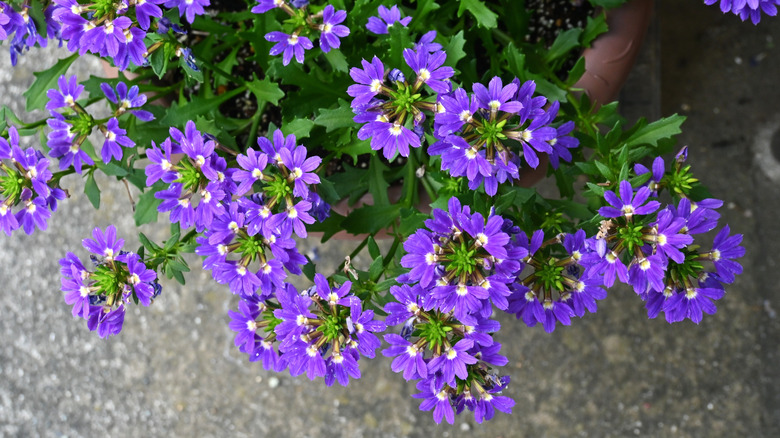
Ever the overachiever, fan flower is chasing a second title as well: "most blossoms in one growing season." This summer bloomer explodes with flowers until frost hits in the fall, offering an over-the-top display even on the hottest days of the year. Stagnant water is the main issue that might keep it from showing off. That's because fan flower dislikes water pooling around its roots, a situation that encourages rot. Make sure its soil drains excess liquid effectively. If the growing site you're preparing contains clay, mix in some compost to prevent water buildup.
Fan flower appreciates loamy soil that's rich in organic matter when grown in the ground. A general-purpose potting mix works well when growing it in a planter or hanging basket. Be sure these containers have plenty of drainage holes, too. Though fan flower doesn't extract nutrients especially fast, find out if your garden lacks nitrogen and other essentials by performing a soil test. One option to consider is the MySoil test kit. It measures your soil's pH and 13 different nutrient levels.
If your fan flowers need a nutrient boost, apply a slow-release fertilizer early in the growing season. Schultz Rose & Flower 15-5-15 slow release plant food or another product with minimal phosphorus is best since too much of this nutrient can make fan flowers' foliage dry out. Plus, this type of fertilizer helps fan flowers make tons of blossoms. You can also encourage optimal flowering by giving these plants at least at least 6 hours of daily direct sunlight and pulling weeds that might limit their access to sunshine and nutrients.