

Attract More Woodpeckers With A Simple Natural Shelter Idea
We may receive a commission on purchases made from links.
Woodpeckers often get a bad rap. Some people find their incessant pecking, or what's more often described as hammering, to be an annoyance. Others fret over damage to wooden portions of their homes or their beloved shade trees. While these are legitimate concerns, there are actually a number of reasons why you should welcome woodpeckers to your backyard. Luckily, that is fairly simple to do and you can easily attract more woodpeckers with a simple natural shelter idea. In fact, if you have trees on your property, you already have all you need to provide natural shelter, particularly dead trees, for woodpeckers. From that point, it's not so much a matter of what you do, but what you don't do (hint: you can cut back on landscape maintenance a bit) that can get woodpeckers to flock to your yard.
Of course, one of the hesitations many homeowners have when it comes to attracting woodpeckers it that they will damage their trees or even their homes. While woodpeckers do indeed tap, drill, and otherwise create holes in trees, they aren't doing so to destroy the wood. Rather they are looking for a meal. The holes they make rarely if every cause any harm to healthy trees. In fact, woodpeckers can help attract hummingbirds, as hummers will also feast from the sap holes woodpeckers drill in healthy trees. They can also be of service since woodpeckers are bug-eating birds. In fact, often times if a woodpecker begins hammering holes in your home, it's a warning sign you may have a bug infestation in your wooden eaves or siding.
Give woodpeckers what they want
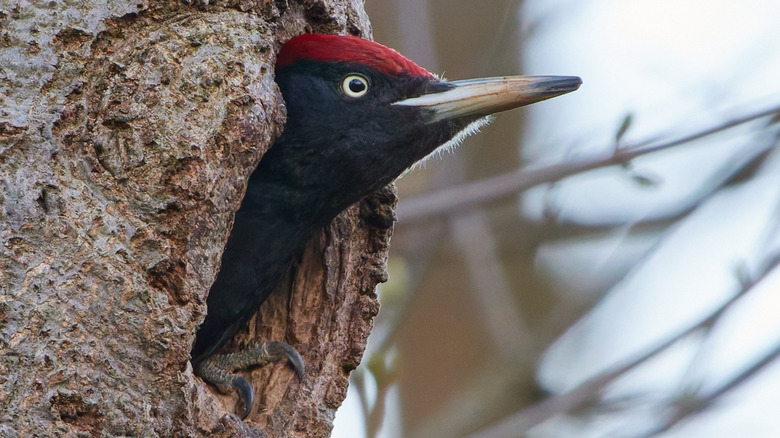
While woodpeckers will hammer holes in healthy trees to suck out sap, when it comes to hunting insects and building nesting holes, they would much rather work with dead wood, both for food and shelter. That means there are times when cutting back on some lawn and landscape maintenance can actually result in more natural habitat for woodpeckers. In addition, woodpeckers are considered a keystone species, meaning they create habitat for other species. So the process of providing woodpeckers their preferred habitat material can result in a greater ecological diversity in your backyard. So, from that perspective, less lawn work can actually be a hack that attracts more birds to your yard.
So, how do you go about providing dead wood for woodpecker habitat? Simple. If you have a mature tree die, particularly one that is a safe distance away from your home, garage, fence, or other structure, consider leaving it standing. If you are concerned about the tree falling, you can always trim back the excessive limbs with a Black & Decker Extendable Electric Pole Saw or similar implement. With only the main trunk remaining, it is less likely to topple in a storm. Even if you have large dead limbs on otherwise healthy trees, you can cut the dead limb and leave it on the ground or prop it upright to provide woodpeckers foraging and homebuilding opportunities.